
Review: Not Nobody, the Anarchist Legal Drama We Need Right Now
Twilight Theatre Co. presents Brian Dykstra’s new play at 59E59.
 |
Off-Broadway
|
|
Off-Broadway
|
February 12, 2026
(© Carol Rosegg)
The system perpetuates itself. Lawyers run for office so they can write new laws and expand the government, making the bureaucracy so complicated that businesses and individuals must hire more lawyers just to navigate it. Run afoul of their ever-shifting and regularly arbitrary rules and you risk a smashing from the cudgel of the state.
Brian Dykstra understands this, and so should you, especially if you’ve gotten a head start on your taxes this year. His new play at 59e59, Not Nobody, is a spicy and irresistibly puckish repudiation of the whole rotten system.
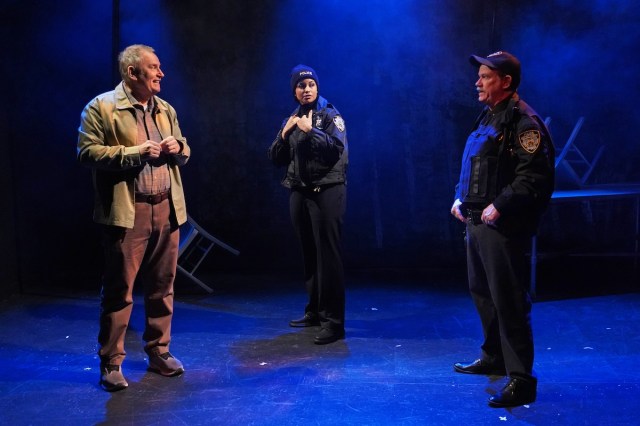
It opens on McAlester Daily (Dykstra) walking through a rough neighborhood in New York City. Officer Ricketts (Sheffield Chastain) whistles him over wanting to know why an older white guy is walking alone in this neighborhood. His partner, Officer Chavana (Kathiamarice Lopez), plays the good cop to Ricketts’s tough guy, but Daily’s stuttering response raises suspicion.
A retired ethics professor, Daily exhibits flashes of ACAB hostility and has a frustrating habit of quibbling with language and answering questions with questions. Ricketts thinks he’s being a smartass and asks to see his ID, which he confiscates right before all three are involved in a shooting that leaves Chavana dead and Ricketts severely wounded.
(© Carol Rosegg)
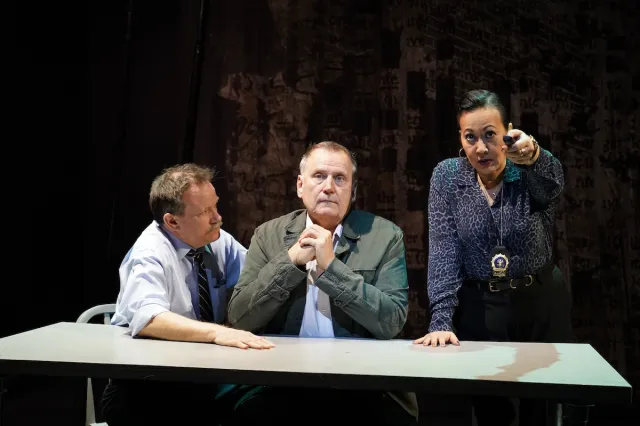
At first, Daily is hailed as a hero for applying pressure to Ricketts’s wound long enough for an ambulance to arrive. But then a couple of detectives (Chastain and Kate Siahaan-Rigg) start asking questions about Daily’s possible connection to the shooter based on a lip reader’s assessment of surveillance video. When the shooter asked, “Who the fuck are you” Daily responded, “Nobody! I’m not— nobody!” But the lip reader incorrectly interpreted him as saying “I don’t know, Buddy,” suggesting Daily knew him. What follows is an animated and occasionally discursive legal drama as Daily attempts to escape the jaws of the leviathan that has targeted him as easy prey.
Dykstra writes with the passion of a man who has been personally wronged by the state, which makes his drama richly compelling even if it is not always precisely targeted. Yes, it is alarming the degree to which our courts take seriously the testimony of expert witnesses peddling pseudoscience. We should talk about this more. But a scene depicting a rightwing talk-radio show (podcast?) just feels like a catnip break for the off-Broadway audience.
Luckily, the performances sell the script, particularly through the zesty incantation of outrageous lines. “What I suggest, is you simply sit there with your metaphorical thumb up your— or… not, as you wish – as I voir dire this betch,” said no real judge ever. But the sassypants one played by Siahaan-Rigg does, and we cannot help but laugh at this lampoon of the highly educated and bitterly bored individuals charged with administering justice in America. Dykstra is an actor’s playwright, crafting lines that he knows will sound great in the mouths of his castmates, and none of them disappoint.
(© Carol Rosegg)
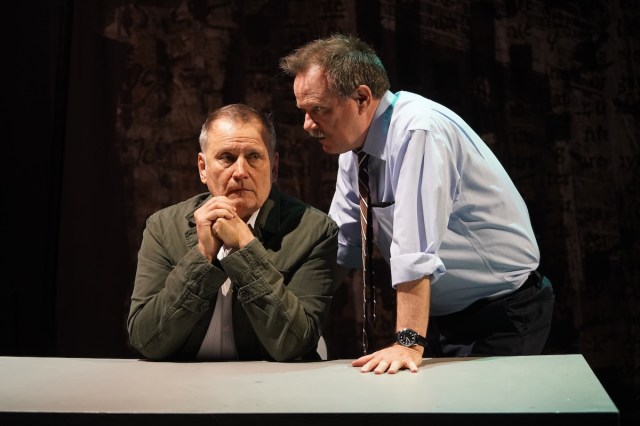
The performances are physically on point as well, with every actor committing to Dykstra’s heightened vision of the justice bureaucracy. Whether it’s Lopez producing her own expert testimony with a grand flourish, or Chastain as an overcaffeinated detective insistently jabbing Dykstra in his trapezius, everyone is giving their very best audition for Law & Order; and if I was the casting director, they would be hired.
Margarett Perry’s direction accentuates the shades of light and dark in Dykstra’s script, ensuring that one does not overpower the other. Tyler M. Perry’s set evokes the permanent scaffolding of New York City while facilitating seamless scene transitions to multiple locations. Lighting designer Jen Leno helps set the scene, so we instantly know if we’re in a fluorescent interrogation room or on a poorly lit street corner. Sound designer Ariana Cardoza creates the crucial offstage action. And costume designer Daniel Lawson lets us know the earning power of the various lawyers in this story through his smartly selected suits.
A late monologue delivered by our protagonist (but also, I suspect, by our playwright) hammers home why so many of us have lost faith in the state and its institutions. When police actions are driven by quota the objective ceases to be public safety and becomes making money. ICE isn’t the only state agency guilty of this. Playfully but insistently, Not Nobody asks, Who consented to this racket that calls itself the government, and how much longer will we tolerate it shaking us down?




Featured In This Story
Latest Reviews
See all
Latest Videos
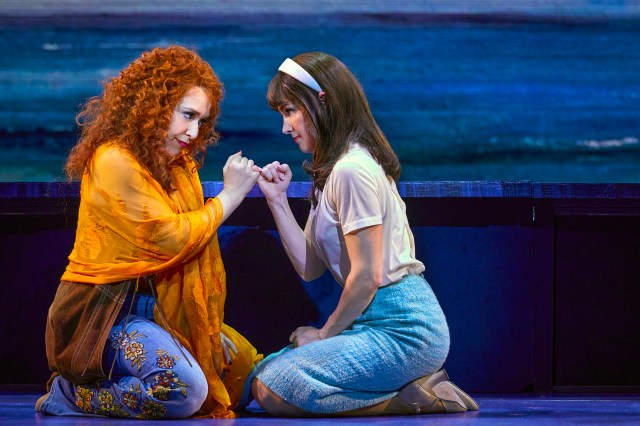
Watch Jessica Vosk and Kelli Barrett Sing a Song From the Upcoming Broadway Musical Beaches
Broadway performances start on March 27 at the Majestic Theatre.