
Interview: With Oedipus, Anne Reid's Broadway Dream Comes True at 90
The veteran actor makes her Broadway debut alongside Mark Strong and Lesley Manville.
 |
Broadway
|
|
Broadway
|
December 11, 2025
Anne Reid has done it all. She’s graced the West End and toured extensively, romanced Daniel Craig on screen in The Mother, and delivered memorable television performances from Coronation Street—where she appeared in 632 episodes before meeting a shocking end—to Last Tango in Halifax.
Yet there was one dream Reid carried throughout her life: to appear on Broadway. At some point—perhaps only last year, after she turned 89—she put it aside. But life has a funny way of circling back. Now, at 90, Reid is realizing that dream, making her Broadway debut in Robert Icke’s production of Oedipus at Studio 54.
Reid “transfixes our gaze every moment she’s onstage,” our critic said of her performance as Merope, the secretly adoptive mother of the title character, played by Mark Strong. Her spry and grand performance proves that age is merely a number, and off-stage, she’s glowing with pride about making a goal come true.
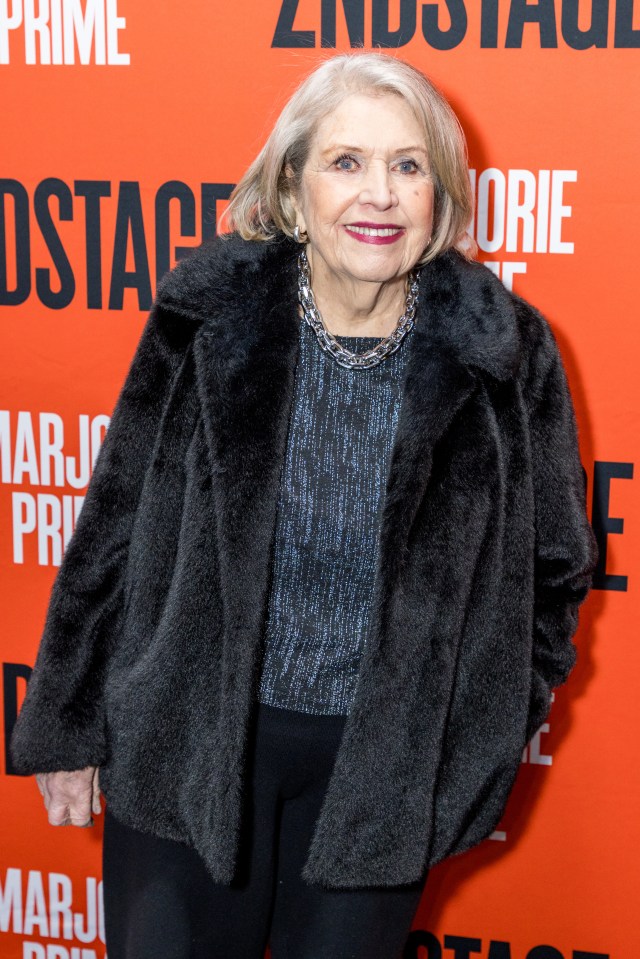
(© Tricia Baron)
This conversation has been condensed and edited for clarity.
I’m sure you’ve gotten this a lot over the last few months, but I don’t think I’ve ever felt so tense in a theater watching something as I did with Oedipus.
Really?
Yeah.
I wish I’d seen it! I didn’t see it in London. I wasn’t in it in London. And it’s very difficult when you’re in something, darling, to tell you how good it is. It’s terribly difficult. When you’re learning something and working on your performance, you have a different attitude. I’m just chuffed, thrilled to bits, to be on Broadway.
We’re glad to have you.
When I was a little girl, in the Second World War — you know, I’m a dinosaur, me — the thing that kept me going was American movies, MGM movies. My brothers and my father were all away fighting, and I was a little girl, and my mom and I used to go to the movies. I thought America was the most magical place on earth. Everybody’s beautiful. Everybody can sing and dance. They all have houses with picket fences and beautiful bedrooms. I just wanted to be in America.
I don’t think it ever really left me. I’ve been to America a lot, but I’ve always had this dream of working on Broadway. I came here for Thanksgiving last year, and I made a little speech at the dinner. I said that I was sad that my dream of working on Broadway had passed me by, never imagining in a million years that a year later, guess where I’d be.
Isn’t it funny how life works some times?
Yeah, well, that really worked.
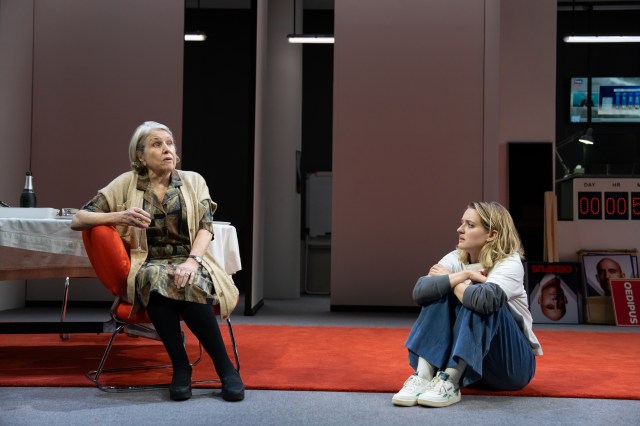
(© Julieta Cervantes)
How did this role come to you?
The woman who did it in London, June Watson, we’re the same age, and I don’t know the full details of it, but she didn’t want to do it here. And I’m grateful to her because she’s done Broadway a couple of times, and I never have. So, I’m living my dream right now.
Tell me about the process of working on it, since I imagine the rehearsal period was fast considering most of the other actors had done it already.
Oh, God, yes. We only got two weeks. They did seven weeks originally in London. It was very, very full on. It wasn’t something I’ve ever done before. It was difficult. It’s a complicated play; it’s not straightforward. It’s not an obvious comedy or something like that. I just thought it was a great part and he’s a wonderful writer, Robert Icke. A very clever young man. I didn’t know how I would get on. I find it difficult working with young directors now because they try to teach me, and I can be a bit cross about that. He was absolutely lovely. I like him very much.
Is being on Broadway what you had hoped it would be?
Yeah, it’s heaven. I couldn’t think of it on the first night. I just pretended I was in some small theater in England. A theater is a theater. It’s a stage with people, wherever it is. So, I didn’t think of it as Broadway. I just wanted to remember it, frankly. That was the main thing. I didn’t want to go wrong and hold anybody up and spoil the production. So far, I haven’t.
Were you worried about that?
I’m pretty good at learning lines. My sight’s not great. I find it difficult to read things. They have to print the scripts large for me, but that’s ok. Thank God, I’ve got a good memory, which is really all you need as an actor. Well, it’s not all you need, but it’s essential to me. I hear people work with microphones in their ears. I couldn’t do that. I wouldn’t enjoy it, you know?

(© Julieta Cervantes)
It must have been nice to realize that even at this point in your illustrious career, there can still be some surprises.
I got another surprise this year because I played Queen Elizabeth II in a tour [of the play By Royal Appointment]. The intention is to revive it in the West End next year.
Another intimidating role.
I’ve always wanted to play her. I met her four times and I always thought “You are not a solemn woman.” She takes her work very seriously, but she looked like she would be good fun given half a chance. I spoke to her hairdresser; we became friends when I was doing the play. He was with her for 25 years. He said she was very funny. I think we should bring it to New York. I know Americans like things about that world.
What would you say is the key to your longevity, being 90 and acting on Broadway, and having just toured around the UK?
I would say cocktails, but I shouldn’t. I’ve never had so many cocktails in my life as I have since I’ve come here. I’m in danger of dying of an overdose of cocktails, actually, in New York. Well, it’s Christmas. And it’s absolutely lovely.
You did pick a great time to be here.
I do think Americans are very good at parties and the lights and the decorations. My family is coming on Boxing Day and I just want them to see all the lights and the Christmas tree and everything. They’re going to go skating in Central Park. I’ve spent a lot of time in New York, because I was a friend of the singer Barbara Cook, who was very famous. I came here for many New Years and Christmases. We went to Philadelphia and she sang in the Millennium and I was with her at the Four Seasons Hotel in Philadelphia. And my grandma was born in Lackawanna. I’ve only just found out where that is.
You must try to visit while you’re here.
I know; I want to go and find it. I mean, it was 1880 or something, so I don’t know if there would be any records. But I’d like to go. My great-grandfather built boilers for the trains when they were opening America, you know. If they’d stayed, I could have been an American. And then I wouldn’t have had to get a visa and all that!
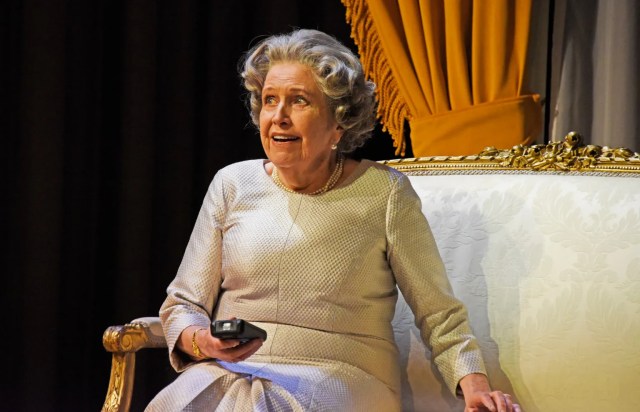
(© Nobby Clark)




Featured In This Story

Related Articles
See all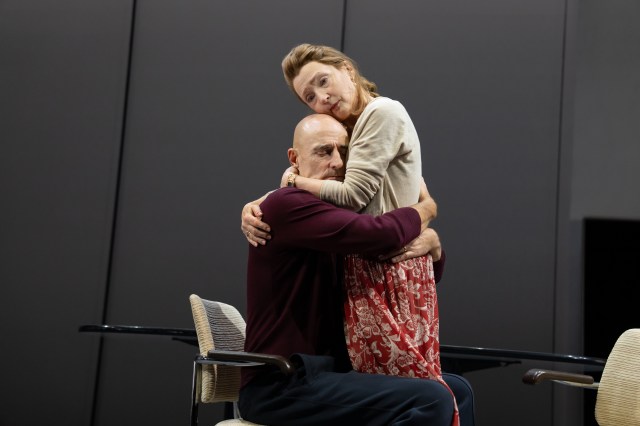

Latest Reviews
See all


Latest Videos
Watch Jessica Vosk and Kelli Barrett Sing a Song From the Upcoming Broadway Musical Beaches
Broadway performances start on March 27 at the Majestic Theatre.