
Interviews
Interview: Get to Know Mary-Mitchell Campbell, This Year’s Isabelle Stevenson Tony Award Winner
Campbell will be honored on June 7 for her work in arts education and equity in the theater industry.
 |
Broadway
|
|
Broadway
|
June 4, 2026
Mary-Mitchell Campbell may be most recognizable from her perch on a piano bench. But between her work as a music director, orchestrator, concert accompanist, conductor, and every other job title a music department could dream up, there’s no theater fan who hasn’t been on the receiving end of Campbell’s prodigious artistry. And as someone who equates a life in the arts with a life of service, when you get her artistry, you also get her advocacy.
On June 7, Campbell will accept this year’s Isabelle Stevenson Tony Award, a pause amid Broadway’s annual brawl for supremacy to honor a leader in our industry for their humanitarian work.
While Campbell was crafting new orchestrations for the 2006 revival of Stephen Sondheim’s Company, she was also founding ASTEP (now called Arts Ignite), a nonprofit that harnesses the life-changing power of arts education. As a founding member of MUSE (Musicians United for Social Equity) and early advocate for Maestra Music, she’s also moved the needle on racial and gender diversity in theatrical music teams, all while wielding the baton for the New York City Center Encores! series and amassing an impressive Broadway resume.
You know her work. Now, before she takes the Radio City stage, get to know her—from the musical that launched her love affair with theater to the unexpected catalyst for her life of philanthropy.
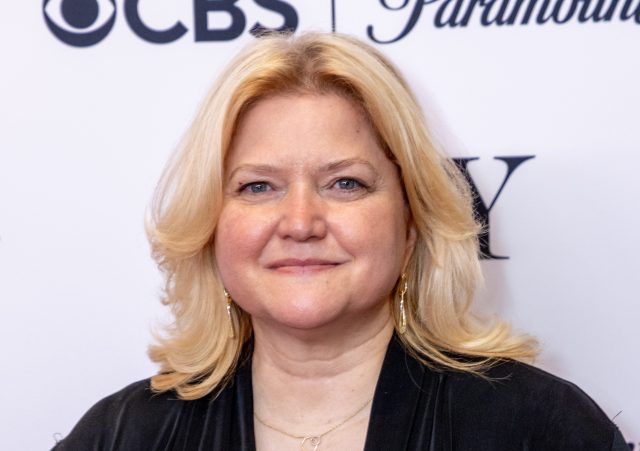
(© Tricia Baron)
This interview has been condensed and edited for clarity.
Take me back to the beginning. How did music first come into your life?
I asked for a piano for Christmas when I was 3. We didn’t get one until I was 7, but I started playing other people’s pianos, and I would play at church. I started lessons when I was 8, but I started playing dinner music at this restaurant on the weekends when I was 10. I would take requests from people and play by ear. Then I went away to conservatory when I was 16. So I pretty much always was drawn to music. And then when I was at conservatory, North Carolina School of the Arts, I saw a production of the musical Baby and fell in love with the idea of storytelling with music. That was when I decided I would love musical theater.
What kind of career did you picture for yourself after college? Did you know what the possibilities were?
It was when I was in college that I found a book on careers in the theater. I found the page that said “music director,” and I was like, that’s what I think I wanna do. That one feels most aligned with what I like. So the goal was to move to New York and be a music director.
There are so many arms to the job of music directing: playing, teaching, conducting. Did all those facets appeal to you?
In a sort of terrifying way, yes. I didn’t feel like I had those skills entirely, but I wanted to get them. And I loved teaching. That part I always loved. As I’ve grown into a career of music-directing, I think there are so many business and management skills that are also kind of needed. I actually feel like starting my nonprofit was the best education I got on how to be a better businessperson as a music director.
You’re referring to your nonprofit Arts Ignite, which you launched in 2006 as Artists Striving to End Poverty (ASTEP). What made you want to go beyond gigging and apply your skills to something bigger?
I went through a really bad break-up. I was sort of wallowing in my depression, and I thought, I need to get outside of my problems for a minute and do something bigger than me. I ended up booking a trip to India for several months where I volunteered in what India calls orphanages, but homes for children who don’t have parents. I was teaching English and music, and it was a life-changing experience. I couldn’t unsee the things that I had seen. My life couldn’t be the same returning to the US. So when I came back, I got a group of like-minded artists around me, and we started an organization that ran out of my apartment for the first few years—which was quite hilarious.
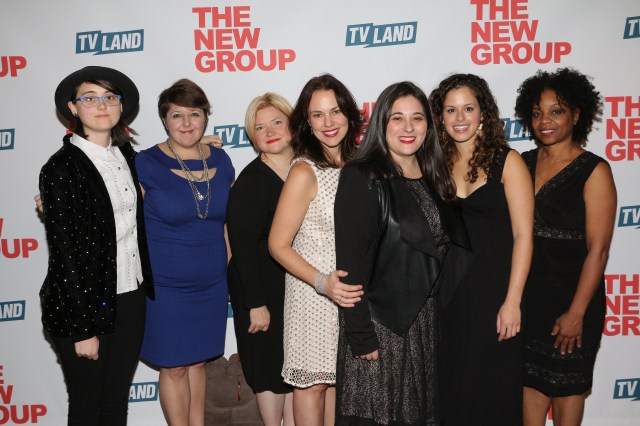
(© David Gordon)
And then there’s also your work with Maestra, which has helped so many female and nonbinary musicians get a footing in this industry. Why did it feel important to you to open doors for other women?
It actually sparked for me when Jeanine Tesori and I were in a conversation, and she mentioned “You have to see it to be it.” I think I felt a certain click of, “Oh, this is something I need to be more proactive around.” And then Georgia [Stitt] and I did a production of Sweet Charity where we were requested to put together an all-woman band, and the process of doing that illuminated a lot of challenges with the systems in place. That motivated both of us to be way more present to this issue, and it motivated Georgia to start Maestra. She’s really taken it and done something so amazing with it, so it’s a real privilege to get to work with her on it.
Looking back on your career, what’s the job you learned the most from?
I feel like working with Stephen Sondheim was the best education I could possibly have had. I got to do three shows with him: The Sweeney Todd revival with Patti LuPone, the Company revival with Raúl Esparza, and Road Show at the Public. Just being able to be in his presence and listen to him talk about his work and talk about musical theater at large. That was an astonishing education on so many levels.
What would you say has been the hardest job?
There’s challenges and triumphs to all of them. I would say one disappointment for me was that Tuck Everlasting, which I really loved, had such a short run. The last 10 minutes of that show had this amazing ballet that showed [Winnie’s] whole life story play out. It was one of the most stunning things that I got to work on. But it was the year of Hamilton. There was a lot happening that year. It was very overshadowed.
Do you have advice for musicians just breaking into the theater industry?
I would say show up 100 percent as much as you possibly can and recognize that it requires an enormous amount of skill. It is a lot of hard work, and we’ve all had to do that.
How does it feel for the theater community to recognize all the hard work you’ve put in? And with a Tony Award no less?
It’s incredible. It’s overwhelming. You don’t go into this work thinking of a Tony Award. That’s the last thing I ever would have anticipated. But I think it’s very special that they even have this award. I think it proves how much we care about our community. And I do think being part of this community is one of the greatest gifts one could ever have. We’ve created a special ecosystem that really takes care of each other. We value it. And we have a Tony Award for it.
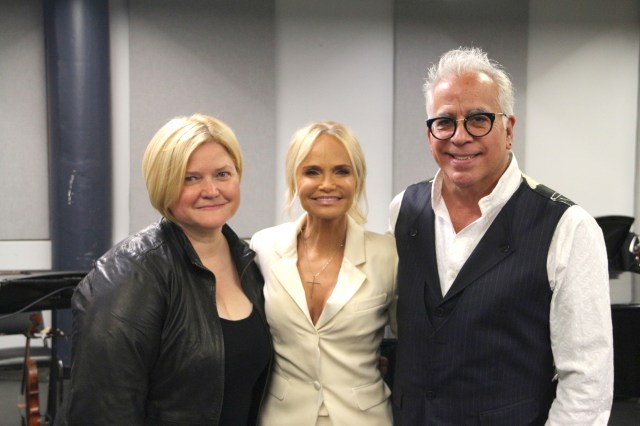
(© David Gordon)




source on Google
Latest Reviews
See all

Latest Videos

Watch: Zachary Noah Piser Performs "Where You Belong" From Maybe Happy Ending
This record is going right next to Gil Brentley Jazz Orchestra 1957.