
Review: The Gin Game, Starring Debra Winger and Arliss Howard
D.L. Coburn’s popular two-hander gets a new staging in a downtown bookstore.
 |
Off-Off-Broadway
|
|
Off-Off-Broadway
|
July 23, 2026
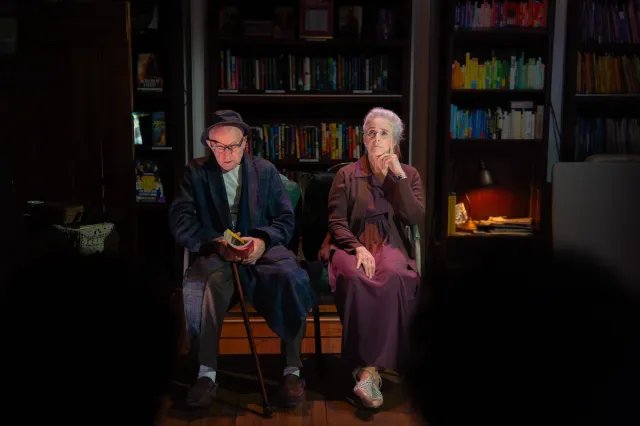
(© HanJie Chow)
The latest New York staging of D.L. Coburn’s The Gin Game takes place in front of the young adult section of the Housing Works bookstore in Soho. It’s just the first of many humiliations visited on the play’s elderly protagonists. They literally inhabit a world that wasn’t designed with them in mind—an inconvenient afterthought shoved into a corner near the bar and the LGBTQ shelf. It’s a brutally effective metaphor for the treatment of older Americans who do not command a mountain of capital.
Debra Winger and Arliss Howard thrillingly repeat the act Jessica Tandy and Hume Cronyn performed for this play’s 1977 Broadway debut: a real-life married couple playing strangers who connect over a game of gin rummy on the porch of a low-rent nursing home.
Winger plays Fonsia Dorsey, a newcomer who wanders onto the patio in a daze. Seated at a foldable card table, Weller Martin (Howard) engages her in small talk and invites her to play a hand. Tepidly, she agrees, and why not? Both players are in their bathrobes and slippers, with nowhere to be and no visitors expected.
Details of their lives emerge over cards: her son in far-off Denver, his career as a marketing a research consultant. It seems like a real friendship (perhaps even love) could emerge in this hopeless place. But then male insecurity rears its ugly head when Fonsia consistently beats Weller in hand after hand.

(© HanJie Chow)
Howard’s initial presence is dry as the plains, with an even-keeled line delivery that masks the rage bubbling underneath. Disappointed in life, Weller has mentally invested in this card game as proof of his virility, a dangerous bet. But his prairie charm is enough to convince Fonsia that he’s one of the sane ones in this human discard pile (at least temporarily). But we know that their courtly banter cannot last, especially when we learn that both are divorced and have very different perspectives on whom the courts favor in such matters.
Winger gives an unsettlingly authentic performance of a woman who was socialized to make herself smaller, especially in front of men. She delivers her lines clearly but softly from downturned lips. Her meek demeanor and feigned ignorance about how to play the game lulls Weller into a false sense of superiority, and this proves to be her secret weapon.
Howard and Winger have real chemistry, a push-pull dynamic that runs the gamut from flirtatious to downright nasty. It’s the kind of deep understanding of one’s scene partner, what turns them on and what enrages them, that can only come from decades of marriage. They reminded me of real people I know—older folks who, were they raised upper-middle-class today, would absolutely be diagnosed with a personality disorder and medicated accordingly. But it seems that such interventions become less urgent after one exits the labor market.
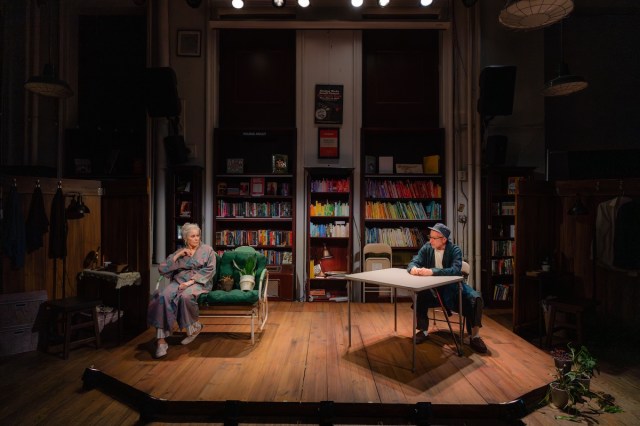
(© HanJie Chow)
David Blum does what all wise directors do when gifted with such solid performers: he gets out of the way. Ashley Basile’s pop-up set features the basics: a card table, two chairs, and a swinging loveseat (this last bit might not even be strictly necessary). She has placed little dressing areas off to each side for the actors to change, extending the performances to the transitions as we see each character prepare for their next encounter, with anticipation or dread (Michael Schaffner’s costumes offer a clue, like armor for senior citizens going into battle). Sarah Woods keeps the lights at a contemplative dim for these transitions, while Bart Fasbender underscores them with the sound of a visiting choir, a bit of tinny overkill that nevertheless underscores the indignity of their situation.
The Gin Game has been a staple of American theater for decades, ostensibly because it is an opportunity to feature two veteran actors in meaty roles (Cicely Tyson and James Earl Jones starred in the last Broadway revival). But Coburn, who died last December, captured something profoundly tragic about American society: the abundance of choice we have as consumers has warped our expectations around human relationships, to the point that even maintaining contact with one’s own parents is a matter of choice.
And honestly, after getting to know what Fonsia and Weller are really like over the course of 90 minutes, it is easy to understand why they have been left alone to play cards on visitors’ day. It’s a chilling vision of where most of us are headed. I can only console myself with the belief that the AI-powered robots that will sing me to sleep in my dotage will have an inexhaustible tolerance for my bullshit.




source on Google
Featured In This Story

Latest Reviews
See all










Latest Videos
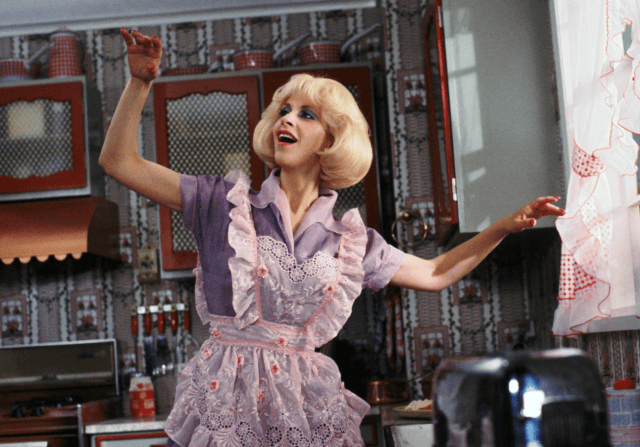
Watch: Ellen Greene Reflects on the Enduring Legacy of Little Shop of Horrors
Frank Oz’s cult classic movie-musical has gotten a new 4K restoration in celebration of its 40th anniversary.