
Interviews
Interview: The New Netflix Film Don’t Say Good Luck Puts Waitress Center Stage
Director and co-writer Julia Hart talks about why so much of the stage musical made it into her movie.
 |
New York City
|
|
New York City
|
August 14, 2026

(© Netflix)
Sugar. Butter. Flour. Action!
Waitress, the beloved Sara Bareilles musical, is getting an unexpected screen moment this summer, courtesy of director Julia Hart’s new film Don’t Say Good Luck, which hits Netflix on August 14.
While Waitress already has a live capture starring Bareilles herself, the musical is integrated into Hart’s story. Sunny Sandler, daughter of Adam Sandler, stars as Sophie Birenbaum, a high school student with her heart set on playing the quirky Dawn in their school spring musical, a production of Waitress.
When Sophie unexpectedly lands the lead role of Jenna, she has to dig deep to find her connection to a woman going through an emotional pregnancy and an extra-marital affair. To complicate matters, Sophie’s mom, Elizabeth (Melanie Lynskey), learns that her cancer has returned. But the character of Jenna gives Sophie a place to put her heartbreak, reckoning with her difficult home life through her songs.
The film—co-written by Hart, producer Jordan Horowitz, and Laura Hankin—brings in an many of the musical’s songs, including complete performances of “Bad Idea” and the show’s breakout ballad “She Used to Be Mine.” It’s a stellar showcase for the show (which currently is not available for schools to license)—one that brings to life far more of the book and score than the average movie about high school musicals.
TheaterMania spoke with Julia Hart to learn more about her fondness for theater kids, how she managed to include so much of Waitress in a movie that is not a direct adaptation of the show, and why she needed her sets to look like they were actually built by high school students.
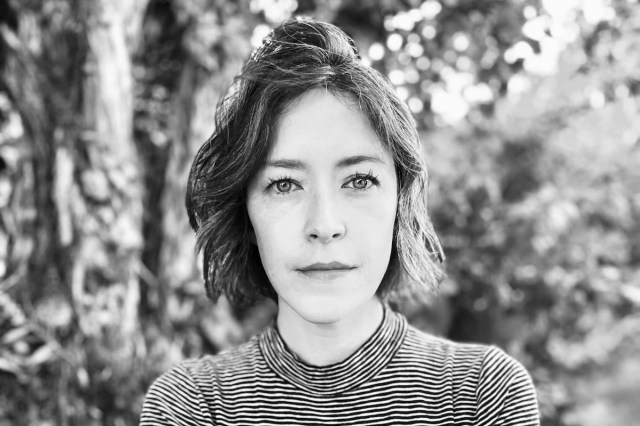
This conversation has been condensed and edited for clarity.
How did the concept of building a movie around a high school production of Waitress come about? Especially when schools can’t even actually do this yet.
Julia Hart: I’m hoping there will be a Waitress Jr. released after this movie. Laura Hankin, who wrote the original script, wrote Waitress into the story, but had a note at the top of the script that was like, “I don’t know if we’ll be able to get the rights. Maybe we’ll write an original musical, maybe we’ll do a different musical, but for now, Waitress is a placeholder.”
Jordan Horowitz, my husband, producer, and co-writer, read the script first, and he said to Laura, “Would you be open to using Waitress? Because oh my God, it works so perfectly.” Laura said, “That was my secret dream all along. I just didn’t think we could get the rights.” Her initial conceit of the musical as it exists in the world of Don’t Say Good Luck is so perfect. The themes of Jenna’s life and Sophie’s life and the way they wrap around each other and Sara Bareilles’s music is incredible.
Did you all work closely with Sara Bareilles on the film?
We did not. Jordan is friends with and has worked with Michael Roiff, who was one of the producers of the original film of Waitress and the musical. Then, Laura Hankin wrote a really beautiful letter to Sara, and they gave us their blessing. They trusted us to honor the work that they had done. They’ve all seen the film and said that they loved it. We hope that they continue to feel that, because it’s a love letter to Waitress ultimately.
How did you decide how many songs to include?
The way that the songs are in the movie was exactly how Laura had it in the original script. She knocked it out of the park, the placement and the sentiment of each of the songs. When she first wrote it, she didn’t know if Waitress was going to stick, so she only loosely placed them. Once we knew we had the rights, we really went to the work of weaving it into every aspect of the script so that people who didn’t know the Waitress musical could follow along with Jenna’s story and see the way that it connected to Sophie’s.
How did you sort out how you wanted to shoot those numbers and how much you wanted to be in the theater versus elsewhere?
I’m a theater kid, Sunny is a theater kid, Jordan is a theater kid. It was so fun to get to just live in that auditorium and stage those numbers. Rehearsal for the movie felt like putting on a play. It was our own version of summer stock. Choreography going on in one room, music rehearsals in another, and bringing it all together on the day in that beautiful auditorium. It was magical.
Jenna is a mature-beyond-her-years role in terms of the things that she is going through. How does a teenager navigate that?
Sunny is such an old soul, and she’s so connected to the ancient energy of the arts. I did Who’s Afraid of Virginia Woolf? in college and the people playing George and Martha were 21 years old, but my God, they channeled all of that age, rage, trauma, and heartache. Kids are amazing and when they’re performers, it’s extraordinary what they can tap into
In terms of the sets, there’s a delicate line to walk. You want them to look like sets that would actually be in a high school production, but you don’t want them to look bad. How did you pull that off?
A pet peeve of mine is when I see a movie and the set for a local public elementary school looks like a big studio movie. Look, the level of craft in these high schools is so high. Your head scenic painter on your high school musical is the senior who’s going to RISD next year. The same is true of the costumes, the vocals, the lighting design, everything. We wanted the level of craft for all of those aspects to be really high, but we wanted it to feel like a real high school budget.
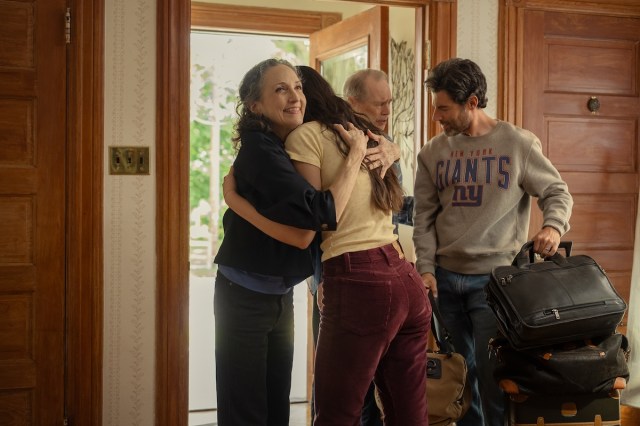
(© Netflix)
Bebe Neuwirth features as Melanie Lynskey’s mom. Were you like, “OK, I want to put one theater legend in. I’m picking her.” Or how did that come to be?
She is a personal hero of mine. I got to see her in Damn Yankees and Chicago on Broadway when I was in high school. I ended up being brave enough to tell her, though I might’ve blacked out, but I actually dressed as her as Velma Kelly for Halloween one year in high school. She’s an icon. So, we really geeked out and she shared so many amazing stories with me. In this movie that is a love letter to musical theater, it was such a treat to have her.
Do you hope the movie inspires more kids to audition for their high school musicals?
I hope that the theater kids all feel seen and loved by this movie. But I also hope that kids who think they know what that means see a different side of it or see behind the curtain, if you will. I hope that they want to be a part of it too. We cast a bunch of kids who were either in theater programs in college or had just graduated. We wanted it to feel as real, authentic, and grounded as possible.
Would you want to direct a big screen adaptation of the musical version of Waitress?
My God, that would be amazing. Yes. Alert the media. The answer is yes.




source on Google
Latest Reviews
See all
Latest Videos
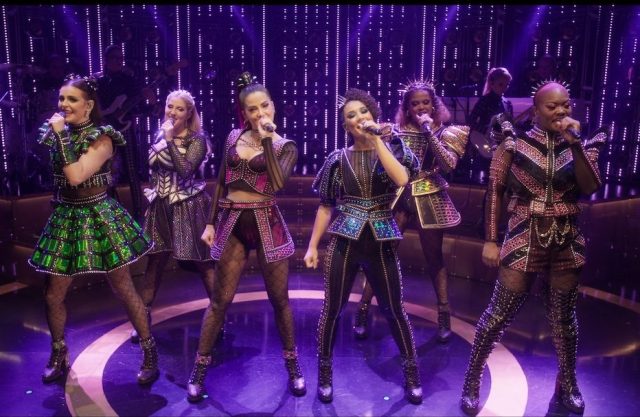
The Original Queens of Six Talk Bringing the Hit Musical to the Big Screen
Jarnéia Richard-Noel, Natalie Paris, Alexia McIntosh, Aimie Atkinson, and Maiya Quansah-Breed discuss reuniting for the proshot.