
Review: The Pass Is Not the Heated Rivalry We Want, but the One We Deserve
John Donnelly’s soccer drama makes its U.S. debut.
 |
Off-Broadway
|
|
Off-Broadway
|
August 4, 2026
(© Andy Henderson)
Before Ilya and Shane there was Jason and Ade, the protagonists of John Donnelly’s soccer drama The Pass, now making its US debut with the Max Hunter Company at La MaMa’s Ellen Stewart Theatre (the play premiered at London’s Royal Court Theatre in 2014 and was later turned into a 2016 film, with Russell Tovey in the role of Jason both times). Wine moms beware: This is not the tale of sensitive male athletes finding love in the closet, but a darker, more realistic look at how commerce and competition conspire to triumph over love, self, and human decency.
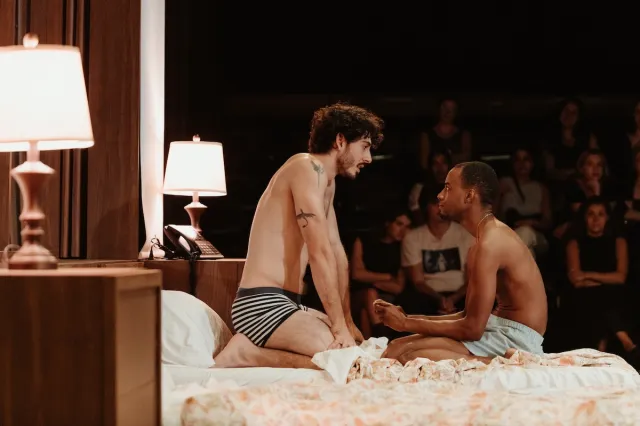
Jason (Matisse Ratron-Neal) and Ade (Terry Bell) are two 17-year-old footballers sharing a hotel room in Bulgaria ahead of a crucial match. Their contracts are expiring and the team only has room to keep one. Those high stakes are somewhat obscured in the fog of horseplay as the two young men raid the minibar, channel-surf for porn, and wrestle around in their underwear—all classically heterosexual methods of letting off steam.
Through Ratron-Neal and Bell’s perfectly timed performances we begin to see the façade of performative hetero-masculinity crack: a glance too longingly, a hold too intimately, a shower shared silently … you know, dude stuff.
The Pass reinforces something I have long suspected, which is that straight men in the West are among the loneliest, most repressed people on earth, desperate for male companionship but ever worried that their overtures will be perceived as gay. If anyone is in need of liberation, it’s them. And if that means allowing them to get a little D on the side without relinquishing their straight identity, who are we to deny them? It’s not like our contemporary sexual taxonomy is long for this world, having only emerged in the 19th century. How quaint to allow something as contrived as identity to prevent you from fucking whom you would like to fuck.
(© Andy Henderson)
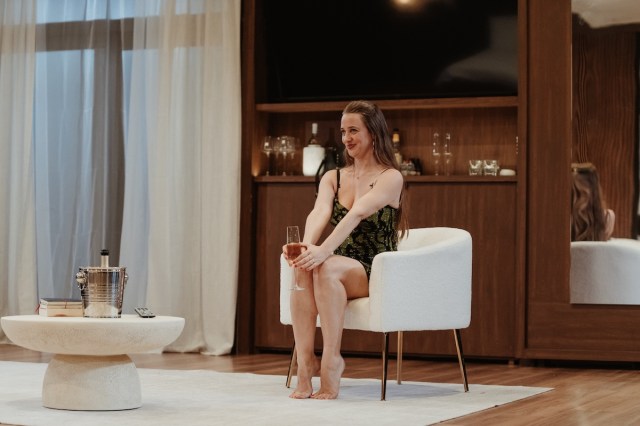
But we hear the social barrier preventing us from reaching this libertine utopia in Ino Badanjak’s deliciously cruel laugh. In a scene-stealing Act 2 performance she plays Lyndsey, an erotic dancer who has been recruited to produce a clandestine sex tape with Jason—at this point an international superstar. She initially doesn’t suspect that the millionaire footballer with incredibly lucrative brand deals would want this lurid bit of tabloid fodder. When she discovers why, she finds it hilarious, as do we. Modern society threatens to turn us all into Carrie, the result of which is a pandemic of defensive living.
But our sympathy for Jason only goes so far. Ratron-Neal ensures it with a performance that slowly, insidiously transforms Jason into an outright monster. We see that most clearly in his interactions with a young bellhop named Harry (Oliver Rowland-Jones, a starstruck puppy dog). This is in the third act, which is both disturbing and shaggily written, in which Jason and Ade reunite to hash out what exactly transpired that night, and how it changed their whole lives. Bell and Ratron-Neal both give layered, smartly evolved performances that help us fill in the gaps of the previous 12 years—to see how the boys of the first act became the men of the third. But it doesn’t quite compensate for a script that makes its point and then frustratingly continues to circle the drain.
(© Andy Henderson)
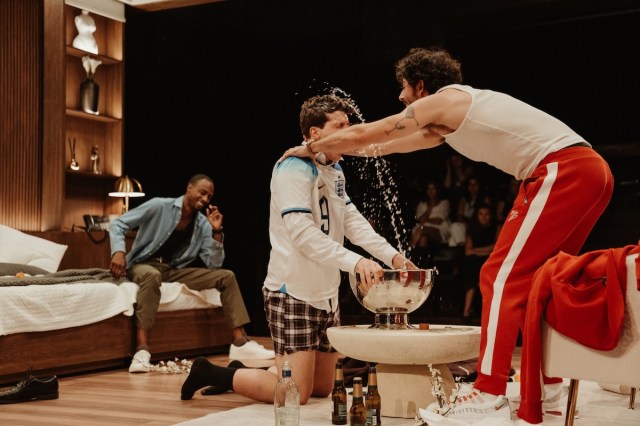
Director Max Hunter helps us pass the time (a superfluous 15 minutes in a 105-minute run time, if I had to estimate) with an attractive production. Seth Byrum’s cleverly adjustable set transforms into a series of outdated hotel rooms (the story takes place between 2002 and 2014), the growing mini-bar and flattening TV giving us a sense of Jason’s improving fortunes. Big props to the stage ninjas who rearrange the set between scenes, providing this play’s greatest spectacle, all thrillingly underscored by sound designer Megan Culley.
The production is staged in traverse, with audience on both sides of this hotel room terrarium. Lighting designer Cheyenne Sykes helps to create the subtle intimacy of the piece, giving us the striking opening image of Jason stretching in in his boxer-briefs in the fading natural light from the window. That well-curated underwear (Ade wears oversize hospital blue boxers—ideal for telegraphing tasteless heterosexuality) is by costume designer Amanda Roberge. She also shows us how Jason grows richer, if not more sartorially discerning, with an expensive-looking track suit and a (less expensive-looking) shorty robe.
Audiences looking for a bit of eye candy won’t be disappointed by this sincere yet somewhat dated look at the travails of closeted athletes in the early part of this century. The Pass is an unsentimental look at what one must give up in order to obtain fame and fortune in professional sports—a bet plenty are still willing to take. It’s not nearly as heartwarming as Heated Rivalry, but it’s a lot more honest.




source on Google
Featured In This Story
Latest Reviews
See all

Latest Videos
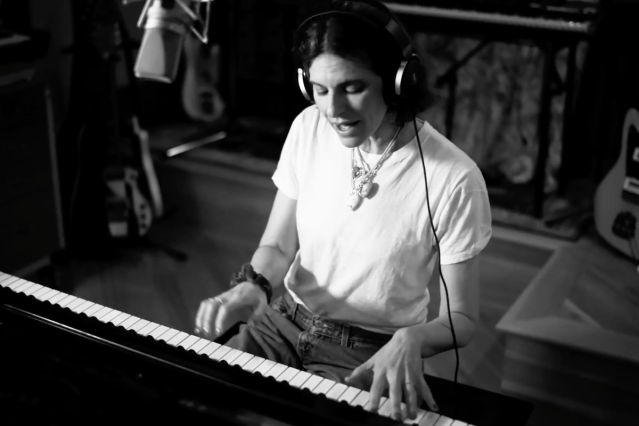
Watch Lindsey Kraft, Featuring Ben Folds, Sing "Beautiful Pain" From the Musical We've Been Here Before
We’ve Been Here Before starts performances on August 4 at SoHo Playhouse.