
Review: Lincoln in the Bardo at the Met Opera, Spooky for the Wrong Reasons
Missy Mazzoli’s adaptation of George Saunders’s novel makes its world premiere at the Metropolitan Opera.
 |
New York City
|
October 20, 2026
(© Karen Almond / Met Opera)
There are few more exciting moments in opera than when the chandeliers ascend at the Met, signaling the imminent start of the show. The creators of Lincoln in the Bardo (the new opera by composer Missy Mazzoli and librettist Royce Vavrek, based on the 2017 novel by George Saunders) have devised a clever variation, causing the lights to flicker in a way that would make a supernaturalist squirm with glee. It’s a thrilling overture to a mostly disappointing night.
It didn’t need to be this way. Mazzoli is one of the first two women to be commissioned by the Met to compose an original opera, a major initiative by general manager Peter Gelb. She has taken an admirably big swing in her selection of source material, a historical novel that invites readers into the secret world of the dead.
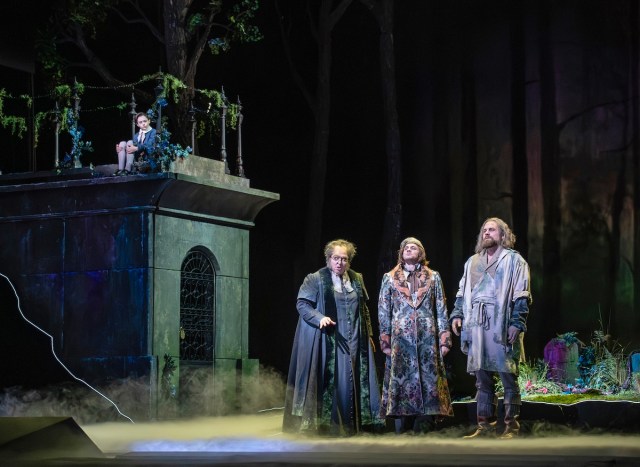
Lincoln in the Bardo takes place in Georgetown’s Oak Hill Cemetery, where the deep-sixed residents are in deep denial, referring to their coffins as “sick-boxes” and waiting for the day they will recover. Printer Hans Vollman (Ryan McKinny) was crushed by a falling beam before he was able to consummate his marriage to his second wife, causing him to manifest an enormous swollen penis. Sensitive homosexual suicide Roger Bevins III (Jonah Hoskins) swims in a miasma of eyes, the better to observe his lover’s treachery. The Pavarotti of this grim trio is Reverend Everly Thomas (Christine Goerke), a fugitive from judgment and the only one who truly understands that they are deceased.
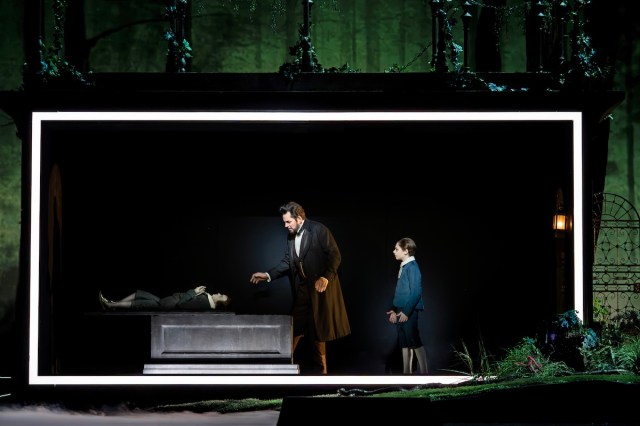
He also recognizes how strange it is that the spirit of the latest to be interned, an 11-year-old boy named Willie (Everett Sobers with a properly angelic voice), still lingers. “The young are not meant to tarry,” all three sing in unison. But the dutiful son is determined to stay and wait for dad. And he is proven correct when the president (Peter Mattei) returns to the mausoleum to cradle his son’s corpse (this rumor has long circulated about Lincoln, but has never been historically verified). But as the tendrils wind around him, Willie is in danger of staying in this place forever.
(© Karen Almond / Met Opera)
Mazzoli has written pleasantly cinematic underscoring to this ghost story, with creeping strings, eerie woodwinds, and mildly fateful percussion. Yannick Nézet-Séguin conducts it all like a dream that you cannot quite remember the next morning. It’s atmospheric, but it never grabs the audience by the collar and asserts itself as the main attraction.
Despite ample dramaturgical opportunity, there is no grand chorus of angels or march of the dead. There’s not even an aria of aching regret for superstar countertenor Anthony Roth Costanzo, totally misused in the minor role of Miss Elise Traynor. I never expected to emerge from Lincoln in the Bardo humming a brindisi, but I was hoping to have at least one melodic theme to take with me. Unfortunately, the songs in this opera are aural apparitions, flying in one ear and out the other.
They are certainly not helped by Vavrek’s lyrics, which range from banal to turgid. While the obsessive ghosts have a tendency to repeat (“We had been sisters, brothers, brothers, brothers, brothers, / Had been husbands, wives, wives, wives, wives of many years,” they sing) the writer of the Gettysburg Address describes the love he shares with his son as “two passing temporarinesses developed feelings for one another,” like he’s a freshman sociology major.
This line, which is drawn directly from the novel, is a mouthful to sing; but Mattei perseveres, delivering a performance that emphasizes Lincoln’s fatherly grief, and the heavy guilt he feels for his role in bringing that same tragedy to thousands of fathers across the union.
Vavrek’s libretto is a faithful adaptation of Saunders’s story, though he makes the fatal error of introducing far more characters than a two hour, 40-minute opera can adequately accommodate. Mr. and Mrs Baron (Craig Colclough and Stephanie Blythe as Potomac Thénardiers), Mrs. Francis Hodge (Janai Brugger), Litzie (Viviana Goodwin), Thomas Havens (Joshua Blue), and Lt. Stone (Daniel Clark Smith) all get short shrift.
The best scene in Saunders’s novel is when the Reverend faces a kind of Christified judgment of Ma’at and is deemed unworthy, leading him to flee back to the graveyard. This Act 2 opener calls for a Wagnerian set piece, but Mazzoli has only written a thin operatic monologue to recount the memory. Goerke interprets it with feeling while directly connecting with the audience, but the lackluster staging (three actors descend a staircase and pass through a glowing door far upstage) matches the vibe of this musical missed opportunity.
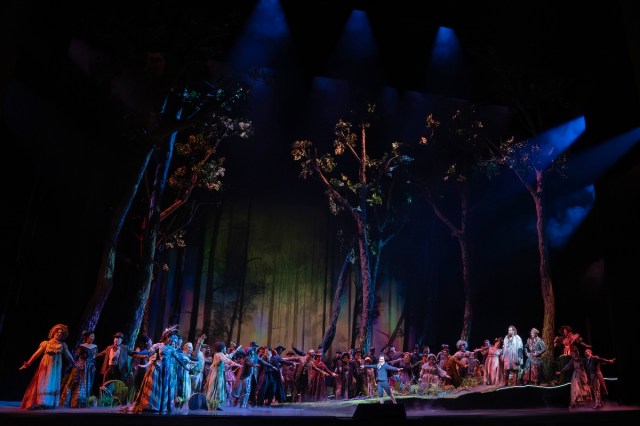
Lileana Blain-Cruz directs the production, reuniting with three of the designers from her 2022 Broadway revival of The Skin of Our Teeth. It is far more impressive than anything on the page. Adam Rigg’s set is appropriately gothic, with wrought-iron fences, hanging vines, and grassy mounds for ghosts to hide behind. Montana Levi Blanco’s distressed costumes allow the chorus to blend into the scenery and suddenly emerge, like real ghosts, activated by Yi Zhao and Stacey Derosier’s precise lighting. Sure, Lincoln’s light-up shirt is a little on the nose, but if you can’t have an obvious visual metaphor in an opera about ghosts, where can you?
(© Karen Almond / Met Opera)
The dead move through the space performing Raja Feather Kelly’s choreography, a little treasury of modern dance clichés, the most evocative of which is the fenty fold.
Most impressive are James Ortiz’s puppets, the tendrils and outsize appendages that help bring Saunders’s supernatural world to life. When they’re in full flourish, it’s like seeing a live Tim Burton film. Unfortunately, Vollman’s giant phallus and Bevins’s multitudinous eyes mostly disappear after that early scene, a box ticked and quickly forgotten.
The scariest thing about Lincoln in the Bardo is the sinking suspicion it imparts that commissioning new operas might be a fruitless endeavor at this point in history, as the gauntlet of university programs and residencies that constitute the gatekeeping mechanism of great companies like the Met have scrupulously weeded out anyone with a talent for melody or a flair for showmanship. Until that system is thoroughly overhauled, I’m afraid the opera will exist in a state of limbo, agonizing over its past but not yet ready to move on.




source on Google
Featured In This Story
Latest Reviews
See all

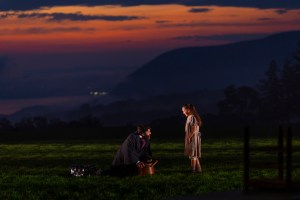
Latest Videos
Watch: Ellen Greene Reflects on the Enduring Legacy of Little Shop of Horrors
Frank Oz’s cult classic movie-musical has gotten a new 4K restoration in celebration of its 40th anniversary.