
Inside the Making of the Hadestown Pro-Shot With Eva Noblezada, Reeve Carney, André De Shields and Patrick Page
The cast of the acclaimed Broadway musical shares how they brought their performances to the big screen after thousands of times on stage.
 |
New York
|
|
New York
|
July 24, 2026
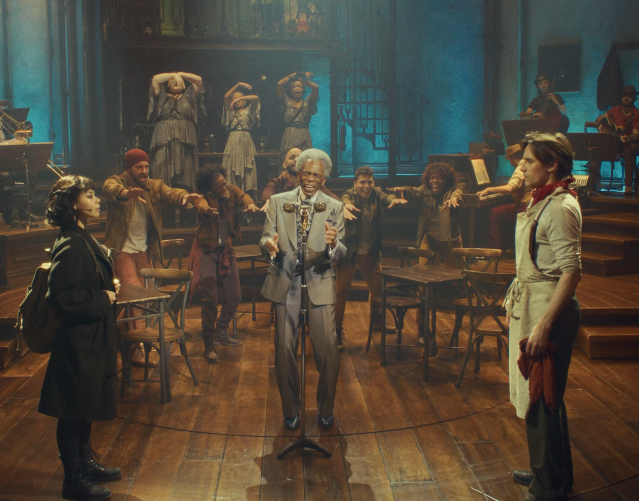
When Hadestown first arrived on Broadway in 2019, Anaïs Mitchell’s retelling of the Orpheus and Eurydice myth captivated audiences with its haunting, New Orleans-influenced score, and Rachel Chavkin’s mesmerizing staging. Now, that magic has been not just been preserved, but fully enhanced, by a new filmed capture of the Tony Award-winning musical, bringing the world of Hadestown to audiences beyond the Walter Kerr Theatre.
Directed for the screen by Brett Hampton with a cinematic approach that captures both the epic scale and intimate details of Chavkin’s staging, the film, shot last year at the Lyric Theatre in London’s West End, is led by original Broadway stars Eva Noblezada (Eurydice), Reeve Carney (Orpheus), Amber Gray (Persephone), André De Shields (Hermes), and Patrick Page (Hades), with their chemistry front and center in every frame.
In this conversation, Noblezada, Carney, De Shields, and Page reflect on the unusual experience of seeing themselves on screen, rediscovering their characters, and finding new ideas about a production they thought they already knew inside and out.
(© Bleecker Street and LD Entertainment)
These conversations have been condensed and edited for clarity.
What was it like to watch yourselves in the show?
Eva Noblezada: Weird. I don’t love watching myself in anything. We only filmed the show three times in its entirety, so we really had to be in it every time. Because of that, I felt like I was watching Eurydice. I’m proud of myself because it allowed me to watch the whole thing without any inner judgment.
Reeve Carney: It can be hard as actors to watch yourself. I never used to watch myself, and I learned something useful from an incredible actor named Timothy Dalton. I worked with him on Penny Dreadful, and I told him I didn’t like watching myself, and he was like “Oh, you must.” I didn’t know what he meant by that; like, do you think I need to fix something? But what he meant was that I shouldn’t get self-conscious. We all get like that. You can’t look for anything besides the truth, and that should be your focus. That makes it easier to watch yourself it that’s what you’re looking or, as opposed to “Why am I making that face?”
André De Shields: The Tribeca Film Festival was a truly arthouse experience in which the people in the live audience were very much like the people in the audience at the Lyric Theatre when we filmed it in London. They were participatory, sometimes singing parts of the song, sometimes talking back to the screen. And I was at sixes and nines with myself because it was the first time I had seen the film in its completeness. Then, two weeks passed, and we saw it again at the AMC on 42nd Street, with an audience that leaned forward and listened. And I thought “Oh, wow, this is a truer experience than the first time.”
Patrick Page: It’s always difficult to watch myself on film. We had seen a couple of edits at Rachel’s place beforehand, so when I eventually saw it in Tribeca, where your face is 30 feet high, I was prepared, and I was able to simply watch the film as an audience member. An amazing magic trick happened: I was transported into the story as if I didn’t know it and as if I hadn’t heard this music thousands of times. There was something about the way it was put together, the way it was shot and edited, the entire filmic experience turned it into something new that captured me and did that thing that theater is meant to do, which is enchant you so that you forget you’re sitting in a seat and you’re there with those characters. That miraculously happened to me.
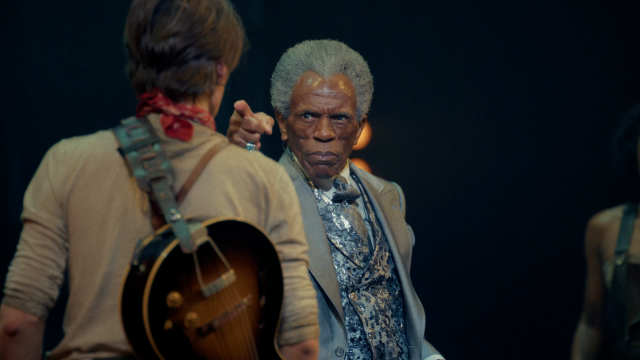
Reeve: This creative team so brilliantly focused the story in a way that, I think, can serve not as a guide, but as a useful companion piece to anyone who is looking to experience the show live again. They focus the story so beautifully and captured nuances that are sort of imperceptible from the audience that are now seen in the film.
(© Bleecker Street and LD Entertainment)
There are so many moments that could never exist from an audience member’s perspective, like going down in the elevator drum, which was so cool.
Eva: It was really informative for us. There were a lot of things I didn’t know Reeve or Amber or Andre or Patrick were doing, because I have specific things that I have to put my focus on, on stage. It’s nice to be like “Oh, that’s what Hades and Persephone are doing before she comes down for ‘Living it Up on Top.'” I wouldn’t need to see it for my own world as Eurydice, but it’s so cool.
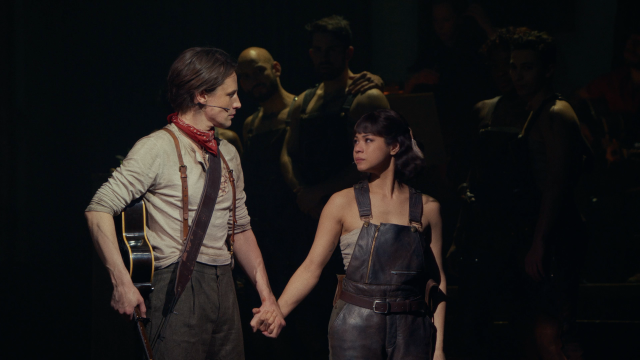
Reeve: We had four to six cameras filming at any given time, and those cameras were shifted to completely different parts of the theater for each of the three performances. We had one take of each thing you see, but it makes it feel like there are 30 cameras because they kept moving them.
(© Bleecker Street and LD Entertainment)
Had the show lived inside you, or did you really need to buckle down and reacquaint yourself?
Eva: For each person, it’s different. We’ve done the show thousands of times, so it’s in our bodies.
Patrick: I didn’t remember my performance, which was a good thing because I had to rethink every event. What’s going on here? What am I doing? What do I want?
André: We were told that we had two weeks of rehearsal to put this together and I said immediately, and quite truthfully, that I cannot do this in two weeks. When it was originally done at the National Theatre in 2018, I was 72 and in 2025, I was 79. So, I thought, “No, this isn’t going to work.” We have to fall in love with these characters again so that we can make it feel real when we speak the dialogue to one another. We made it happen, but it didn’t feel rushed. There was pressure, but it didn’t feel unfair. And there was brutality, because we were doing shows live in the evening and then coming back during the day to redo something that the directors felt they hadn’t captured the night before. But it was all about achieving a reality that would be believable on the silver screen.
Eva: The rehearsal process was important to remember things, but the show has evolved and changed so much. You start on mark two, and then by year two, you’re on mark four. You also meet the moment with how we were as actors in our bodies. I used to go and do this, but I don’t relate to that anymore, so I’m going to do something different.
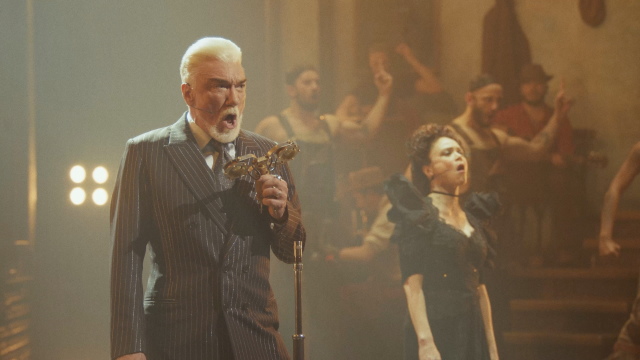
Patrick: When I look at Amber, she dictates the extent to which I may scold her or not scold her, seduce her, or not seduce her. She’s calibrating that, as Eurydice is in “Songbird” and so on. The most wonderful thing was for me to be back playing with them, which felt the way I think people do when they meet their best friend from high school after 40 years apart. There is a familiarity, and that was glorious.
(© Bleecker Street and LD Entertainment)




source on Google
Featured In This Story

Latest Reviews
See all


Latest Videos
Watch: Ellen Greene Reflects on the Enduring Legacy of Little Shop of Horrors
Frank Oz’s cult classic movie-musical has gotten a new 4K restoration in celebration of its 40th anniversary.