
Interview: Bubba Weiler and Jack Serio on Religion and Teen Actors in The Saviors
The playwright and director of Well, I’ll Let You Go discuss their latest collaboration, now making its world premiere with the Atlantic Theater Company.
 |
Off-Broadway
|
|
Off-Broadway
|
August 5, 2026
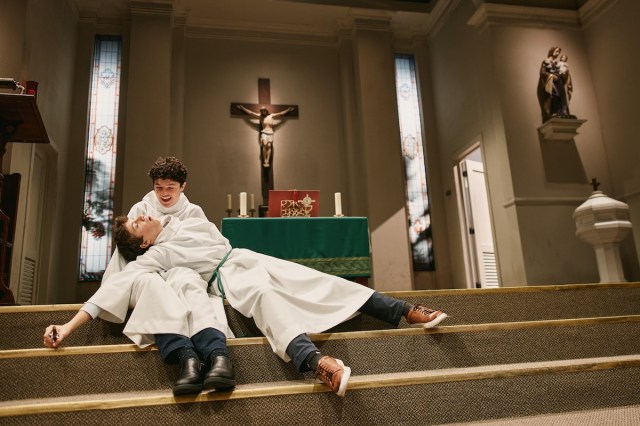
(© Emilio Madrid)
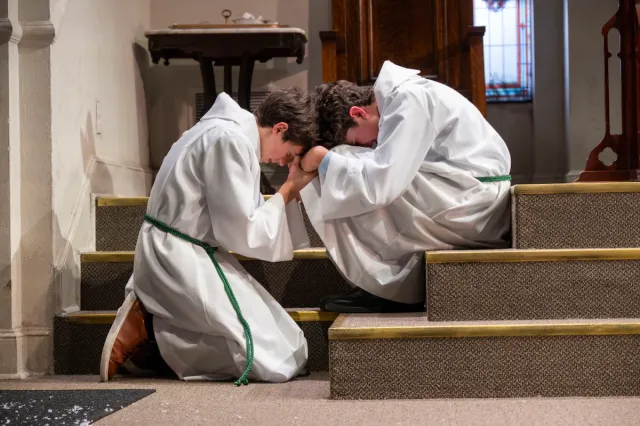
Though Bubba Weiler’s new play The Saviors is his sophomore production following his New York City playwriting debut, Well, I’ll Let You Go, Weiler actually conceived The Saviors first while an undergraduate at New York University. Given how much the narrative and characters of The Saviors—which chronicles the rift that develops between two Catholic altar boys, Michael (Ivan Howe) and Paul (Julius Rinzel)—reflect his own religious upbringing, it makes sense that this would be the first play to flow from his pen. Regardless of which came first, The Saviors fully confirms the promise of Well, I’ll Let You Go. It’s a sensitive and deeply moving work that exposes the limits of organized religion while refusing to fall into outright derision.
The Saviors is also the first script he sent to the equally talented up-and-coming director Jack Serio, whom he met at NYU and who directed the world premieres of both plays. It’s a creative partnership that has brought forth two artistic triumphs so far. Both Weiler and Serio sat down with TheaterMania to talk not only about The Saviors, but about religion in general and their adamant belief that they needed authentic teenage performers to play the two lead roles.
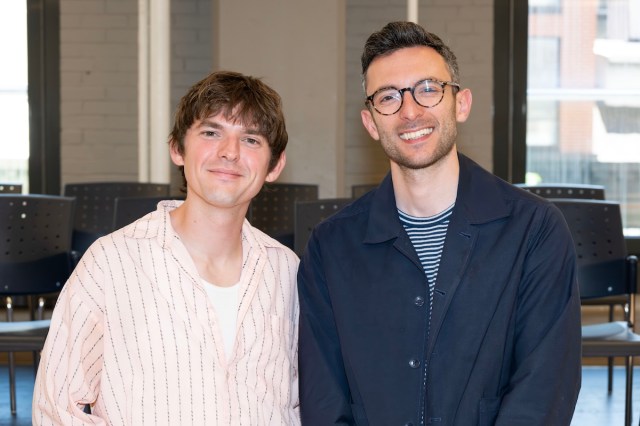
(©Ahron R. Foster)
This conversation has been condensed and edited for clarity.
Bubba, is The Saviors based on your own experiences as a Catholic teenager?
Bubba Weiler: Yeah. I went to Catholic school from 5 years old until I graduated from an all-boys Catholic military high school. Much like Well, I’ll Let You Go, I’m writing about the place where I grew up, and the people I grew up with, but there’s no one-to-one for any person. It doesn’t feel like autobiography to me or biography of anybody else. But all the details are real.
Did you also, as with Paul in the play, have a crisis of faith at around that time?
Bubba: When I was 13, I was sure I would grow up to be a professional tennis player. I was traveling the nation playing tournaments, and I was nationally ranked. But a tennis ball hit me in the right eye during practice one day, blinding me. I had to take time off from tennis and lost all my rankings. And within the heartbreak, everyone pushed me to faith. I leaned into that and found theater, and it was very comforting to feel that something was controlling my life in that moment of pain. I was also realizing that I was gay and not welcome in that community. To both hold onto that thing so strongly and feel unwelcome in it created a huge amount of anxiety within me. And then, deeper into high school, I was like, “You know what? I don’t know that this is something I believe in at all.”
Do you still consider yourself Catholic?
Bubba: I don’t go to church. And I have a lot of problems with organized religion. But my brother’s a theologian, and we think very similarly. At the end of the day, he’s probably more of a Buddhist than anything else. But when you ask him what he is, he’s like, “I’m Catholic because we were raised Catholic, and so are you, because it’s our way into understanding morality and how to treat each other and the idea of God in the first place.” Even now, sometimes I find myself having an impulse to think about God or to go to God when I get scared.
I think it’s really easy to take down faith, especially presenting something in New York City where I know most of the audience will agree with me. The harder thing is to recognize that some people find real help and grace in it. I’d say I’m an agnostic, but God is real because he’s real to other people. It’s a force in our lives that we have to contend with, because so many people are devoted to it.
(© Ahron R. Foster)
Jack, have you directed child actors before?
Jack Serio: Not since I myself was a teenager with the company I ran in Boston.
Was the decision to cast actual teens in the two lead roles a mutual one?
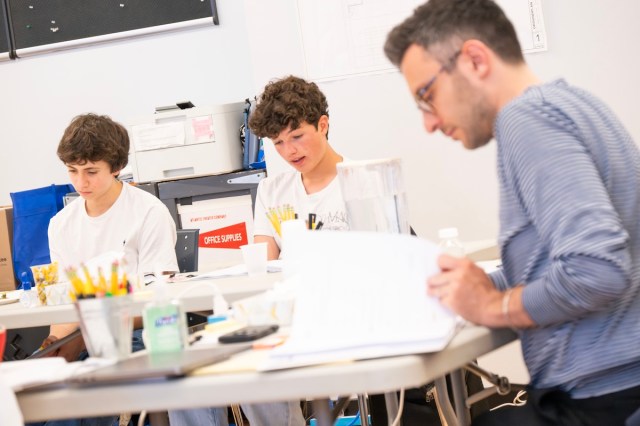
Jack: I’m certain Bubba mentioned it when we first talked about the play, but had he not, I would’ve suggested it. I don’t know that the play works on the same level if we feel safety or maturity inside the performer. I have seen this kind of play before, but I’ve never seen it with two kids. And Bubba and I both had experiences working semi-professionally as teenagers ourselves, and always had confidence that we could find real kids to pull this off.
Did you feel like you had to significantly change your approach to directing Ivan Howe and Julius Rinzel for this production?
Jack: Yes and no. The Atlantic kindly gave us a week-long workshop of the play in January, which Ivan was a part of. I remember Bubba saying kind of jokingly after that workshop that we should develop all of our plays with kids because in that process, they’re unafraid to ask blunt questions that forced Bubba and me to explain parts of the play that aren’t as obvious as we assumed. But I was ultimately surprised at how little I had to change about my work with these two.
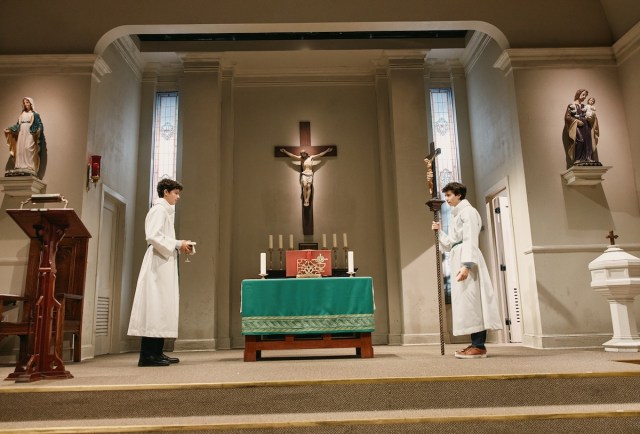
(© Emilio Madrid)
This year, I’ve seen a lot of other plays, like Dad Don’t Read This and Indian Princesses, featuring adults playing children. Do either of you have thoughts in general about age authenticity versus adults playing children?
Bubba: I think there are a lot of successful examples of [the latter]. The Wolves was really successful, and those actors are much older than their characters.
Jack: I think Dance Nation is another example. I do wonder if we’ve begun to use casting people in their early 20s as a crutch. It’s become a given that if you’re telling a story about people of this age, you’ll cast people just out of college. In Dance Nation, you had people who were 20 but also in their 70s or 80s [playing teens]. Form and content were in conversation with each other, and I don’t know that that’s always the case.
Bubba: I personally have an aversion to the squirminess that adults play when they’re playing children. I sometimes find it unspecific and also a little…
Jack: Pandering.
Bubba: Yeah, exactly.
Jack: The other thing is, I don’t know that I’ve seen many plays, if any at all, with young actors or with older actors about the queer male teenage experience. And I feel like that’s our offering into the canon of plays about early teenage years in middle school and young adulthood. The intersection of that queerness with faith felt like a gap, and therefore one that we felt some responsibility about telling in as true a manner as possible.




source on Google
Featured In This Story
Latest Reviews
See all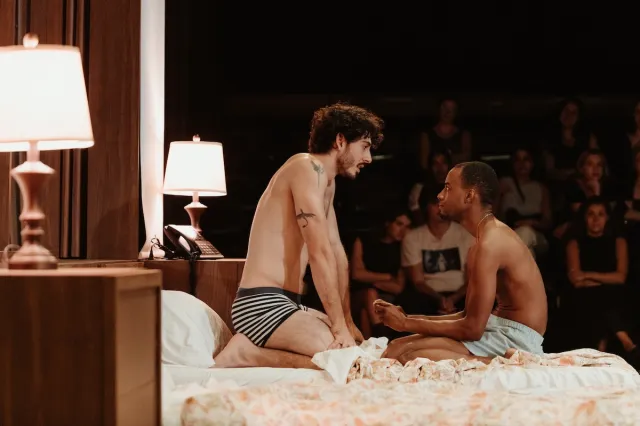
Latest Videos
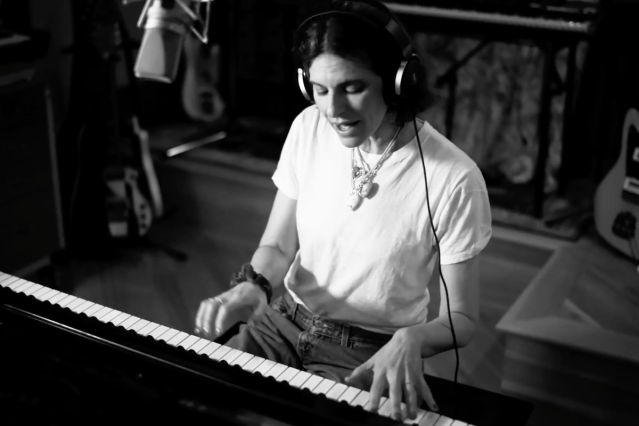
Watch Lindsey Kraft, Featuring Ben Folds, Sing "Beautiful Pain" From the Musical We've Been Here Before
We’ve Been Here Before starts performances on August 4 at SoHo Playhouse.