
Review: As a Thiller, Gordon Greenberg’s Rope Isn’t All That Taut
The New Group’s revisal pays tribute to Hitchcock but loses its grip on suspense.
 |
Off-Broadway
|
November 3, 2026
(© Monique Carboni)
Alfred Hitchcock’s 1948 film Rope is not usually ranked among his very best, but it has remained enough of a favorite to spawn a sassy riff on its murderous plot. Patrick Hamilton’s 1929 play, the rarely revived museum piece on which the movie was based, hasn’t aged nearly as well.
But Hamilton’s play is not what you’ll find at the Theater at St. Clement’s. The New Group has mounted a fresh version of Rope, written by Gordon Greenberg and directed by Scott Elliott, that differs significantly from the original and the film but makes use of both.
It’s still the story of two insidiously bored rich dudes who attempt to pull off the perfect murder, but rather than being a suspenseful thriller like its predecessors, Greenberg’s Rope is an often-clumsy character study of suppressed Jewish identity and homosexual shame. In our age of identity politics, the idea of two sociopathic elites murdering just for fun no longer passes muster.
(© Monique Carboni)
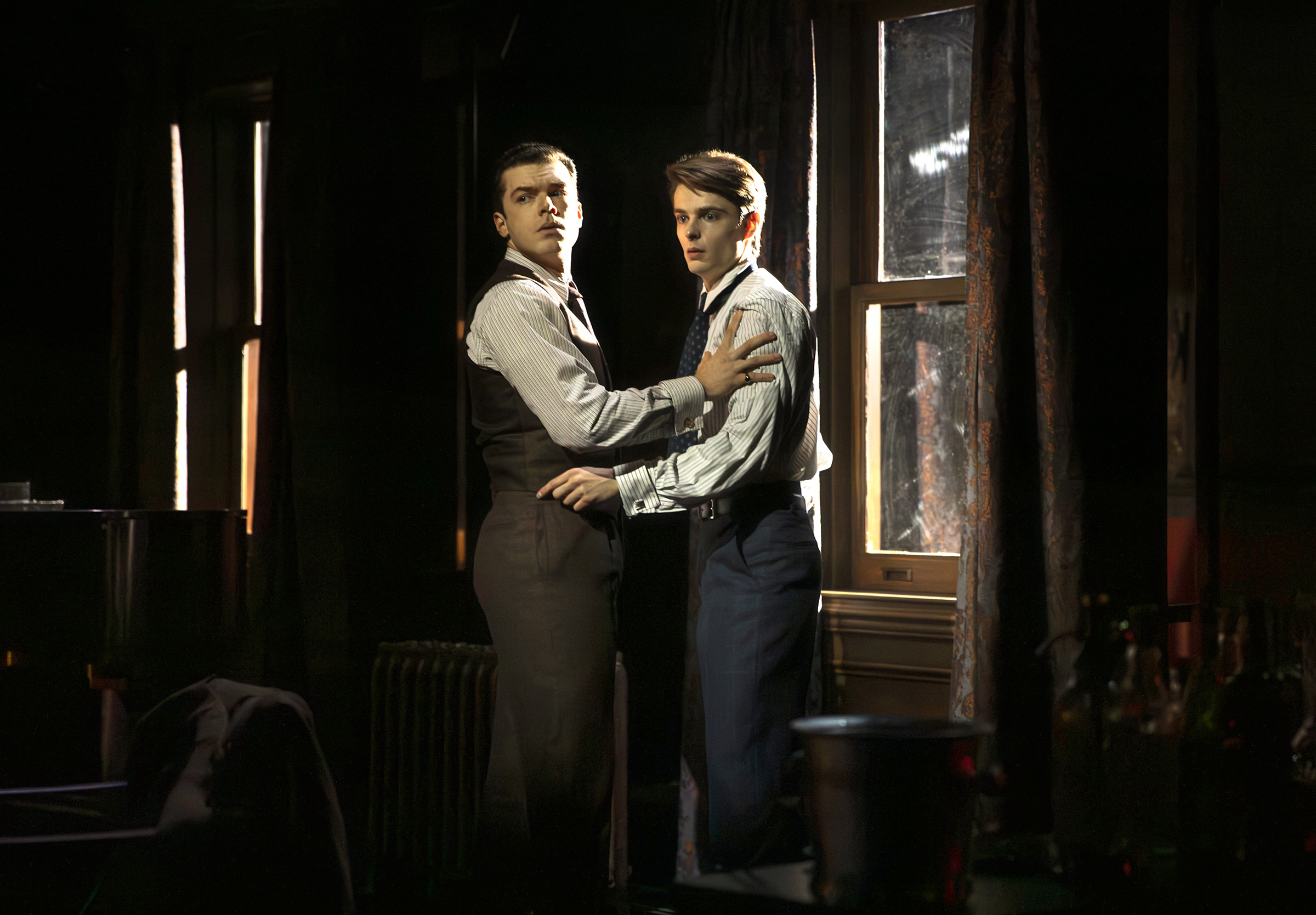
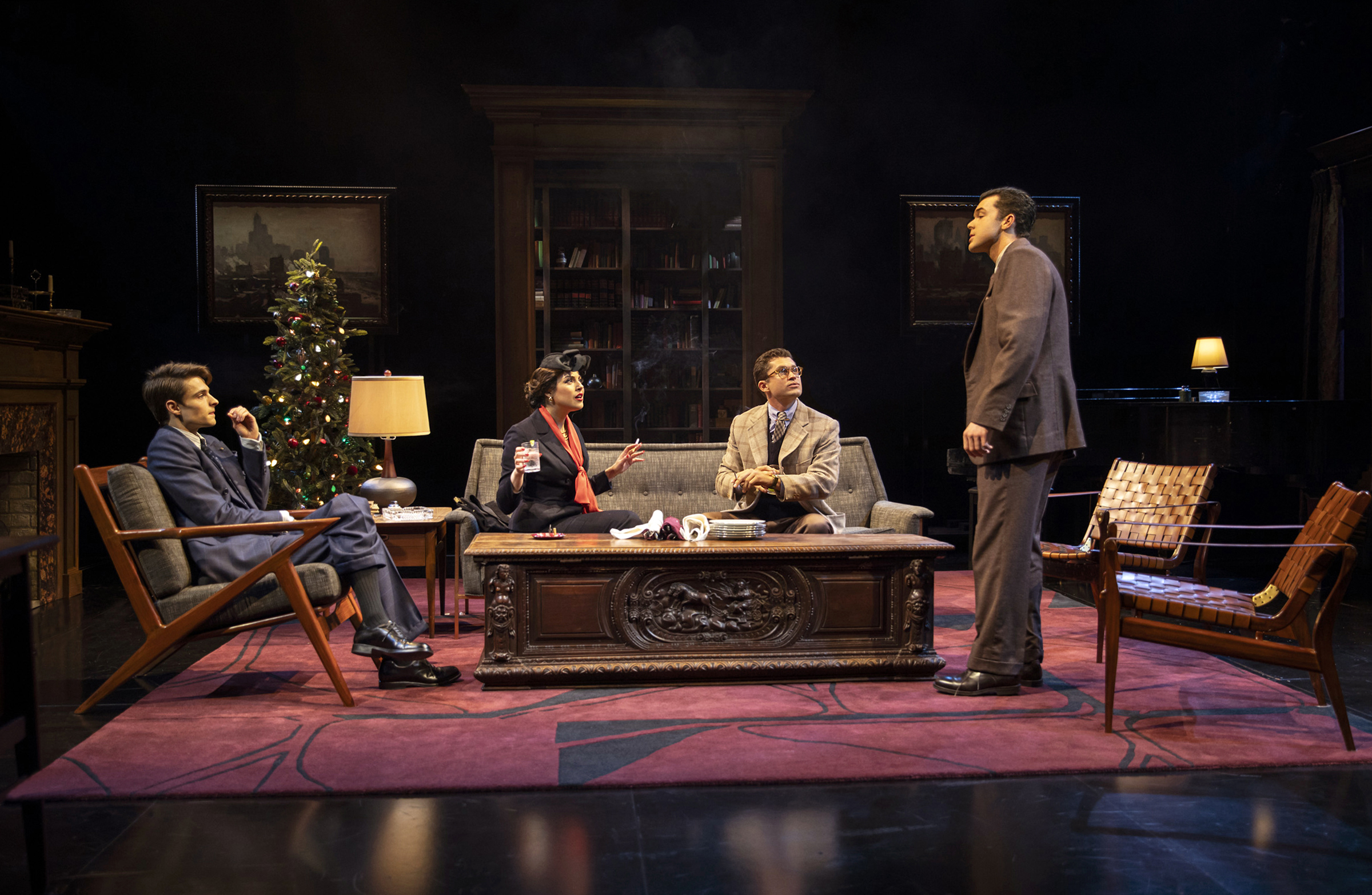
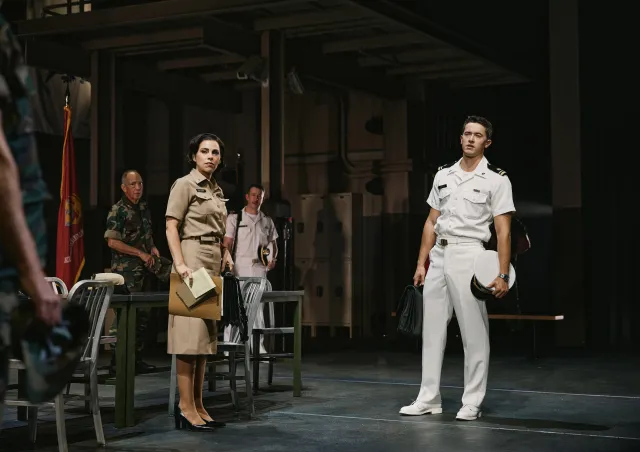
The story involves Princeton University students Garrett (Cameron Monaghan) and Nate (Corey Fogelmanis), lovers who have killed their fellow classmate Ronald and put his body in a chest upon which they’re about to serve dinner in their posh New York flat. It’s just after Christmas in 1957 as they prepare for the party (Garrett choses the theme from Psycho for their background music), but with the holidays over, none of the guests are sure what the party is for. Among them are wealthy dimwit Richard (Graham Phillips) who falls in love too easily with quick-witted socialite Leila (Elizabeth Gillies). Ronald’s father, Judge Kentley (James Waterston), shows up, too, perplexed by his son tardiness as he eats a sandwich off the chest.
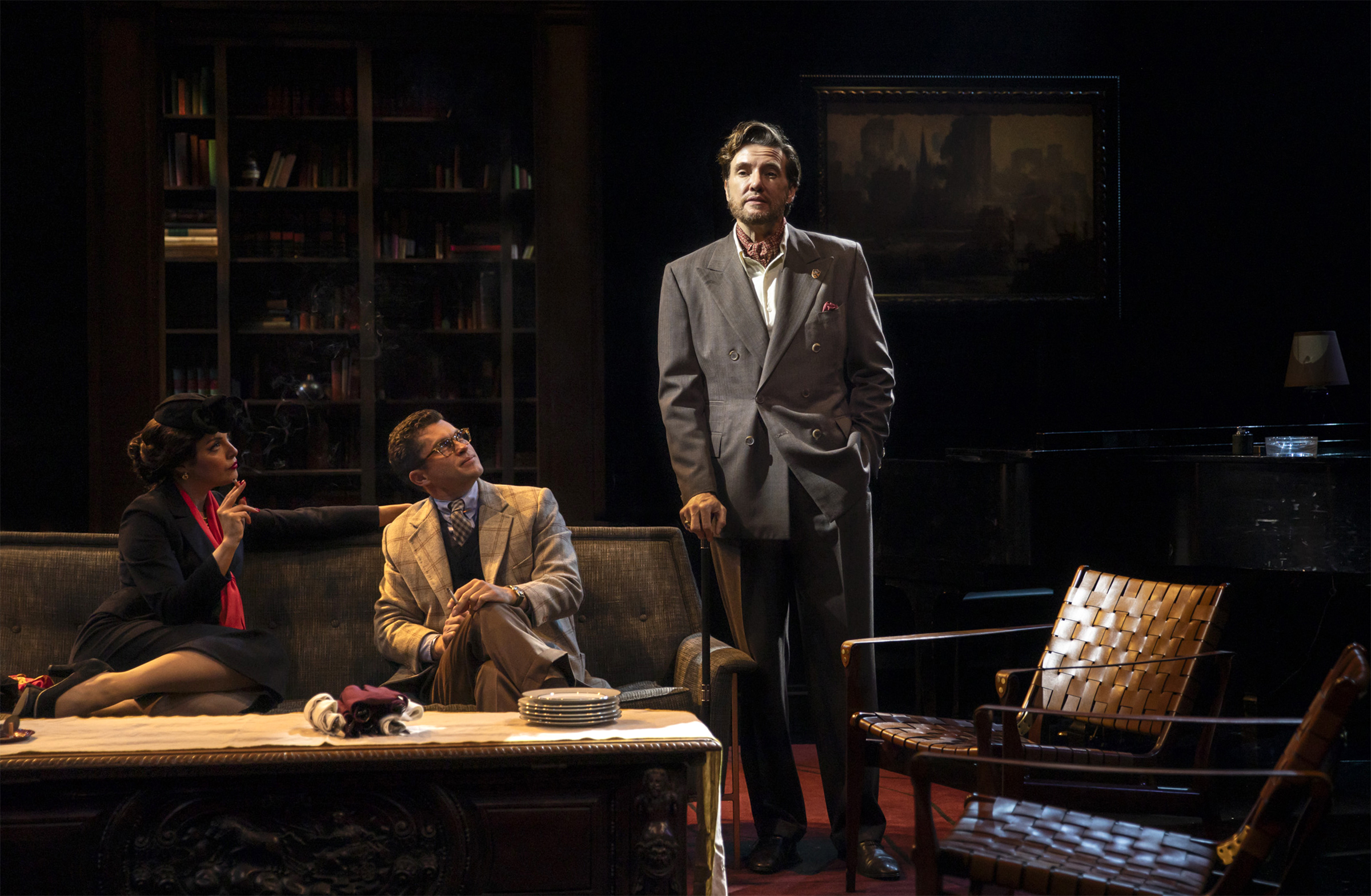
Then there’s Garrett’s former professor and current side piece, Rupert (Jason Butler Harner), who once had a penchant for Nietzsche and filled Garrett’s head with ideas like, “Power belongs to the person least afraid of consequences” and “Superiority is a choice.” Rupert knows that something is up with these two, and his suspicions gradually turn the dinner party into a game of cat and mouse. But who ends up caught?
By the end, you may not care. Hamilton was inspired by the true crime story of Nathan Leopold and Richard Loeb, a pair of gay, Jewish, Nietzsche-obsessed teens who killed a 14-year-old boy. Greenberg’s killers are also Jewish and gay, and they express their sexual relationship in ways that Hamilton and film screenwriter Arthur Laurents could never have gotten past the censors.
(© Monique Carboni)
The frank talk about gay sex might have added a provocative dimension to the story, but Greenberg gets his plot so tangled up in love triangles and motives of power and shame that any danger of Ronald’s body being discovered seems like an afterthought. Even worse are the frequent fourth wall breaks and lengthy flashbacks that delve into the queer drama bubbling beneath it all. Greenberg falls off that slippery playwriting cliff of explaining too much. So long, suspense.
On the other hand, his dialogue does crackle. Gillies is especially good at delivering a shady bon mot, and she gives a lovely performance of Patti Page’s “Old Cape Cod.” Phillips gets laughs as the not too bright rich kid who never feels quite at home with all these smart people but knows his bank account will always be OK. Waterston feels sadly underutilized as the Judge, but Fogelmanis is terrific as the accomplice who buckles under pressure. Shameless star Monaghan proves his stage mettle with a chilling turn as the mastermind behind the murder, and Harner also creates suspenseful moments with suspicious side-eyes.
Everyone looks 1950s elegant in Catherine Zuber’s spiffy period costumes. Derek McLane’s well-appointed set allows for characters to disappear into an unseen dining room while the murderers conspire. Leah Gelpe’s sound design makes us leap from our seats with claps of thunder presumably meant to create the dark and stormy night for the anticlimactic, borderline-absurd final scene, which Jeff Croiter swaths in shadow.
In the end, Greenberg deserves credit for trying to unearth the subtexts buried in previous versions, but without real dramatic tension to hold it all together, this Rope goes slack.




source on Google
Featured In This Story
Latest Reviews
See all




Latest Videos
Watch: Lisa Rinna, Harry Hamlin, Megan Hilty and More Discuss It's a Wonderful Life on Broadway
Andrew Rannells, Tituss Burgess, playwright Joe Landry, and director Jerry Zaks join the conversation about the Broadway premiere of this live radio play.