
Lighting Designer Jen Schriever Builds a World of Shadow, Scale, and Controlled Revelation in The Lost Boys
Schriever received a Tony nomination for her work on the new musical.
 |
Broadway
|
|
Broadway
|
May 15, 2026
Jen Schriever’s Broadway resume is extensive. As an assistant or associate lighting designer on everything from the Christina Applegate-led Sweet Charity revival to A Raisin in the Sun with Denzel Washington, she took the title in full in 2016, with Danai Gurira’s play Eclipsed.
Quickly, Schriever has become prolific, earning Tony nominations for lighting A Strange Loop and the Wendell Pierce Death of a Salesman, and another this season for The Lost Boys (she has already won this year’s Outer Critics Circle Award, sharing it with her codesigner, Michael Arden).
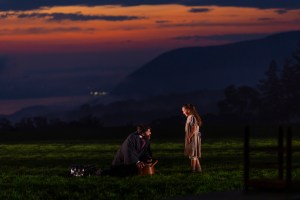
The Lost Boys is a production where light doesn’t just illuminate the story, but actively withholds it and reshapes it. The design that moves fluidly between intimacy and scale, often lingering on a face in near-total darkness, then suddenly opening into a vast, operatic sweep of space. For the artist behind the work, it’s just another way of telling a story.
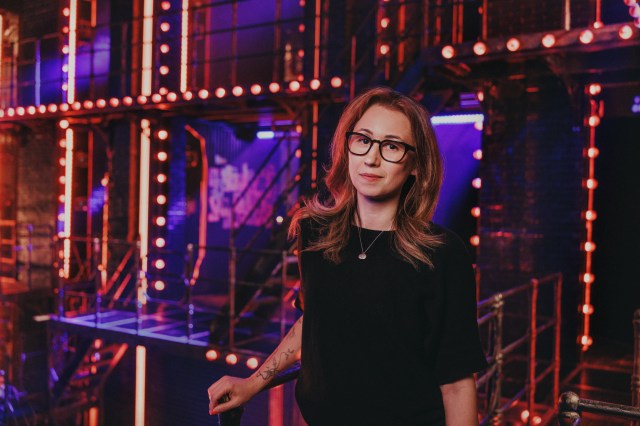
(© Matthew Murphy)
This conversation has been condensed and edited for clarity.
How did you find your way into lighting design?
In high school I was searching for my place to be and found the theater. I knew there was no world in which I’d be on stage so I learned about lighting design through a lighting person named Jared Saltzman. He was a self-taught artist, a local stagehand who happened to have a side gig doing lighting design in high schools and the community college. He just recently passed away, but he was a major force. I ended up at Purchase College. Brian MacDevitt was teaching there and his work was blowing up all over the city. I was like, I wanna learn from that guy.
How you actually begin a project like The Lost Boys? What does the process look like?
It begins with a script and demo tracks, the cast singing the songs in some studio somewhere. When I was brought on there was a series of script workshops and movement workshops, so I quickly could hear it in real life with actors in a studio alongside conversations about the general arc of the story, how the director and the writers are talking about the play. The adjectives they’re using literally become the light plot. That’s telling me exactly where the lights need to be or how they need to be. The main thing we had to do, because the set is so massive, was claim space. I had to claim where the lights could even go. The Emerson house that flies in, that whole platform, that’s all the overhead space. It’s a very untraditional staging setup. So the first part of the process practically was claiming space so that there were actual places to stash all of these lights.
I was struck by how much the lighting was doing, in terms of setting mood, concealing and revealing parts of the set, focusing our perspectives, and at one point just holding on the character Michael’s face.
It’s the genre. When you’re having a scary night or you hear a sound in the night, the darkness conceals and convinces you something’s there that isn’t there, or hides something that maybe is there, and the relief you feel in the morning when the sun rises and you realize you’re having a bad dream. With our design and the story we’re telling, it was really important to me to hold back lighting the set as long as possible and keep the mystery of what this whole space looks like revealed, because that is also a part of our discovery of Santa Carla alongside Michael. We don’t really reveal the whole space until Michael does, at the midway. I knew right away we had to figure out how to keep it mysterious as long as possible and stay with them, like you said, tight to their face sometimes. Michael is a lost boy trying to find his way.
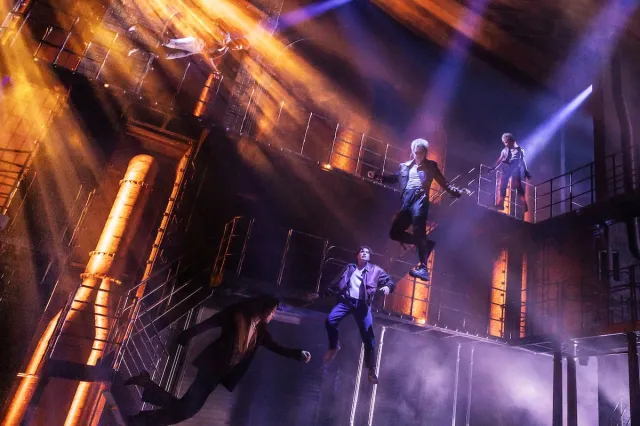
(© Matthew Murphy)
There’s an almost operatic scale to The Lost Boys that is rarely seen on Broadway.
Lost Boys is actually really operatic in a way. The fun thing about opera is, you don’t really need to see anybody’s face. It’s just about the music, so you can do these huge wild gestures. As long as the bodies are on stage, you can wrap them in light in all sorts of strange ways, which is a fun sort of freedom. Similar to vampires actually, you can envelop them in the darkness and you know, you’re not mad about it.
Did you try anything technically new on this show?
There’s some technology I’m using in a way that people have used it before, but new to me, that allows us to more skillfully track the performers or scenery in a way that takes so much programming time. People keep saying, “You had such a long time to tech the show,” but we used every second. This is a huge show. I’m proud of the way we used the technical stuff artistically. I think we held restraint when we needed to and deployed the tools in the most useful way and not overdone, in terms of the lighting technology. Markus Maurette helped do the special effects design and that goes hand in hand with lighting. I generally filled the room with haze and he did the more specific things. That was also a challenge because with white smoke, it might as well be a white shirt. It can reveal something we don’t want it to.
Were there safety challenges too, given how much is happening in the dark?
So many challenges. Lighting plays a lot in helping with the safety aspect of all of these tricks because not only are people moving around in the dark to get to where they need to be, offstage has to be a really controlled lighting environment because the set is really porous. There’s a lot of action happening behind it that we’re trying to hide. But also things like performers in harnesses getting onto their lines in ways we don’t want people to see them yet, but they have to be lit in order to be safe, so people can watch them ascend and descend in the offstage space. There are a million lights that Aaron Tacy, the associate lighting designer, managed to place everywhere and are perfectly cued in our whole cue stack to only turn on at the exact right brightness and turn off. I would like a documentary about the backstage life!
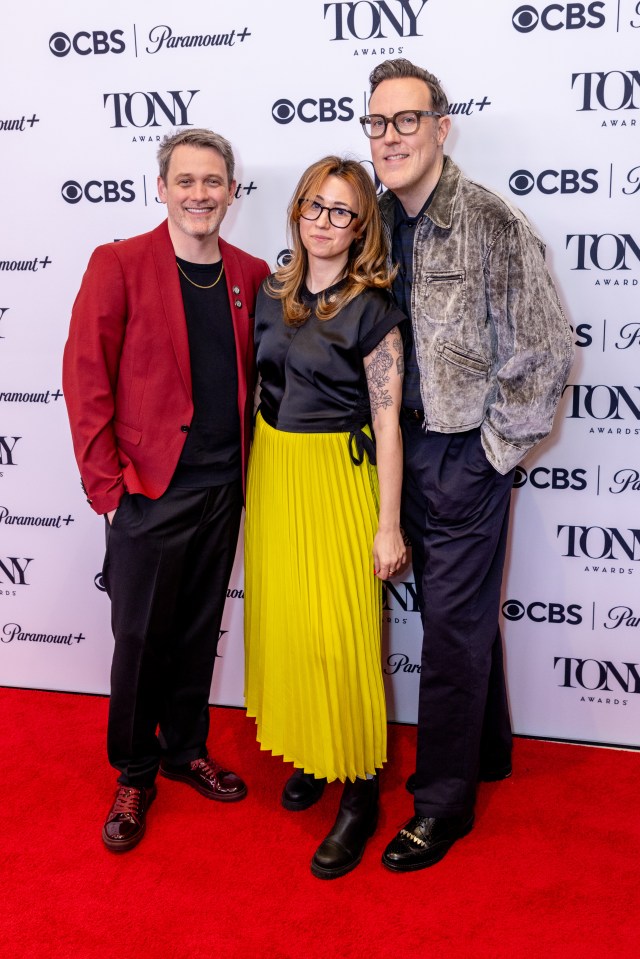
(© Tricia Baron)




source on Google
Featured In This Story
Latest Reviews
See all

Latest Videos
Jocelyn Bioh, Whitney White, Jasmine Amy Rogers, and Patina Miller Talk School Girls
The playwright, director, and stars of School Girls; Or, the African Mean Girls Play discuss the comedy, sisterhood, and themes behind the new Broadway production.