
Interview: Yeller Tooth Finds the Music in Waiting for Lefty
Musician-actors Cameron Scoggins and Sahar Milani discuss the concept behind their arrangements for Classic Stage Company’s Clifford Odets revival.
 |
Off-Broadway
|
November 18, 2026
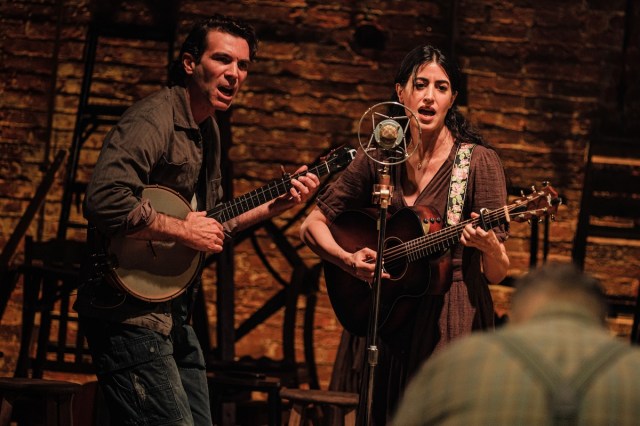
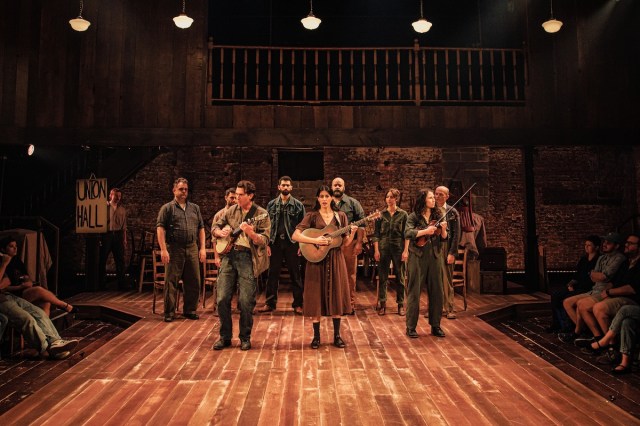
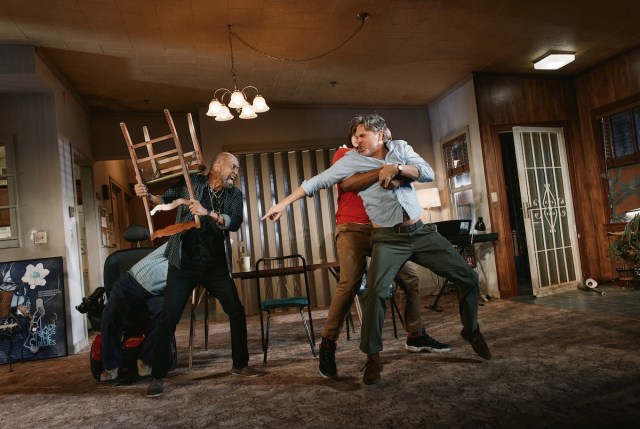
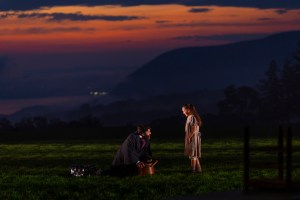
Married performers Cameron Scoggins and Sahar Milani are pulling triple duty in Steven Pasquale’s revival of the Clifford Odets drama Waiting for Lefty at Classic Stage Company. In addition to playing misbegotten lovers Sid and Florrie in Odets’s famously brief piece of 1930s agitprop, Scoggins and Milani, under the moniker of their band Yeller Tooth, perform period standards that they’ve arranged for banjo and guitar (among other instruments).
The challenge, they tell us, is balancing the play’s Depression-era roots and making the added songs feel fresh, all while navigating their roles. In the following conversation, Scoggins and Milani discuss how Yeller Tooth came to the production, the musical discoveries they’ve made, and how they collaborate as both artistic partners and spouses.
(© Marc J. Franklin)
What was your familiarity with Waiting for Lefty when Steven Pasquale first approached you about the project? Could you immediately see where music might fit into the play?
Cameron Scoggins: I had read Odets in college and seen some scenes from different plays. Immediately, when I went back to read this play again, I remembered the beautiful density of the language. It’s hard to describe but actors will recognize it when they see a text that has zip and room for nuance, where people speak in idioms that are colloquial while simultaneously being electrically theatrical. The play has an interesting format, and we thought Steve’s vision of adding music throughout, that provides context and galvanizes, was brilliant.
Sahar Milani: I read Harold Clurman’s The Fervent Years freshman year of college and was so taken with Odets and the Group Theater, as one is wont to be freshman year of college. I was already a huge Elia Kazan fan at the time, and I wanted so much to exist in that world. I still have my old copy of Lefty from back then. It’s notorious for being a play most actors have performed scenes from in class, but rarely do you see it actually produced on its own or even at all, given its length. When Steve called us to propose this version of Lefty he’d envisioned, we were over the moon. His idea to add music to expand the evening was so genius and made perfect sense to us.
What were your goals for the original music and underscoring that permeate the production? How much of that material emerged organically in the rehearsal room, in collaboration with Steve and the rest of the creative team?
Cameron: Our goals were to support the context, energy, and movement of what’s occurring onstage with the story of Lefty. Steve shared his vision for what he wanted the orchestrations to evoke. Sahar wrote out some beautiful drone/violin ideas and then I came up with some banjo motifs that could be used to make up smaller melodies. Then a lot of experimentation happened in the room once the movement pieces started to take shape. We could then take all our motifs and segments and begin to weave them together and riff off that.
Sahar: It was really a devised process in the rehearsal room. We came into the rehearsal space not knowing what the movement or the underscoring would be, and we all sort of felt around in the darkness for it together. I was already such a fan of [choreographer] Suzie Misner’s work before we met. She’s so gifted in articulating her process in a way that makes sense to actors, and we were playing around with different musical motifs live in the room and sort of layering and un-layering them as Suzie and Steve and the company worked out the movement. It was an entirely organic, collaborative process.
(© Marc J. Franklin)
Did you and Steve put together a list of possibilities for songs, or did he bring you a list and ask you to identify the most compelling choices?
Cameron: Steve had already done great dramaturgical work on choosing songs he thought would fit. He had a list when he approached us about the project. We were also familiar with a lot of these tunes. There were conversations had and some songs that were cut or added over the course of a couple workshops, but Steve came to us and asked us to arrange these songs for our band and for a cast of actors.
Sahar: Cam and I always start by just picking up our instruments and starting to play and seeing what shakes out. It’s as simple as that. Steve had put together a list of songs that made so much sense. Some of the lines in the songs so closely mirror the scenes they come before or after. Remaining authentic to ourselves and respectful of the fact that this music was written as a tool and not entertainment was important to us. These lyrics and melodies have been carried over time by the nameless and numberless, and we always centered that connection to its function first.
Talk about arranging a song as well-known as “Brother, Can You Spare a Dime?” The arrangement feels familiar, but also fresh and unexpected. How did you approach reimagining a song that audiences already know so well, and how does it fit within your personal styles as Yeller Tooth?
Sahar: We knew we wanted it to be punchy and percussive. Greg [Hildreth] and Austin [Durant] are performing the hell out of it, so I think that is also what feels fresh and unexpected.
Cameron: We knew it would be just one guitar in support of the cast, and wanted to find ways to provide rhythm and melody to a group of singers. I knew I wanted it to feel janky too, like it could break down at any moment, or pop a string. We were heavily inspired by Mandy Patinkin’s version from a late-night show performance.
What proved more challenging for the two of you: finding your way into the musical elements of the production or finding your way into the characters of Sid and Florrie?
Cameron: For me, the challenge at first was stepping in between the two, actor and musician. Both were challenging in their own ways but always fun to do once I was in that section of the play. Now it feels more like one hat that I wear instead of multiple. The energy of playing music feeds our acting, and vice versa. And it doesn’t hurt that my wife is my scene partner. It’s been a heavily rewarding journey to be on.
Sahar: This is music that would have been performed in a union hall, and its function in this context is the same. When we’re performing these pieces, I think of the women who have sung these very words over the generations, and sometimes I see them singing back to me from the audience. To see folks recognize and engage with this material with us is really special.
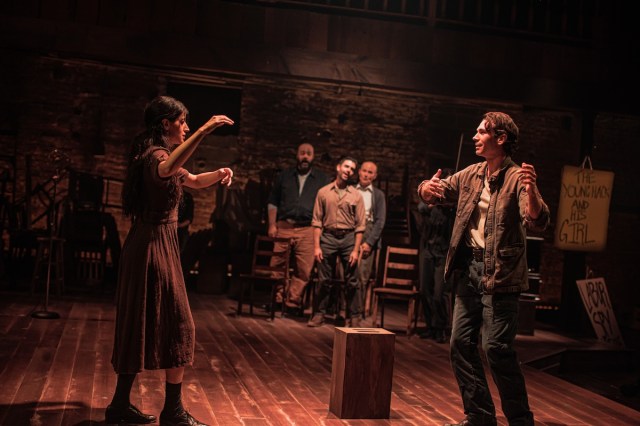
The Sid and Florrie scene is every actor’s dream, and the fact that I get to perform it with my husband every night is a true gift that is not lost on me. It’s probably the most laborious part of the play for me, and also the most rewarding. I love acting with him.
(© Marc J. Franklin)




source on Google
Featured In This Story

Latest Reviews
See all

Latest Videos
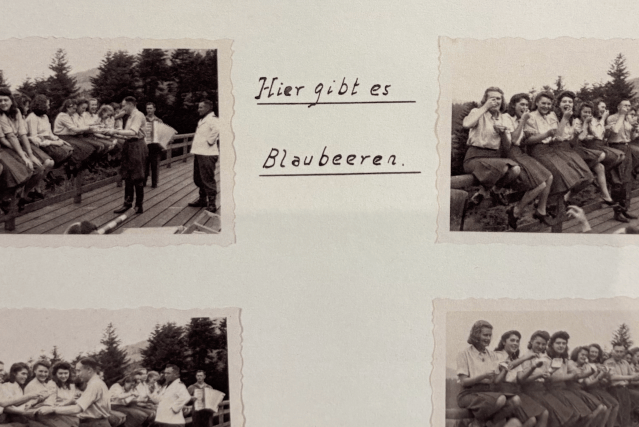
Find Out the Real Story Behind Broadway's Here There Are Blueberries
Moisés Kaufman and Amanda Gronich discuss the new drama along with their cast.