
Review: Passing Strange Finally Makes Its LA Debut at the Pasadena Playhouse
Britton Smith and Saycon Sengbloh shine in a fresh, soulful staging nearly 20 years on.
 |
Los Angeles
|
November 16, 2026
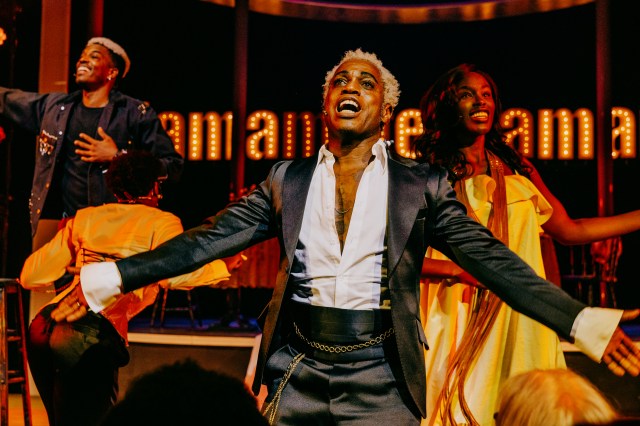
(© Jeff Lorch)
It’s odd that Passing Strange—winner of a Tony for Best Book of a Musical in 2008 and later a PBS Great Performances film directed by Spike Lee—has not crossed the country to Los Angeles until now. Composer Stew co-wrote the music with Heidi Rodewald and co-developed the show with Annie Dorsen, and it still feels fresh at the Pasadena Playhouse almost 20 years later.
The show’s protagonist, Youth (Britton Smith), is seeking his purpose. His single mom (Saycon Sengbloh) smothers him, and he gets involved with the church choir, mostly so he can smoke pot with the choir director (Devere Rogers). He does find his groove in music and leaves home alone to bum around Europe, writing and soaking up bohemian Amsterdam and volatile Berlin in the late 1970s. Youth observes a lot, but he doesn’t seem to learn, to the dismay of the omniscient narrator (Ty Taylor).
Stew came from the indie-rock world with the 1990s band the Negro Problem, where he had partnered with Rodewald. Here they reimagine the rules of theater to form an avant-garde mixture of rock ’n’ roll, punk, jazz, soul, and comedy numbers. There are confrontational songs (“Come Down Now”), longing songs (“Love Like That”), and biting numbers (“The Black One”). But because the actual songs are interspersed with dialogue and some are just repeated words, the score has the explosive feel of a poetry jam.
Stew’s book is not afraid to have an immature main character who spends most of the play on an egocentric journey. All of Youth’s choices are based on impatience and ego, but the character is written compellingly so the audience follows him even if they wish he had made more informed decisions. In the score, Stew is also unafraid to let the voices be dissonant with the band’s music. It all adds to the newness of it all.
We follow Youth on this journey from his early years as an obstinate young man rejecting his mother’s plans for him, and his experiments in the worlds of punk rock, drugs, and sex. As the narrator, Taylor pierces the air in “Love Like That” as he watches Youth makes the mistakes that will allow him to grow into a man.
We don’t get to see Mother as much as we’d like to, but Sengbloh brings such love and warmth to her role that our heart breaks for her loneliness. Her torch numbers, especially the touching “Mom Song; Philistines” and the forgiving “Cue Music (Is It Alright?),” are devastatingly beautiful.
Tanerélle and Brittany Campbell are wonderful as the women who bring romance and a test of his artistic integrity to Youth’s journey, while Johnny Laveie is hilarious as various members of Youth’s world. Rogers is exquisite in several memorable roles, particularly the closeted Reverend’s son who opens Youth’s world, and an avant-garde club kid stoking the revolution in his Berlin cabaret show.
Zhailon Levingston soulfully directs this intimate production with music director Greg Nabours leading his band while stepping in to play goofy characters occasionally. Devario Simmons stylish costumes feature a billowing sleeveless caftan with a macramé sautoir worn by Tanerélle in the Amsterdam sequence. Jared Sayeg’s lighting design is dynamic, and Lawrence Moten manages to create complete worlds on his minimalistic sets.
With this production, Pasadena Playhouse continues its commitment to staging important musicals rarely done in LA. Brigadoon, Jelly’s Last Jam, and A Little Night Music were all gems. Passing Strange can be added to the list of experiences that LA theatergoers have needed to feed their souls.
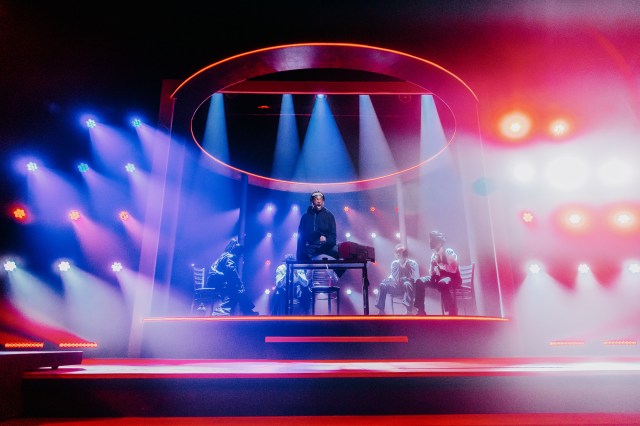
(© Jeff Lorch)




source on Google
Featured In This Story
Latest Reviews
See all



Latest Videos
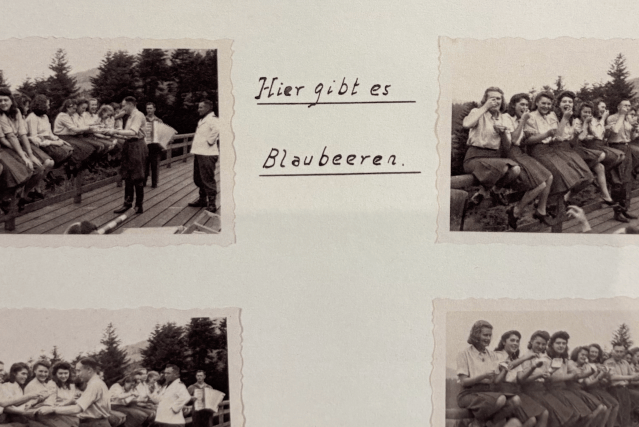
Find Out the Real Story Behind Broadway's Here There Are Blueberries
Moisés Kaufman and Amanda Gronich discuss the new drama along with their cast.