
Review: The Fantasticks Is a Gay Old Time on Broadway—but Not Gay Enough
Tom Jones and Harvey Schmidt’s long-running musical returns to New York City.
 |
Broadway
|
November 16, 2026
(© Joan Marcus)
It’s unusual, given the New York theatrical ecosystem, that the longest-running musical in history spent four decades eschewing the bright lights of Midtown in favor of a hole-in-the-wall in the West Village. Tom Jones and Harvey Schmidt’s The Fantasticks, with its confetti, harp, and cardboard moon, became a rite of passage over its 42 years at the Sullivan Street Playhouse, but the closest it ever got to the main stem is the (formerly Snapple) Theatre Center, where it was revived just four years after it closed.
It begs the question, can a show as modest and of its time as The Fantasticks retain its purity alongside the likes of Wicked, Hamilton, and Dolly: A True Musical Story? The answer is a resounding yes in the hands of director Christopher Gattelli and an all-around heavenly cast. This production for Second Stage at the Helen Hayes Theater is loving and uncynical, a sweet little gem that doesn’t try to be something it’s not by virtue of location.
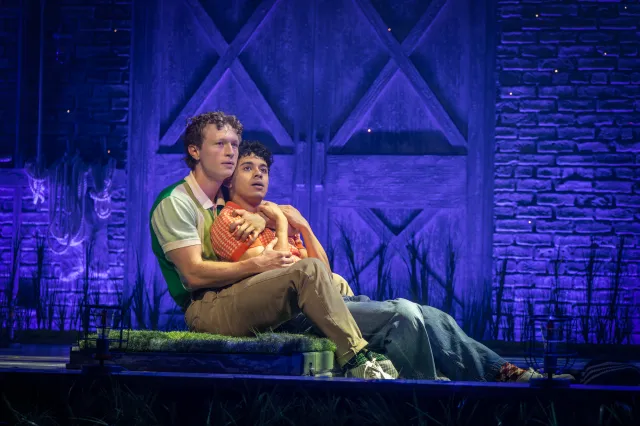
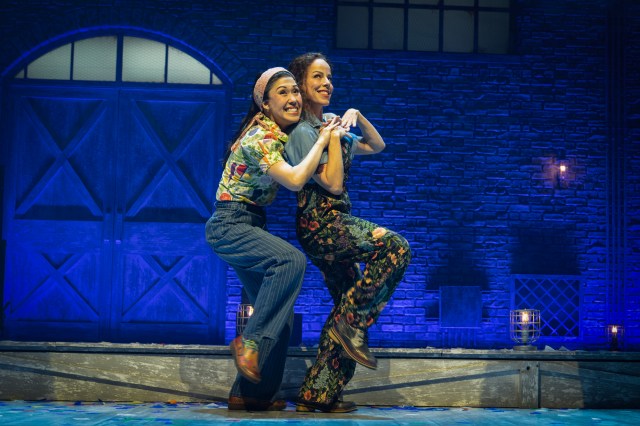
For this quaintly reimagined Fantasticks, book writer and lyricist Jones made essentially two edits before his death in 2023 at the age of 95 (composer Schmidt passed in 2018, age 88). At the behest of a theater in Michigan, Jones queered the heterosexual central lovers, Matt (Maxim Chlumecky) and Louisa, now Lewis (Nathan Levy), and transformed their faux-feuding fathers into meddlesome moms (Leslie Rodriguez Kritzer and Ruthie Ann Miles). There are assorted lyric changes here and there to go with it (some of which have existed for decades), but it’s still The Fantasticks, albeit with a bigger orchestra.
Matt and Lewis are neighbors separated by a wall built by their mothers to keep them apart, but it’s secretly designed to bring them together through reverse psychology. The first act revels in youthful infatuation as Matt saves his boyfriend from a hired posse of actors-playing-bandits in order to achieve their happy ending. The second finds Matt and Lewis separated by wanderlust before they eventually reunite, corrupted by the world but ultimately wiser.
Chlumecky and Levy are an endearing pair, filling their roles with a naivete that communicates the thrill of first love—and their duets on classic songs “Metaphor,” “Soon It’s Gonna Rain,” and “They Were You” are divine. Chlumecky is a genuine star with charisma to spare, and he’s an especially gifted physical comedian, too—his limp-wristed sword fight with the bandits is a guffaw-inducing highlight.
Levy palpably conveys the carnality that romance eventually brings about, but he’s let down by Jones’s revisions, which change the character’s name and pronouns without meaningfully considering how a young gay man might act in these situations. A more contemporary set of eyes might have gone further and deeper, but what Levy is given is just Louisa by any other name. His Lewis is filled with youthful élan, and it’s not his fault that the material doesn’t live up to it.
(© Joan Marcus)
Kritzer and Miles are a predictably showstopping Lucy-and-Ethel-in-the-chocolate-factory double act as the mothers. “Never Say No” is a vaudevillian delight that you don’t want to end, and they know precisely how far to push the number to avoid devolving into scenery chewing. Their “Plant a Radish” works less well, but it’s also no fault of their own; the song has been slowed down to feel melancholy, and we keep waiting for it to achieve liftoff.
Ahmad Simmons is essential as the Mute, an all-purpose theatrical helpmeet whose primary function is to fling confetti and serve as the Wall that divides Matt and Lewis. A lithe dancer, Simmons gives a terrific, syncopated tap solo during “This Plum Is Too Ripe,” a rare instance of dance in a nondancing musical. David Patrick Kelly and Kevin Del Aguila are perfectly pitched as the Old Actor and the Man Who Dies, their shtick actually getting funnier as it goes on (hilarious costumes by Linda Cho help).
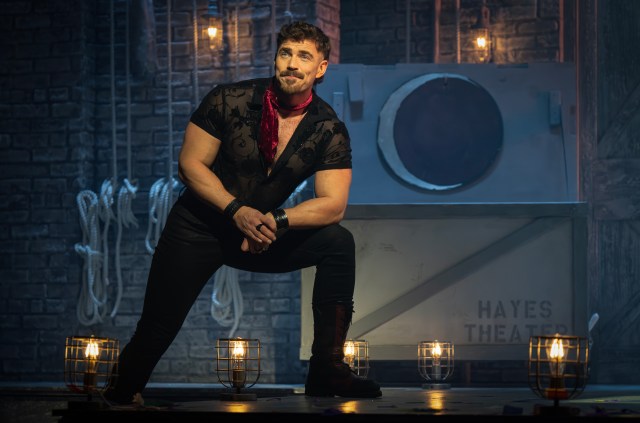
And Zane Phillips is a lusty El Gallo, with a baritone that suits the show’s signature song, “Try to Remember” (though not “It Depends on What You Pay,” the tempo of which he can’t keep up with). Meanwhile, Cho’s outfit—a tight black shirt that accentuates his throbbing biceps—certainly does right by him.
Gattelli and his team resist the potential pitfalls of Broadwayifing this distinctly un-Broadway show. Jason Sherwood’s set nods to the bedsheets, trunk, and platform of the original, while primarily using only a few hanging plants and Jen Schriever’s gorgeous lighting to communicate locales.
Nevin Steinberg’s crystal sound design is a welcome antidote to the over-amplified music we’ve become used to, and we can blessedly hear every harp pluck that Sam Davis retains in his expanded orchestrations for eight players instead of two. An additional horn wouldn’t have hurt—the single one we have now is a little on the anemic side—but the new string section is lush.
There’s no hiding the fact that The Fantasticks is a product of its time, a breed of show that isn’t merely going extinct; it hasn’t existed for decades. Contemporary audiences may not know what to make of it, but if they just try to remember how innocent theater once could be, they’ll recognize what a rarefied treasure this production is.
(© Joan Marcus)




source on Google
Featured In This Story

Latest Reviews
See all


Latest Videos
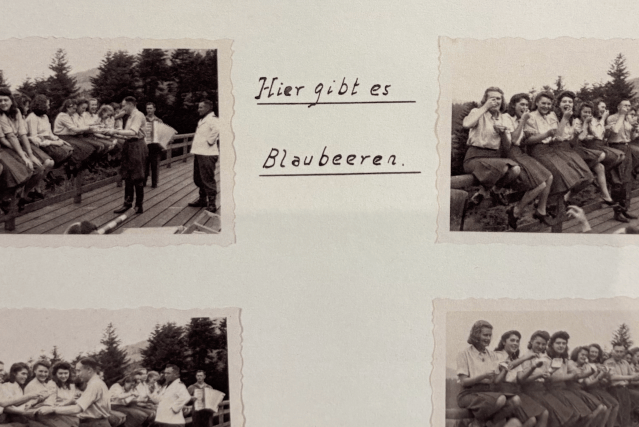
Find Out the Real Story Behind Broadway's Here There Are Blueberries
Moisés Kaufman and Amanda Gronich discuss the new drama along with their cast.