
Interview: Writer/Director Jamie Armitage Wants to Put a Ghost in Your Ear
The Six director talks binaural sound, the terrifying possibilities of a recording studio, and why horror is at its most powerful when an audience experiences it together.
 |
Off-Broadway
|
|
Off-Broadway
|
October 5, 2026
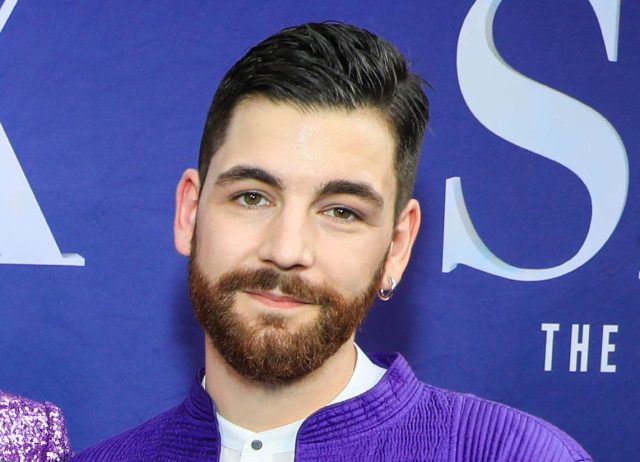
Jamie Armitage spent the bulk of his 20s codirecting the international hit musical Six. After sharing so much time with the pop-singing Tudor Queens, he wanted a change. So, he turned to a genre he’d long loved: horror.
The result is A Ghost in Your Ear, a generational ghost story told through an audiobook recording session that gradually becomes something much more sinister. After premiering at London’s Hampstead Theatre, it has arrived in New York City at the Minetta Lane Theatre, aptly presented by Audible. At the heart of Armitage’s production is binaural sound technology: audiences wear headphones, with sound designers Ben and Max Ringham placing them directly inside the action. Voices move from one ear to the other, creating the unsettling sensation that the story isn’t simply being heard, but experienced physically.
In a recent conversation, Armitage discusses the influence of Simon McBurney’s The Encounter on the creation of A Ghost in Your Ear, why horror can build new audiences, and the surprisingly crucial role of one creepy fake head.
(© Tricia Baron)
This interview has been condensed and edited for clarity.
After Six, was moving into horror an intentional change?
I started doing Six when I had just left university, so I was 23. It was so much of my 20s. Through the pandemic, there was lots of time to consider what I loved, and what I kept coming back to were horror and thrillers, which I adore in cinema. I was like, “If I do anything now, it’s focusing on that in particular.” It’s been a long journey of trying to find what the right horror was for the theatrical setting.
What led you to binaural audio as the way to bring that kind of horror to the stage?
My love of binaural audio was sparked by Simon McBurney’s The Encounter, and I’d always wanted to find a way of doing a horror show that justified why the audience were wearing headphones. That’s when the setting of the recording studio clicked into place. You’re in a world where it makes sense for somebody to be telling a story, but it also justified why we are using this technology. It’s not a gimmick; it’s integrated into the fabric of the show.
Once you had the recording studio as your setting, how did you approach creating scares within such a physically restricted space?
I knew that it was limited, what we could do, and I wanted the scares to be very simple but high impact. I loved the challenge of finding the very few delivery mechanisms that we could have for scares. My director brain was going, “How do you create these illusions?” and from the writer’s side, it was like, “What is thematically important?” Creating scares became fun because I controlled both the writing and the directing. It always felt like these two things were playing between one another. That’s a long way of saying that they organically came out of what I was creating, within the restrictions of the set.
The microphone head is such a striking and unsettling object. When did you realize it needed to be at the center of the show?
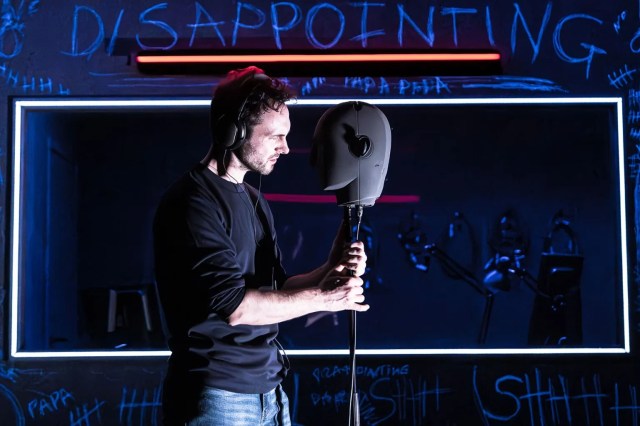
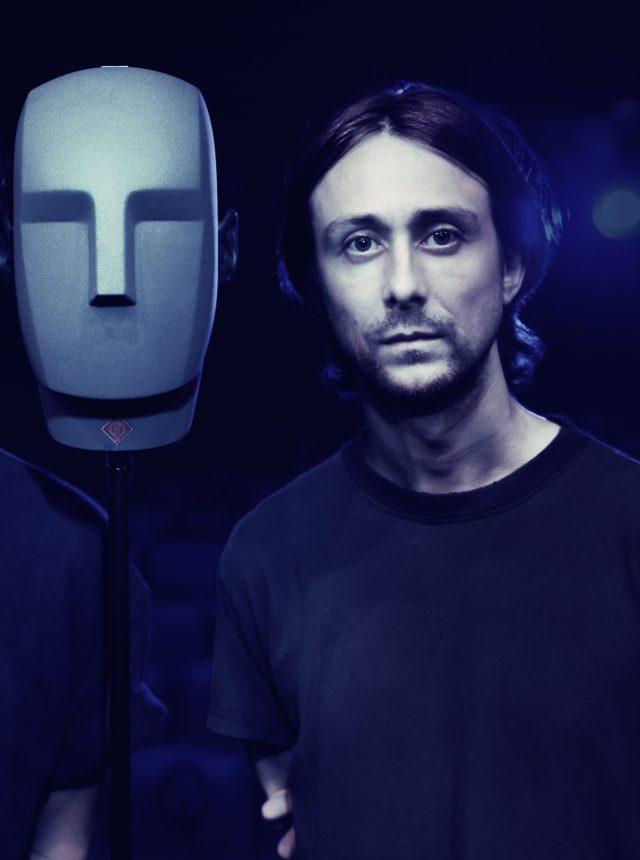
Yeah, it’s amazing. It has such a scary, vacant stare. There was actually a moment where I was like, “Maybe I won’t have the head because it’s a weird object to have in the room,” and that lasted about a day before I was like, “No, you’ve got to have it.” One, because it’s so scary and fun to look at, and two, it’s an important technical idea. The audience needs to know where they’re listening from. As soon as you put them in headphones, they need to understand what the rules of their point of hearing are. If you don’t have that head, they get confused because they’re like, “Where is the microphone?” The head became an important anchor to how we staged the show, because it’s there in the center of it all as the main presence.
(© Marc Brenner)
How much do you think the physical experience of wearing headphones contributes to the show’s sense of unease?
We get used to it quite quickly because we’re spending five, six hours a day wearing them. We’re like, “OK, cool, they switch from one side of the head to the other.” As soon as you have someone in who hasn’t experienced that before, just the experience of “I’m talking in your left ear and now I’m talking in your right ear” sends shivers down your spine. It’s such a physical reaction to something which is actually quite a small little shift. We keep reminding ourselves of that.
What does this kind of theatrical experience offer that a more conventional one doesn’t?
It’s demonstrating that there is an audience who is kind of separate to a normal theater audience who want to go and have these experiences. I find that really exciting at a time when theater is having to think about how to reach new audiences, and how to connect with people in a way that isn’t just putting a famous person in your show. There are certain genres which people are just excited to see. I put horror alongside comedy and musicals, where it’s just more fun experiencing it with other people than it would be watching it by yourself.
I know it’s a personal taste thing for me, but my favorite memories of going to the theater revolve around an intense collective experience, an emotional reaction over a knotty, complicated debate. When I want that, I’ll go listen to a podcast or read a think piece. When I go see live art, I want to feel something above all else. And that’s why I love horror: When it does its job, you will feel something.
What I love most is that when audiences scream, they always laugh afterwards. It becomes so connected with people around you, even when we’re wearing headphones, that you’re still attuned to the people nearby. I’m genuinely so excited because American audiences are just a lot more vocal, and that is really, really fun.
(© Amil Dave)




source on Google
Featured In This Story
Latest Reviews
See all


Latest Videos
Watch the Trailer for Elsinore Starring Andrew Scott
The film is based on the true story of Ian Charleson, who played Hamlet at London’s National Theatre after being diagnosed with AIDS.