
How an Unmade Cup of Tea, a Pair of Glasses, and a Small Miracle Led Aya Cash to a Broadway Debut and a Tony Nomination
Cash stars opposite John Lithgow in Giant at the Music Box Theatre.
 |
Broadway
|
|
Broadway
|
May 13, 2026
(© Johan Persson)
There was a cup of tea that never got made in Aya Cash’s kitchen. She was reading a script and was so engrossed that she ran to find her husband. She needed him to read Mark Rosenblatt’s play Giant, and she just instinctively knew it was worth uprooting her life for. “My whole body was hot after I read it,” she says, remembering that fateful afternoon.
Giant—Rosenblatt’s play about children’s author Roald Dahl and the public revelation of his antisemitism—ended up providing Cash with several firsts: a West End debut, a Broadway debut after two decades of treading the boards in NYC, and now a Tony nomination. The journey required a small miracle, a white lie, and a pair of glasses she didn’t want to admit she needed.
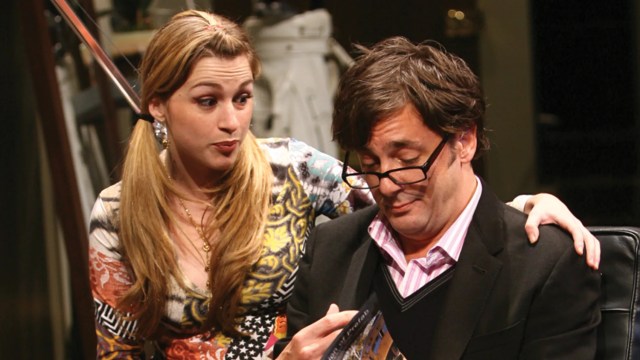
Cash had been a fixture of New York theater for 20 years when Giant came along. She got her Equity card doing Bruce Norris’s dark comedy The Pain and the Itch at Playwrights Horizons in 2006, and like most fledgling actors, bounced around the nonprofit circuit: a Lucy Thurber play at Rattlestick, two Ethan Coens at the Atlantic, pitstops at MCC and MTC and Ars Nova. In 2014, she got cast in the TV show You’re the Worst, and years later in Prime Video’s The Boys, playing the Nazi antagonist to a group of superheroes (she’s the star of its spinoff, Vought Rising, which premieres in 2027).
But Broadway never beckoned, and Cash had made a kind of peace with that. “When we’re young and starting out, of course you have these markers in your head of what success is supposed to look like,” she says. “And if you don’t let those go, you will be a miserable human. In some ways, at some point, I sort of went, ‘Maybe Broadway isn’t for me, and that’s OK.’ I’ve had a beautiful, incredible career.”
(© Joan Marcus)
What intrigued her about Giant and the role of Jessie Stone—a representative from Dahl’s American publisher who’s come to urge him to apologize for negative remarks he made in print about Israel—was the fact that it never collapses into polemic. “When I finished reading, I didn’t know the playwright’s exact politics,” Cash says. “I had no idea if the playwright and I agreed on anything, but what was so exciting was to see [the presentation of] conversations that are mostly distilled into headlines and reasons not to speak to each other. I wanted to be somebody who invites people into this conversation.”
She embarrassed herself during the audition. “It had been a long time since I’d auditioned for a play,” she says. “I hate auditioning, to be honest. I find it so scary and stressful under the best circumstances.” And when she got in the room, to her surprise she couldn’t read the script. She had gotten glasses during Covid, but, she says, “I didn’t think it was that bad. I had it mostly memorized, but I had to look down at the page and kept being like, ‘I have no clue what this line is supposed to be. Thank God for [casting director] Daniel Swee, who I’ve auditioned for, for over 20 years, who was like, ‘Let’s put the glasses on and try again.’” She landed the part.
Cash had only seven days of rehearsal before the show began performances at the Harold Pinter Theatre last summer. To prepare, she watched an archival video on mute so she could write down her blocking. Certain moments of Nicholas Hytner’s production had to stay the same because the rest of the cast was already set; other things shifted because of her height. At 6-foot-4, Lithgow towers over 5-foot-2 Cash, and, she says dryly, part of the reason she was hired was to make him seem even taller.
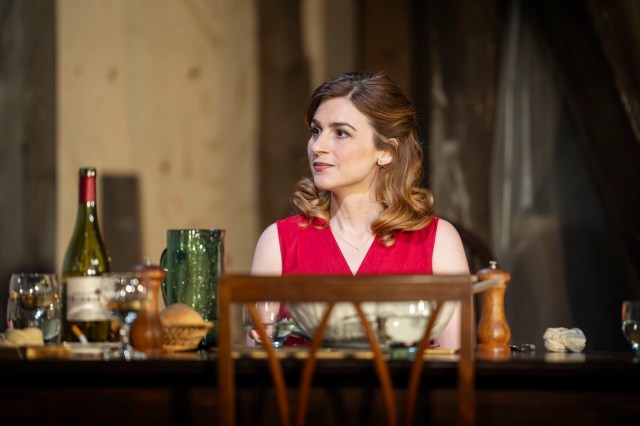
Costume designer Bob Crowley found Cash a bright red dress in a linen blend, a fabric that wrinkles the moment you put it on. “There’s no way to make it look crisp,” Cash explains, which lines up with the backstory of her character, who is on vacation in the UK without an outfit for a work meeting. “She comes in and she’s trying, but she’s a little off and a little garish in this world. You’ve spent 15 minutes watching these Brits being very clever and bantery, and then Jessie comes in and it’s just wrong in a certain way. That dress is an immediate rip in the fabric of this world.”

(© Joan Marcus)
It was obvious that Giant was heading for Broadway after its West End run ended last summer, and Cash knew from the beginning that her Vought Rising schedule made it impossible for her to follow the show back home in the fall. She chose to keep that info to herself. “I just didn’t tell them I wasn’t available for the Broadway portion because it was not real yet anyway.”
She privately mourned the idea of a New York victory lap, celebrated the fact that she got to do the show at all, and was absolutely thrilled when Lithgow’s shooting dates for HBO’s Harry Potter series ended up meaning that a New York transfer of Giant couldn’t happen until now. “All of a sudden, our schedules lined up within weeks of it being OK,” she says. “There was a lot of maneuvering, and they were incredibly supportive, so they all went to bat for me to make sure I could get out and have at least a few days of rehearsal.” That’s a real miracle in a fickle business.
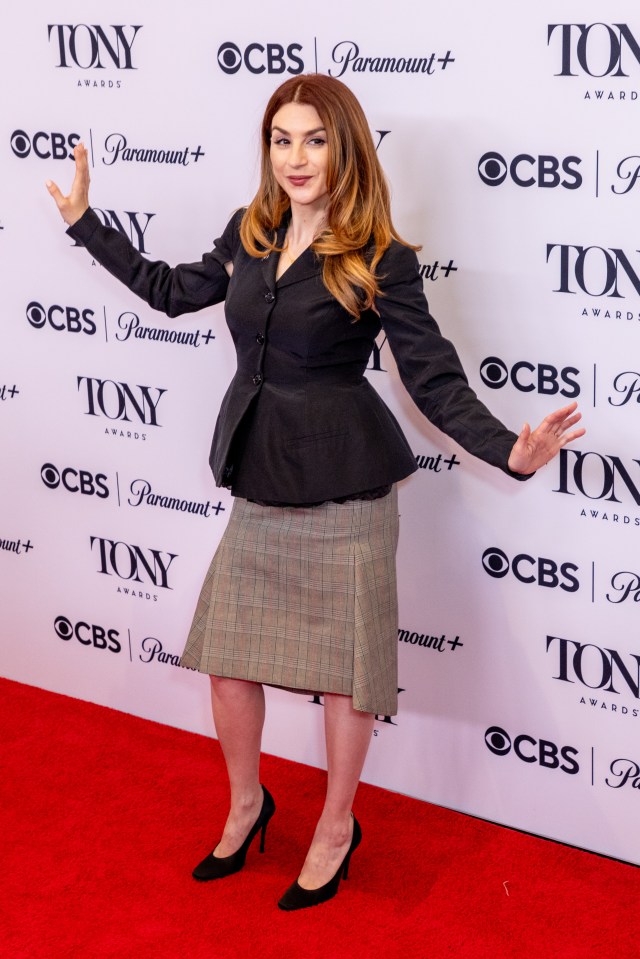
Her Tony nomination, for Best Performance by a Featured Actress in a Play, was not something she anticipated. She thought she was past the ego part, but maybe not. “I am now a changed person,” she jokes. “I would like to be called ‘Tony nominee Aya Cash’ for the rest of my career. Finally, some sort of honorific!” More than anything else, though, it fills her with pride. Early in her career, she was simply trying not to have a survival job. Even a bad play that got bad reviews meant, “I’m not waitressing, so I’m still doing great.”
The recognition is especially meaningful, given that New York’s stages are where her career began. “There is a certain amount of outsider-ness that one feels if you go into the arts. There is a feeling of wanting to connect, and the lack of connection is painful. We make art to try to connect and feel within a community.” With this nomination, she says, “I felt a profound acceptance from the community that I come from—New York theater—and that feels very special.”
(© Tricia Baron)




source on Google
Featured In This Story
Latest Reviews
See all
Latest Videos
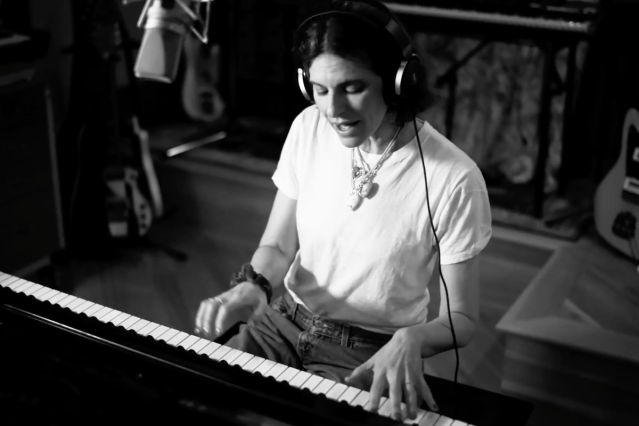
Watch Lindsey Kraft, Featuring Ben Folds, Sing "Beautiful Pain" From the Musical We've Been Here Before
We’ve Been Here Before starts performances on August 4 at SoHo Playhouse.