
3 Predictions for the Theater in 2026
TheaterMania’s editorial staff offers a look the trends that will shape the coming year.


 |
Off-Broadway
|
|
Off-Broadway
|
January 1, 2026
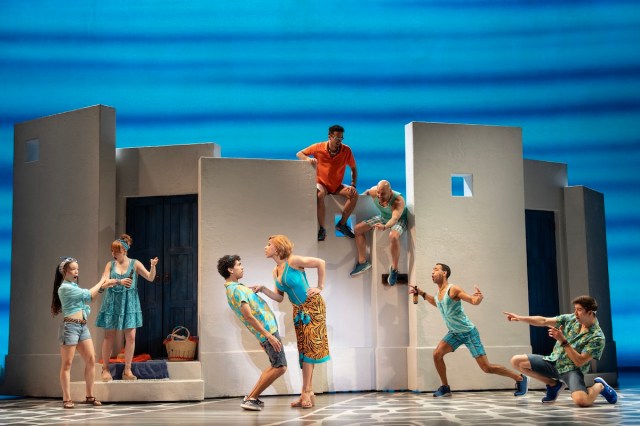
(© Joan Marcus)
1. Broadway Becomes Just Another Stop on the Tour
Mamma Mia! returned to Broadway last summer, straight from the road. Its arrival at the Winter Garden Theatre was an immediate success—the show is performing better than it ever did during its original run. Which makes its planned February 1 closing feel counterintuitive, until you remember that it’s leaving not because it failed, but because it’s heading back out to charm the rest of the country.
The ABBA musical wasn’t alone in 2025. Beetlejuice wrapped up its multi-year national tour with a holiday stint at the Palace (less successfully; the third time wasn’t the charm). And Beaches the Musical, opening this spring at the Majestic, is using Broadway less as a destination than as a launchpad for a tour still being assembled.
Once is a fluke; thrice is a trend. And by 2026, that trend may come to redefine Broadway itself. What was once the apex of the industry has become too fiscally uncertain to remain so, turning Broadway into just another stop on the bus-and-truck—a place to collect the Broadway imprimatur without letting an early closing damage the future prospects of the brand.
Cynical? Maybe. Smart? Absolutely. In an evil kind of way. —David Gordon
(© Alexander Mejía, Bergamot)
2. The End of BIPOC Night
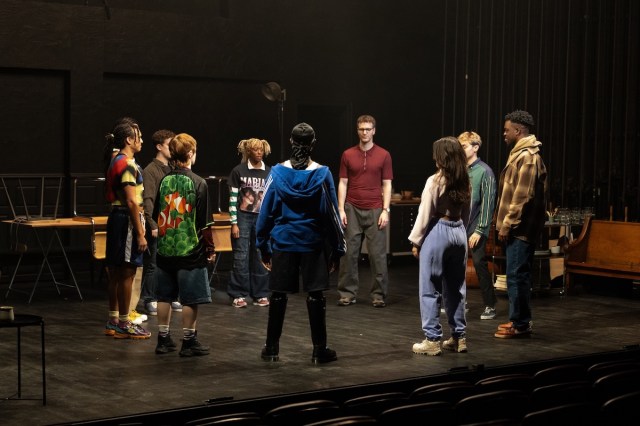
Last week we reported that white theatergoer Kevin Lynch, supported by the conservative legal activist Edward Blum, was suing Playwrights Horizons for alleged racial discrimination stemming from a promotion that offered discount tickets to BIPOC (“Black, Indigenous, and People of Color”) patrons. Whatever your thoughts about the merits of this case, a couple of things are obvious: First, not-for-profit theaters, long seen as bastions of progressivism, are in the crosshairs of anti-woke crusaders; second, the leadership of those theaters will be keen to avoid being targeted in the future.
This is especially true as not-for-profit theaters continue to struggle with declining revenue and rising costs. Lawyers are expensive, and defending an organization from even a frivolous lawsuit means diverting precious resources that could otherwise go to the mission, which is to produce theater. While theater leaders have in the last decade sought to fold a commitment to social justice into that mission, in 2026 they will be hesitant to show that commitment in any way that exposes their organizations to liability.
That means fewer “BIPOC nights,” or any events that recognize a portion of the audience based on a legally protected status (race, religion, sexual orientation, etc.). If such events go forward, expect the tickets to be sold at an across-the-board discount or no discount at all; but there will be no special discount based on the buyer’s professed identity. An abundance of caution (to trot out an old pandemic cliché) will drive decision-making so that potential plaintiffs will have no basis to even think about a lawsuit.
It’s all well and good to issue a press release attaching your theater to a cultural moment like the Great Awokening of 2020, but once that behavior starts to have real legal and financial consequences, theater leadership will decide it isn’t worth it. This is not a hill they are willing to die on. By putting the fear of litigation into the hearts of not-for-profit theater leaders, Lynch and Blum will have partially succeeded in their campaign. —Zachary Stewart

(© Matthew Murphy and Evan Zimmerman)
3. Science Fiction Will Become More Prevalent Onstage
The theater might not be the first medium you think of when you think of science fiction. Cinema and novels have always seemed like more natural fits for spaceships and robots. But we do, in fact, get the word “robot” from a play, Czech writer Karel Čapek’s R.U.R., which tells the story of human-like machines that eventually rebel against their creators.
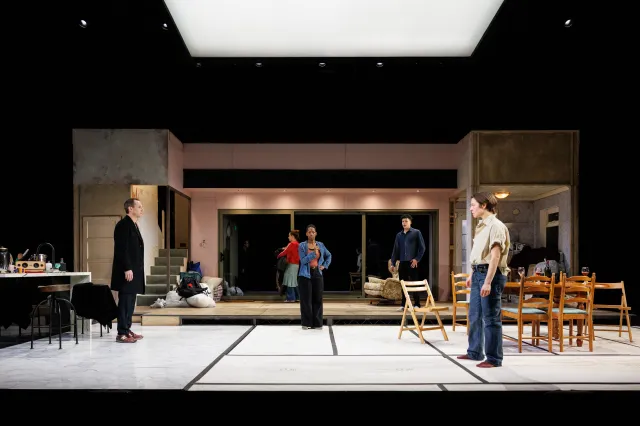
It’s a chilling theme that Jordan Harrison revisited in his play The Antiquities at Playwrights Horizons back it February (it was my No. 1 off-Broadway play of the year). But there were also less threatening depictions of AI beings to be found on New York stages in 2025, as in Harrison’s other prescient play, Marjorie Prime, now running on Broadway, and the delightful surprise hit of last season, the Tony-winning musical Maybe Happy Ending. Other shows this year dabbled in sci-fi too, like This World of Tomorrow, featuring a time-traveling Tom Hanks, and the sci-fi/horror-themed Stranger Things: The First Shadow.
I believe that these shows are a harbinger of things to come, and I predict that in 2026, we’ll see more theater that explores the technologies that are coming to dominate our lives every day, for better and for worse. I also expect to hear about revivals of R.U.R., which premiered 105 years ago tomorrow, popping up around the country, proving that theater is a terrific medium for sci-fi too. —Pete Hempstead




Featured In This Story

Latest Reviews
See all
Latest Videos
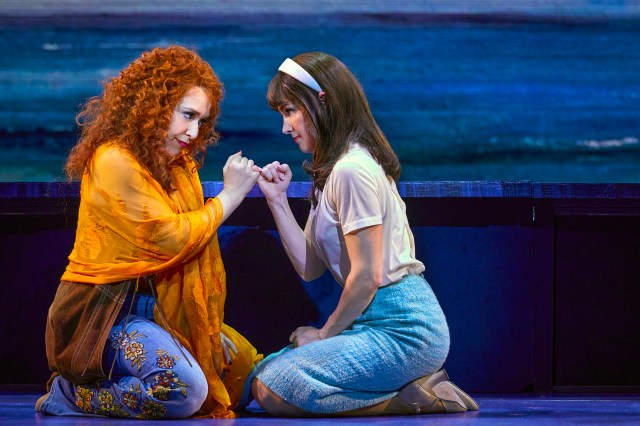
Watch Jessica Vosk and Kelli Barrett Sing a Song From the Upcoming Broadway Musical Beaches
Broadway performances start on March 27 at the Majestic Theatre.