
Interview: Danny Strong Talks About the Cold War, Bryce Pinkham, and the Music of Chess
Strong wrote a new book for the Broadway revival of the ’80s musical.
 |
Broadway
|
|
Broadway
|
February 13, 2026
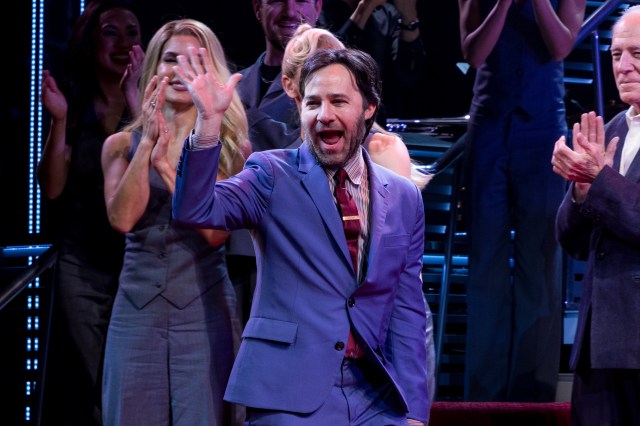
(© Tricia Baron)
Chess has had many versions over the years. The musical by Tim Rice and ABBA’s Benny Andersson and Björn Ulvaeus started as a concept album and then opened on the West End in 1986. A revised version opened on Broadway in 1988 and quickly closed. Despite its cult following, it hasn’t had a revival on Broadway since.
Danny Strong, known as an actor for roles in Buffy the Vampire Slayer and Gilmore Girls and as a writer on Dopesick and Empire, was determined to show that Chess, which he calls a “Brechtian Cold War history play,” could work, and he is proving that now.
Strong, who also wrote the book for the new Broadway-bound musical Galileo, spoke to TheaterMania about writing a new version of Chess.
This conversation has been condensed and edited for clarity.
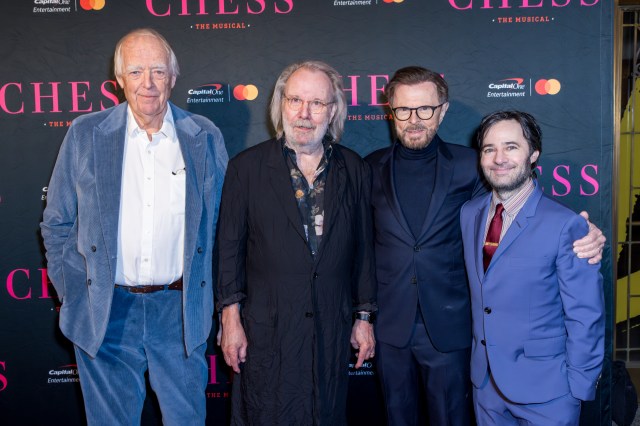
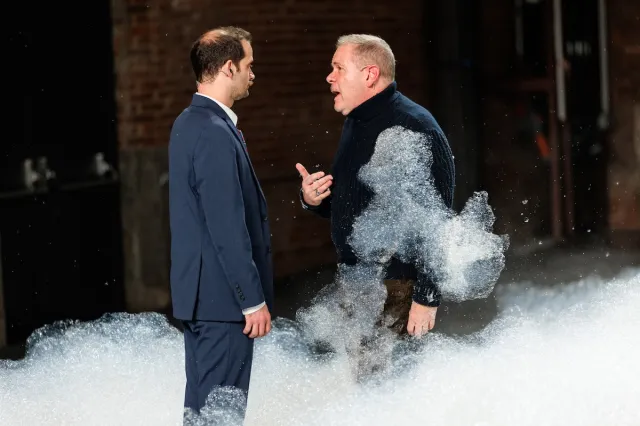
(© Tricia Baron)
You have said before that you kept hearing songs from Chess and that that is why you wanted to do this revival. What do you love about the music?
First off, I love the concept—the idea of a fictional version of the Bobby Fischer-Boris Spassky Cold War chess matches. I’m a huge Tim Rice fan—Jesus Christ Superstar and Evita—and this just feels like part of that canon to me. And I’m a big ABBA fan. You have this undeniably dynamic score that’s emotional and powerful, but there’s so much variation in it too. There are these operatic songs and what feel like ABBA pop songs and then Russian 19th-century dirge and it’s just fantastic.
You’ve chosen to focus on historical events: the Strategic Arms Limitation Talks in the first act and the Able Archer nuclear war scare in the second. How did you decide on those?
I knew I wanted to infuse Cold War plotlines into the show, but it went on for decades, so where do you start? I tried to find some events that involved nuclear proliferation because to me that was the essence of the dangers of the Cold War and why it was fought the way it was fought. That led me to the SALT II Treaty, so in Act 1 we see that our chess match is being intertwined with the attempt to solve the Cold War by reducing nuclear weapons, but the SALT II Treaty ultimately failed, so then how does that escalate? Well, it escalates in the danger in Act 2 which was the Able Archer ’83 incident in which the world almost was destroyed by nuclear weapons by a misunderstanding. It felt like a natural progression, to tell something that to me represented the Cold War in its totality and then there was also an argument to made that the events of Able Archer led to the end of the Cold War, so that seemed like a cool way to tie up the Cold War story. It’s the first time I’ve said that out loud maybe to anyone. I don’t even know if I’ve ever explained this to anyone involved in the show.
The things we’re talking about here aren’t exactly fun topics, but you have fun with the audience, especially with the narrator and his asides. Can you talk about finding that voice?
Well, it’s kind of my voice, so that was pretty easy to find. And there’s a lot of Bryce Pinkham who plays the part in there too. It’s really a blend of our comic sensibilities, which are very similar. But it wasn’t conceived to be as comedic as it ended up. The problem with Chess over the decades is that the audience has a hard time fully investing in it because it feels too broad. I wasn’t looking for big laughs, but then when we did at the Kennedy Center, it got huge laughs and I was stunned. In many ways it tonally matches what the guys did with the score, which is a mosh pit of different tones and styles, so I thought doing that with the book could be consistent with what they did musically.
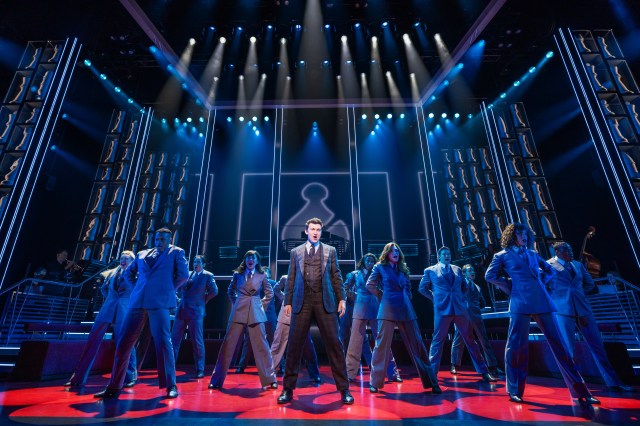
(© Matthew Murphy)
Stepping away from Chess: Gilmore Girls just celebrated its 25th anniversary. Did you imagine when you were working on it that it would have such a lasting impact?
I had no clue. I thought the show was terrific when we were doing it, and I loved how stylized it was. It was viewed as more of a teen show when we were on the air, and that was probably because it was on the WB, which was the younger channel. But I remember thinking the show is so smart and clever with all these incredible references and the quick patter of a 1930s screwball comedy, and then it would be dramatic and touching. I was so impressed with it while I was doing it, but I had no clue that it was going to last the way it did.
Are there any other musicals you want to bring back?
I have an original musical I wrote called Galileo, which is about Galileo and his many battles to teach certain scientific theories. It’s a very timely show. We did it at Berkely Rep in 2024, and I’m very much hoping that it goes to Broadway; fingers crossed. So, my focus right now is on the theater side.
[Editor’s Note: Galileo has announced a winter 2026 Broadway run.]




source on Google
Related Articles
See all
Latest Reviews
See all


Latest Videos
Watch the Trailer for Elsinore Starring Andrew Scott
The film is based on the true story of Ian Charleson, who played Hamlet at London’s National Theatre after being diagnosed with AIDS.