
Review: The Waterfall, a Haitian-American Mother-Daughter Drama
Phanésia Pharel’s two-hander opens off-Broadway in a co-production of Thrown Stone Theater Company and WP Theater.
 |
Off-Broadway
|
|
Off-Broadway
|
February 15, 2026
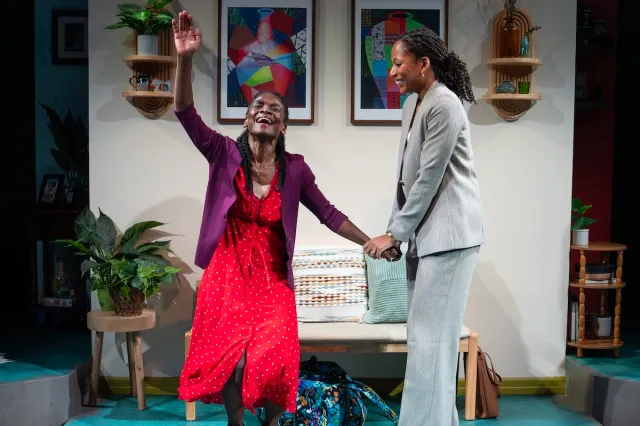
(© Joan Marcus)
Overbearing mothers in conflict with their daughters is a topic so popular it’s practically its own genre. Now onstage at WP Theater, Phanésia Pharel’s The Waterfall highlights generational differences between immigrants and their children. It treads new ground on this subject, but has trouble balancing its two leads.
Bean (Natalie Paul) returns to her childhood home to help her mother Emi (Patrice Johnson Chevannes) recover from a diabetic episode that put her in the hospital. Despite her illness, Emi is a firecracker. After a rough life in which she escaped violence in Haiti, she maintains her joy, playing pranks and twerking in her living room. She’s always had a clear vision for her daughter’s life. It’s one that she claims she saw foretold while staring at a waterfall in her hometown. As all her other predictions have come true, she now demands that Bean give her a grandchild as soon as she marries her “live in fiancée,” a phrase Emi utters with distain. “God forbid someone get married around here,” she rants as she worries that her daughter has become too Americanized. But Bean is grappling with more than her mother knows, launching them into a conflict that threatens their relationship.
Playing a somewhat unconventional mother, Chevannes gives Emi a delightful spirit that conveys a rich inner life. Her playfulness shines in a flashback to Bean’s childhood, when Emi helps Bean cope with social exclusion by pretending to be an eleven-year-old like her. Using her imagination to create the beauty and mysticism of her hometown waterfall in Haiti (made vivid with lighting design by Venus Gulbranson and sound design by Kaileykielle Hoga and DJ Potts) Chevannes draws Bean, and by extension the audience, into her enchanting world. In the flashback, we discover Emi’s strengths as a parent (her resilience and imagination) as well as her weaknesses (she’s controlling). Once the flashback ends, these traits drive the narrative and make the emotional beats between the two adults hit harder. Chevannes’s performance may be a touch broad, but it matches the comedic beats Pharel has laid out for her.
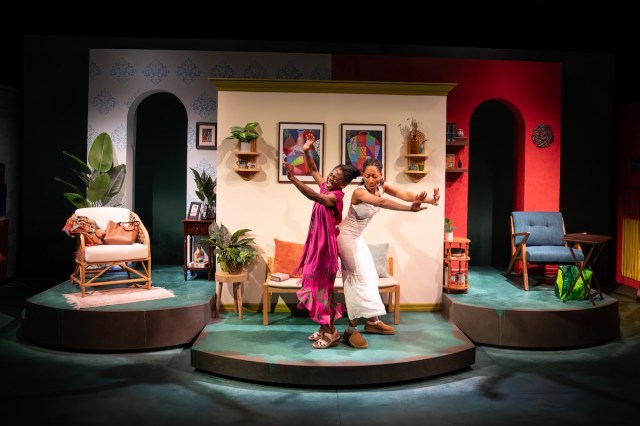
(© Joan Marcus)
But both the lefty and the righty must be equally strong to make a two-hander work; and while Paul hits many of Bean’s emotional beats, she doesn’t quite match the intensity of her partner. It tracks that Paul’s bulk of experience is in television and film—her choices are specific but small, so she doesn’t fill the stage the same way Chevannes does. It doesn’t help that her character is defined by what she is not—one of Bean’s main character traits is that she has lost her bon ange, her “good angel”—so Paul has fewer dynamics to work with than her vivacious counterpart.
The pacing is also a bit off under Taylor Reynolds’s direction. The early scenes revel in Emi’s comedic antics, but though these scenes get laughs, they linger too long. The conflict between mother and daughter ramps up by the middle. There, the playwright mines an interesting tension. Emi survived hell in her home county and didn’t think twice about having a child. Bean is far more privileged but stresses over bringing kids into a world facing climate change, political strife, and other existential horrors. Unfortunately, this divide between immigrants and first generation is more discussed than dramatized, and by the time the conflict comes to the forefront, the stakes don’t feel high enough to justify the 100-minute running time.
But the production elements compensate for the uneven narrative. Alongside strong lighting and sound design, Teresa L. Williams’s sets evoke both the vibrant colors of a Florida home and Haiti’s bustling streets and natural wonders.
An emotional final scene with an arresting last image ends the story on a high note, but it doesn’t totally make up for the shortcomings. The Waterfall is appealing, funny, emotional, and flawed.




source on Google
Featured In This Story

Latest Reviews
See all







Latest Videos
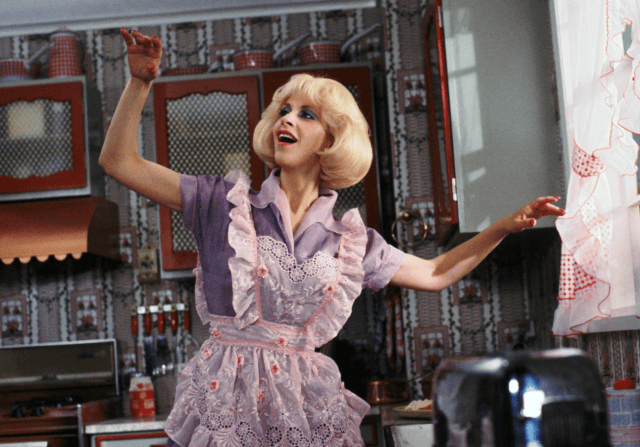
Watch: Ellen Greene Reflects on the Enduring Legacy of Little Shop of Horrors
Frank Oz’s cult classic movie-musical has gotten a new 4K restoration in celebration of its 40th anniversary.