
Review: Blackout Songs, When Your Life Is One Long Night Out
Joe White’s Olivier-nominated two-hander makes its US premiere at the MCC Theater Space.
 |
Off-Broadway
|
|
Off-Broadway
|
January 27, 2026
(© Emilio Madrid)
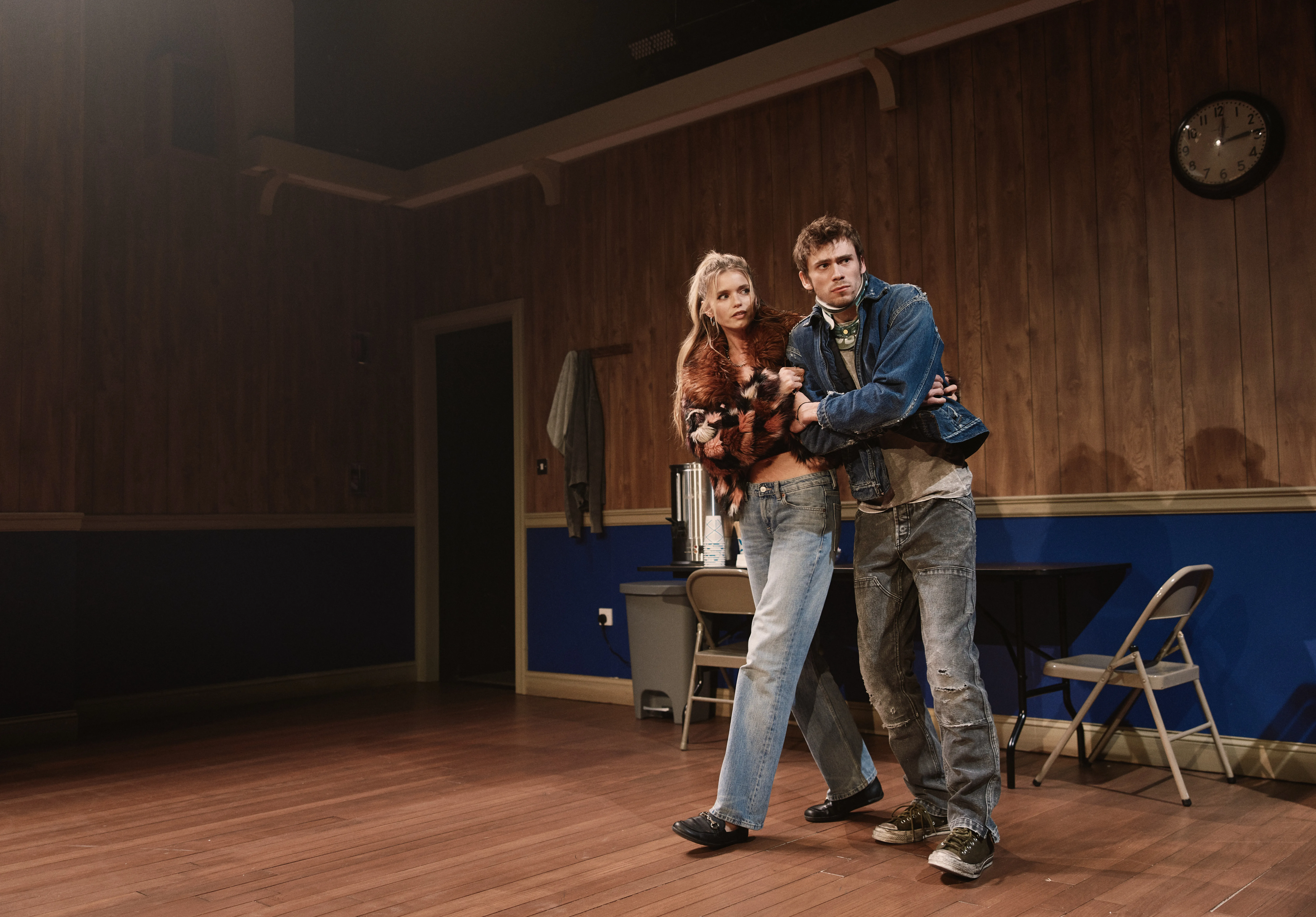
A woman walks into an AA meeting wearing her sunglasses low as she gazes at a man with a neck brace. He looks like he just rolled out of an ICU; she looks ready step out for a night at the club. But did he? And is she?
You’ll find yourself asking questions like that as you watch this odd pair interact in Joe White’s engaging if not altogether satisfying Blackout Songs, now running at the Robert W. Wilson MCC Theater Space. The ambitious two-hander got a nod from the Oliviers after making its off-West End premiere at the Hampstead Theatre in 2022, and it’s not hard to see why.
White is deft at creating moods of mystery and confusion that convincingly mimic the experience of alcohol-induced memory loss. I found myself often leaning forward as I tried to gradually piece together what was happening, as though I were watching a thriller. But while White succeeds at conjuring atmosphere, the play comes up short with two characters who blur in the mind, like when you exchange numbers with someone after a third martini and never call back.

(© Emilio Madrid)
At first, that blurriness seems intentional: neither character is given a name (Owen Teague plays “Him” and Abbey Lee plays “Her”). We do get a soupçon of background on them: he’s an American artist squatting in a flat in London; she maybe comes from a little London money (costume designer Avery Reed wraps her in fur). But their first scenes together get our foreheads wrinkling. Why does she have someone’s tooth in her pocket? Where did his neck brace disappear to so quickly? How is it possible that she has no memory of their first meeting? It seems like we’re missing something. A lot in fact.
“’Obscene,’” she says. “It comes from Greek, Greek plays. Means off-stage. For all the terrible things.”
It’s a ham-handed aside for White to include in a play, but it certainly helps explain why the swirling events of the story often feel untethered to each other—and to reality. Are they really in a club dancing (sound design and music by Brian Hickey), or are they maybe somewhere else? We’re never sure what’s real or what’s happening in the wings. Their blackouts become ours.
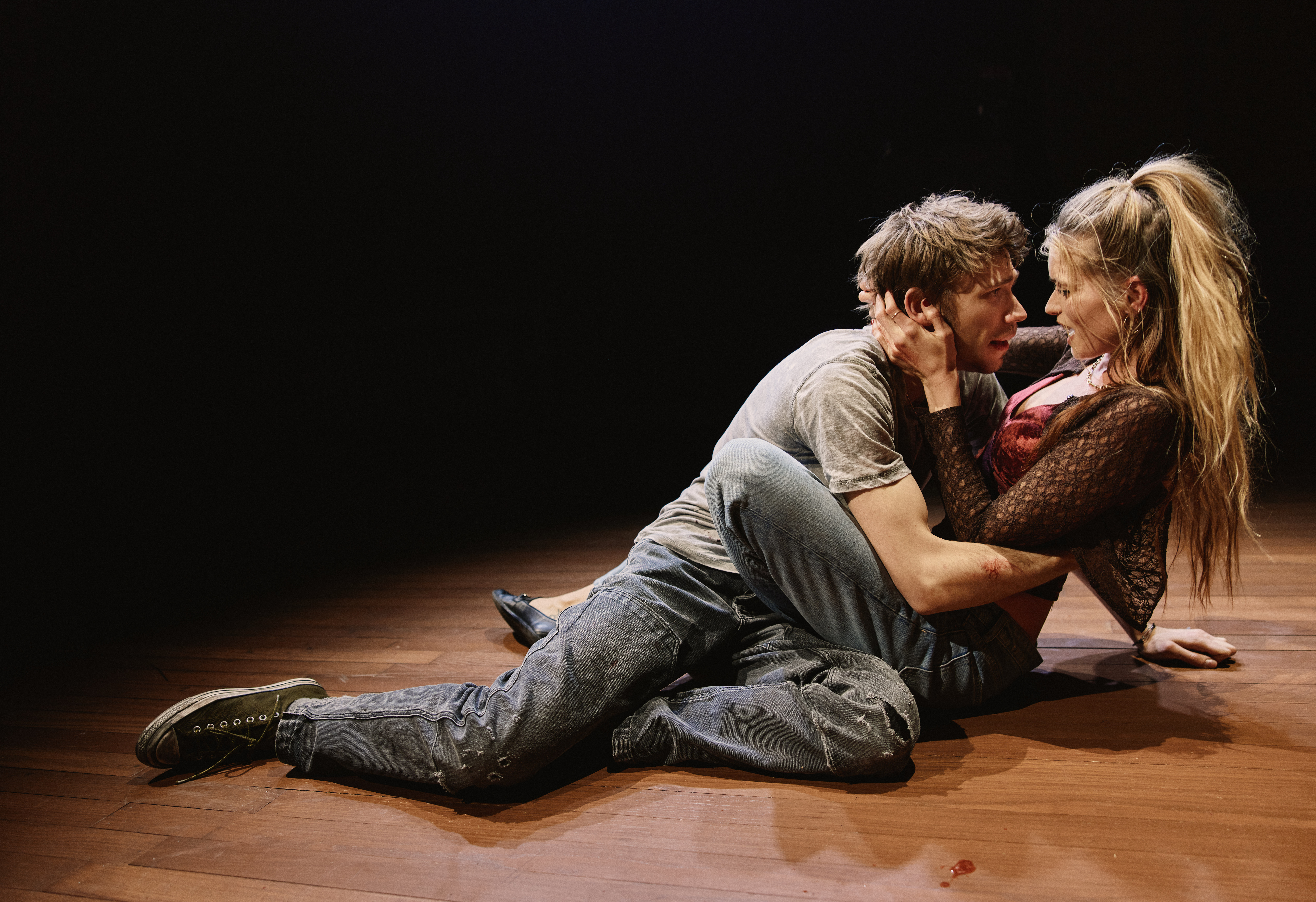
In that respect, Blackout Songs is a fascinating attempt to re-create the experience not just of a night of heavy drinking, but of a life consumed by it. Director Rory McGregor brilliantly simulates these ellipses of the mind with the help of lighting designer Stacey Derosier, who illuminates the couple in discrete alcoves of Scott Pask’s versatile set while leaving the rest of the stage in darkness. In so doing, we really do sense the telescoped nature of memory seen through the gauze of intoxication.
(© Emilio Madrid)
We hear it too. Though we can assume these hardcore alcoholics are nearly always drunk, they never sound it. Nor do Lee and Teague stagger about the stage. We see them as they see themselves: relatively sober.
Despite the production’s high-proof stagecraft, at times I couldn’t help feeling myself staggering through the play’s 100 minutes. Lee is phenomenal, with a stare that can melt iron, and Teague gives a violently convincing performance as a man who has lived a life in oblivion. Both actors also show us the codependence that buttresses chronic addiction. Neither can escape it while they’re together.
But neither do we ever really get to know them very well, and that’s too bad, because we do know there’s more to them than their addiction. It may be too much to ask from a dysfunctional couple who have forgotten so much that they hardly know who they are anymore. Blackout Songs goes down hard, and a bit more of their histories would have made a nice chaser.




Featured In This Story
Latest Reviews
See all



Latest Videos
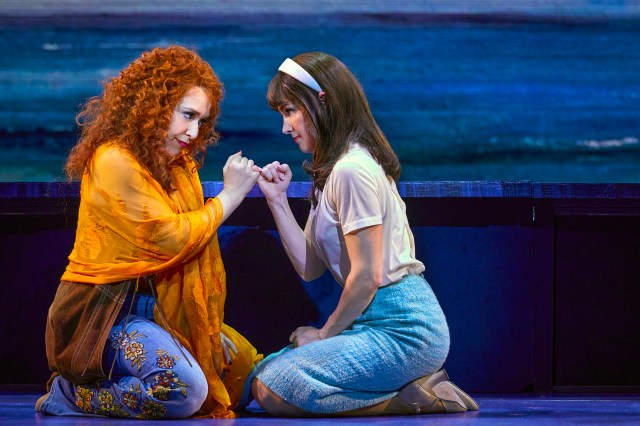
Watch Jessica Vosk and Kelli Barrett Sing a Song From the Upcoming Broadway Musical Beaches
Broadway performances start on March 27 at the Majestic Theatre.