
Interview: Richard LaGravenese on Letting Go of Pal Joey to Find a New Sound in Chez Joey
A reimagining of the Rodgers and Hart musical is coming to Arena Stage in DC.
 |
Maryland | Virginia | Washington, DC
|
|
Maryland | Virginia | Washington, DC
|
January 28, 2026
The Fisher King, The Bridges of Madison County, P.S. I Love You, Water for Elephants—and to think screenwriter Richard LaGravenese never even set his sights on Hollywood. “My plan was to be a playwright,” says the born-and-bred Brooklynite, remembering how, at 11 years old, the original production of Follies hooked him on musical theater. “And then,” he adds humbly, “I got sidetracked into movies.”
LaGravenese’s love of theater has popped up in his film career, adapting Jason Robert Brown’s The Last Five Years on a shoestring budget (“the most fun and fulfilling experience I ever had as a film director”) and even collaborating with Barbra Streisand on the screenplay for her regrettably defunct Gypsy. But his true theatrical ambitions are coming to fruition at Washington, DC’s Arena Stage with Chez Joey, a complete reimagination of the 1940 Rodgers and Hart musical Pal Joey.
“It’s always been a flawed musical attempt at something groundbreaking,” says LaGravenese, pointing to the show’s themes of sexuality and ambition, and of course, the ruthless antihero that made Pal Joey an outlier for its time. Now as Chez Joey, which features a fresh slate of songs from the Rodgers and Hart catalogue, Tony winner Myles Frost (MJ) plays a brand-new title character—a visionary artist molded in the image of the show’s co-director and choreographer Savion Glover (Glover co-directs with Tony Goldwyn). Audiences will still get the comforting nostalgia of Rodgers and Hart classics, but, LaGravenese insists, “they should not come in expecting Pal Joey.”
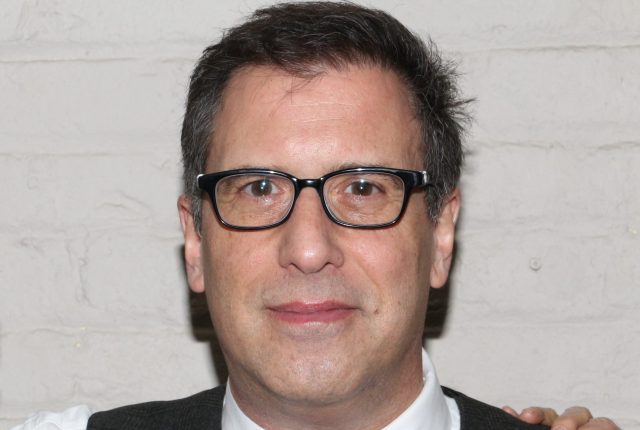
(© David Gordon)
This conversation has been condensed and edited for clarity.
You’ve been working on this adaptation of Pal Joey for many years, and your starting point for the title character was John O’Hara’s original New Yorker short stories. How did you pick the new direction for Joey from there?
We did a reading of it years ago and thought, “Why do we need a revival?” The only way to do one would be to make it more relevant. The idea that it’s about a true artist who is trying to find their way of expression in a world full of obstacles, that made him more interesting than just a heel of a character—a guy who just sleeps with women and lies. That gave breath to a lot of other things and created a lot of research.
That also sent you to the Rodgers and Hart song catalogue.
There were certain songs in Pal Joey that I never thought worked. Some of the great songs like “Bewitched, Bothered, Bewildered” are in there, but then there were some songs that were just some of their weakest work. So I said I would love to do this, but I would love to change some of the songs, and they gave us carte blanche to the songbook. Suddenly it became an opportunity to put in standards that I love that we will never see because they’re in shows that will never get revived—and completely reimagine them. Savion arranged them in a way that has never been heard before.
What was it like getting to pore over the entire Rodgers and Hart songbook?
Heaven. I grew up in Brooklyn—Italian American mom doing Sunday dinner, and in the mornings while she’s cooking, we played records and it was all Sinatra and Ella and Streisand and Tony Bennett, and they all sang all these classics. I found a song called “This Funny World” and when I heard the lyrics, it was so right for Joey. And then of course we have stuff like “Lady Is a Tramp” and “This Can’t Be Love” and “My Funny Valentine” and “I Wish I Were in Love Again.” The chance to use them in a story was a great opportunity and also a great challenge. And then when Savion came on board, the vision really crystalized.

(© Ambe J. Photography)
In addition to co-director and choreographer, one of Savion’s titles for Chez Joey is “orchestrologist.” Is that a Savion-original term?
Yes [laughs]. It is. He’s a real artist. I don’t mean to sound corny, but he exists outside of the collective and he believes his job is to bring into the collective views and perceptions and ideas that don’t exist yet and that we don’t have words for. And so he has to make up words for all the things that he does in the same way that his mentor Gregory Hines did. I would listen to him in rehearsals, and I would put some of those lines of dialogue into the script. If I have to say anything clearly, Savion’s vision and voice is the show—is Joey. It’s what I’ve been serving as a writer.
You mounted a version of Pal Joey at New York City Center in 2023. What did you learn from that run and what have you changed since then?
I did a complete rewrite from the last version that was done, not only at City Center but the workshop that we did last May. It’s funny, one of the things I didn’t like about the original show was the convoluted book. City Center had too much of a convoluted story to it. I made it much more about the characters and didn’t make them go through so many machinations to make the plot work and focused it more on the love story between the three at the core of it.
Can you tell me a little bit about who your core three characters are now?
Because [Joey’s] character is deepened you get a little more of a backstory with him. He’s not in it just for ambition and self. He’s in it for the purity and the truth of the sound. He’s one of those people who believes artists can’t be domesticated. [Myles Frost] is so amazing. He can translate what Savion wants into movement and attitude. And then Awa [Sal Secka] is playing Linda, a woman who has her own history and her own desires and is not just an ingenue as in the original for Joey to break the heart of. And we went younger with the whole cast so Sam [Massell] plays Vera. Vera’s played usually just as a sophisticated bitch and in this she goes through a metamorphosis herself because of Joey. She winds up in an interesting place that was inspired a little bit by our first Vera, the wonderful Marin Mazzie. She did it with us about three times in different workshops over a couple years and she said, “What if Vera really did love him?” That stuck with me.
How, as both a writer and lover of musical theater, do you balance your vision for the show with reverence for the original?
I’ve done a lot of adaptations in my film work, and my first drafts are always very reverent of the original writer. And then in the second and third drafts, I give myself free rein to create. It became so different than this past May, I asked the producers, “Can we please change the title?” Because I don’t want people coming in like they did to City Center thinking they’re getting Pal Joey and it isn’t. The work that we’re doing and the work that Savion is doing with the actors is so original, it deserves to be seen with original eyes.

(© Ambe J. Photography)




Featured In This Story

Latest Reviews
See all


Latest Videos
Watch Jessica Vosk and Kelli Barrett Sing a Song From the Upcoming Broadway Musical Beaches
Broadway performances start on March 27 at the Majestic Theatre.