
In Miami, a Theater Is Staging the Jewish Conversations No One Else Will Touch
Michel Hausmann’s Miami New Drama is currently presenting the world premiere of S. Asher Gelman’s The Zionists.
 |
Miami
|
|
Miami
|
April 24, 2026
When Michel Hausmann founded Miami New Drama in 2014, he set out to build a regional theater that looked like its city: multilingual, multicultural, and unafraid of complexity.
More than a decade later, that mission has produced 25 world premieres and countless other productions, including a landmark revival of Our Town in which characters spoke English, Spanish, and Creole. After becoming what Hausmann describes as the largest bilingual theater in America, Miami New Drama is also starting to be known for its new Jewish play initiative, created in the October 7 attacks.
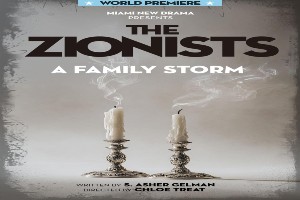
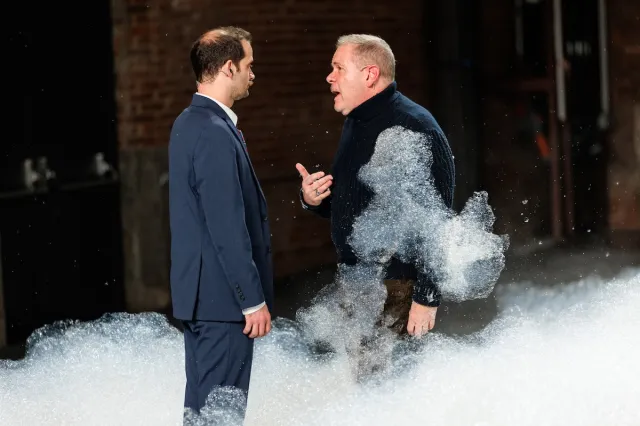
In 2025, Hausmann commissioned and produced Birthright, a sweeping, generation-spanning drama by Jonathan Spector that is now headed to MCC Theater with Broadway producer Sonia Friedman, Jenny Gersten and FourthWall Theatrical attached. He followed it with the world premiere of S. Asher Gelman’s The Zionists, a family drama with a provocative title and a penchant for drawing both conversation and protests. That play is still running in Miami and will move to the Berkshires in June, for a run at Barrington Stage Company.
We spoke with Hausmann about what it takes to hold the room when the room is deeply divided.
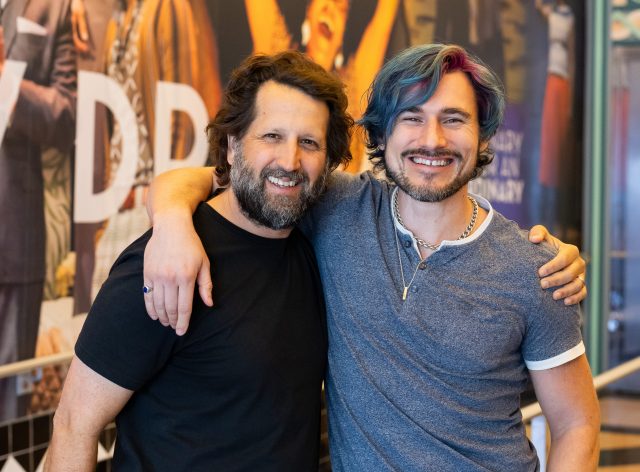
(© Miami New Drama)
This conversation has been condensed and edited for clarity.
You founded Miami New Drama a little more than 10 years ago. What was the original vision?
Miami New Drama existed with the idea that a regional theater should create new work that speaks to the community. Miami is a very Hispanic town. Fifty-four percent of Miami is foreign born; 70 percent is Hispanic. We became the largest bilingual theater in America. We do at least one show in Spanish a year. We’ve done 25 world premieres, a large portion of which are about the history of Miami. We have a large Venezuelan community, so we do a lot of new work that centers the Venezuelan experience, and the Cuban exile experience. After October 7th, we also created a Jewish play initiative. Miami is also home to one of the largest Jewish communities in America. There’s something exciting about Miami. It is significantly more diverse, multicultural, and multilingual than America. To some degree, America will slowly become more like Miami, and I feel we have the vantage point of creating the future of American theater.
How did the Jewish play initiative come about, since that ties into both The Zionists and Birthright, which is coming to New York this summer.
Starting on October 7th, and especially on October 8th, when I saw the response from a lot of people in our theater community, I had this realization that there’s not going to be a lot of challenging Jewish work going forward. I think they were going to do a lot of The Diary of Anne Frank, but given the temperature, there’s not going to be a lot of world premieres about challenging and complex and nuanced works about the current moment in time.
Because we do world premieres, I’m able to try to always be a little bit ahead of the moment, or on the moment. On October 20th, I called Jonathan Spector and I said “Jonathan, I created this initiative. I want, for the foreseeable future, to do at least one Jewish show a season, and I would love for you to write a play about this moment in time.” Jonathan is a very smart man, so he said no to me like 40 times until I got so annoying.
Why didn’t he want to?
It’s a big, complicated subject. Why would he put himself through that? Why expose himself? And he felt like he did not know how to approach it. Ultimately, he came up with a brilliant idea that ended up being Birthright, that we premiered last season.
Birthright really brought complicated reactions from the audience, mostly very positive. Some people were upset. If you get folks upset from different ends of the political spectrum, you’re doing something right. And I think that’s been the case both for Birthright and for The Zionists.
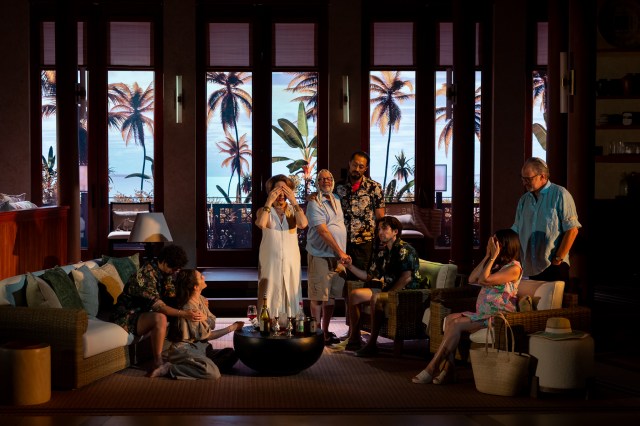
(© Morgan Sophia Photography)
A play like The Zionists has a very confrontational title. How is it doing?
It’s mostly sold out, except on Fridays. It’s very interesting. There are a few folks every performance who stand up and leave because they feel uncomfortable about some of the criticism of Israel that some of the character say. As they leave, they get confronted with protests from the anti-Zionist groups that are protesting the show. I have the two ends of the spectrum responding. Mostly, people are very grateful to have a space. The play stoped being just about the play and has become an emotional experience. It’s a place where people can share space and ideas with others in the community.
Being a family drama, does it present all the different generational positions on these issues?
For sure. It’s very complicated because, in Judaism and in many traditional families, the relationship with Israel is a very deep and an important one. When members of the family are thinking differently, it puts at risk the continuation of a family as an entity, right? But we are so polarized about almost everything that you can change the characters from being anti-Zionist to being Trumpist, or to being something else and it’s the same story. I mean, this is happening in every family in America, which is very different from where we were as a country 20, 30 years ago. There’s something breaking in society, and I think that plays like this force audiences to sit down for a couple hours and listen to things that they love to listen to and listen to things that make them extremely uncomfortable. The only way is to heal society to listen to each other.
The last show we did was called English Only. It was about a small ballot initiative in the election of 1980 in Miami-Dade County to remove Spanish as an official language. It was focused on the Hispanic league that was trying to protect Spanish and this nativist movement that wanted to remove Spanish. It was important for that play to give space for both ideas and be said in an intelligent way. Theater is this great tool where we can actually use those opposing points of view with respect.
How do you ensure all sides of the argument are heard fairly in something like The Zionists?
I always push for every other argument to be just as important, just as well-versed. What ends up happening is that if you’re an anti-Zionist and you see The Zionists, you feel like all your arguments were there. And if you defend the state of Israel and identify with those members of the family, you feel like everything you would have said, they said. But what is key—and Birthright and The Zionists do this extremely well—is that the argument should always be character-driven, not policy-driven. The characters went through certain things that lead them to feel a certain way. When it’s part of a character’s development, it doesn’t feel like Wikipedia or NPR. The only way to heal society is to listen to each other. If we don’t listen to each other, we’re not going to make it.




source on Google
Featured In This Story
Latest Reviews
See all






Latest Videos
Watch the Trailer for Elsinore Starring Andrew Scott
The film is based on the true story of Ian Charleson, who played Hamlet at London’s National Theatre after being diagnosed with AIDS.