
Interviews
Blue Moon Rising: Writer Robert Kaplow Puts Lorenz Hart in the Spotlight and Lands an Oscar Nomination
Kaplow earned a Best Original Screenplay nomination for his drama set on the opening night of Oklahoma! in 1943.
 |
Los Angeles | New York City
|
|
Los Angeles | New York City
|
March 3, 2026
Writer Robert Kaplow had a dream in his heart when he was writing the screenplay for the film Blue Moon.
It wasn’t the dream of an Oscar nomination for Best Original Screenplay—that’s just gravy. No, Kaplow, who spent three decades as a teacher and novelist before director Richard Linklater and actor Ethan Hawke led him toward Hollywood’s Biggest Night, just wanted to get the idea of Lorenz Hart out there.
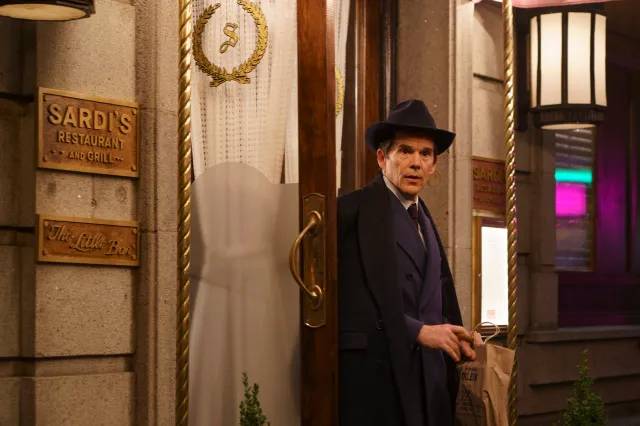
Faced with only fragments of archival audio and scattered correspondence, he set out to imagine a voice worthy of the lyricist behind “My Funny Valentine,” building a chamber piece set over the course of one night at Sardi’s as Rodgers and Hammerstein’s Oklahoma! ushers in a new era.
In giving Hart center stage at a moment when he feared he’d been written out of the story, Kaplow proves that sometimes a so-called blue moon is simply the right spotlight at the right time.
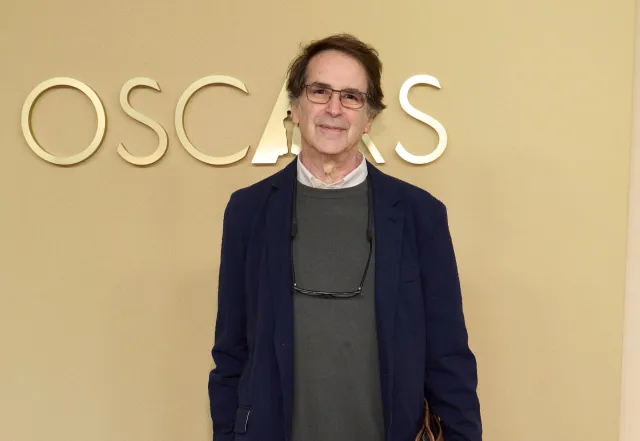
(© Mark Von Holden/The Academy)
This conversation has been condensed and edited for clarity.
The subject matter of Blue Moon is so rich because Lorenz Hart is one of the major theatrical figures of the 20th century, but there isn’t a whole lot of primary source material out there about him.
No, and that was part of the challenge for me. There’s very little audio you can listen to. I mean, there’s almost none. There’s a little film he made with Rodgers in the ’20s. He’s on two radio shows from the ’30s, but he’s reading these terrible scripts, mostly joking about how short he is. The challenge was to try to invent a plausible voice for him, where you would say, “Yeah, this is the guy that could have written ‘My Funny Valentine’ and ‘I Wish I Were in Love Again.'” And that would be just like those songs: funny, sardonic, inventive, and manifestly lonely right under the surface.
When did you start thinking about this?
This idea had been with me a long time. When I was in my 20s, I thought I wanted to be a songwriter, and I remember going to the Library of the Performing Arts and listening to this long interview with Richard Rodgers. I got to the point in the interview where he talks about his decision to leave Larry Hart, and there was something chilling and so businesslike in the way he said it. Sitting there with my headphones on, I felt an actual chill in my heart. You felt that this was a painful thing for Rodgers, but over the years he had armored his heart against feeling too sentimental about it. I think the seed of it was planted then.
(© Sony Pictures Classics)
The entire film takes place in Sardi’s. Was the screenplay confined to that location even in its earliest stages?
Yes, it was. That just felt right to me. The fact is that Lorenz Hart did attend the opening of Oklahoma! Whether he went to the after-party or not is my invention. It’s both brave and self-destructive to go to that party. That conflict interested me dramatically.
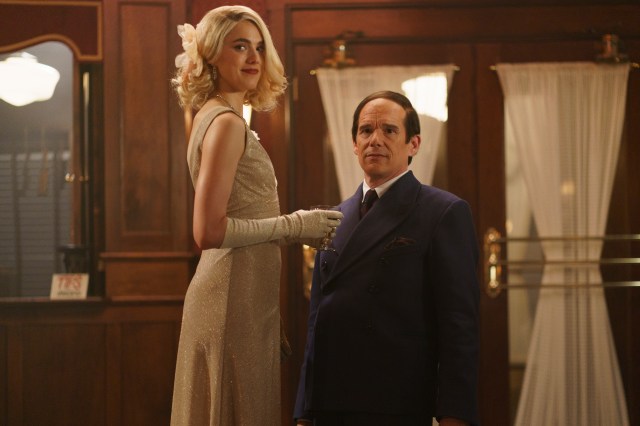
I’ve wanted to ask you about the Elizabeth Weiland character, played by Margaret Qualley. A title card says the film is inspired by her correspondence with Larry Hart, but who is she?
She’s a student at the Yale School of Fine Arts, and her name is Elizabeth. I didn’t do any further sleuthing than that. The letters came to me late in the process through a used-book dealer in Nyack who knew I was interested in this and asked if I wanted to buy them. These are all letters from her. She made carbons of her own letters; I think she thought she was going to be famous enough that her correspondence was worth keeping.
They’re all from the summer of 1942 and fall of 1943, and they suggest a friendship between the two. They went away for some weekend to a lake house, but we don’t know what happened. That’s entirely my invention. We don’t know if they even went alone. She talked about having this disastrous 20th birthday with a boyfriend she had a crush on, but she doesn’t say what happened. It was like listening to one part of a phone conversation, and I’m inventing the other side in a way that I thought would be plausible and would also mirror Hart’s yearning and loneliness.
(© Sony Pictures Classics)
Tell me about the young Stephen Sondheim.
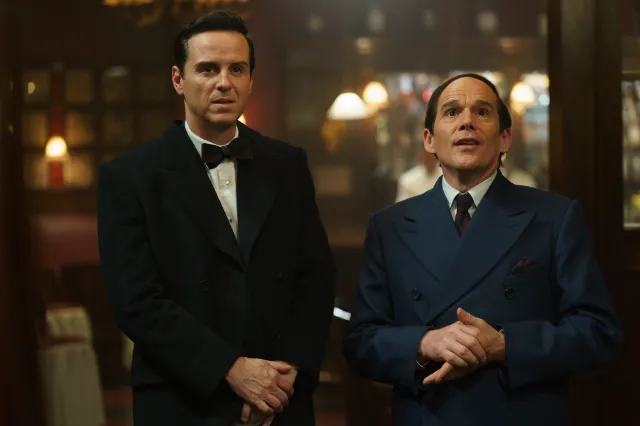
I couldn’t resist that. Sondheim had said that the first opening he went to was Carousel. He tells the story of crying into Dorothy Hammerstein’s fur coat, and she was furious at him for wrecking it. But I just thought, if I’m going to bring Hammerstein in here, then I can’t resist bringing in his young protégé from Bucks County. Knowing how Sondheim took jabs at Lorenz Hart for being sloppy and stuff like that, I thought, I’m going to give that to the 12-year-old version of Stephen Sondheim. If people get it, it’s funny, and if they don’t, it’s just a precocious young character.
You’ve spent the bulk of your life as a teacher. What did you teach?
I was a teacher for 34 years, and I taught AP English, creative writing, and film studies.
(© Sony Pictures Classics)
Having taught film studies for so long, what is it like to now be an Oscar nominee for your own contribution to the field?
It’s astounding. I’ve written novels. Novels are nicely reviewed by five people, bought by 100 people, and vanish from the face of the earth. I didn’t realize the profound cultural noise that an Oscar nomination makes. People I haven’t spoken to in 40 years are calling me up. I go to a restaurant and the owner comes out to congratulate me and pays for my dinner. Its fingerprints are so deep in the culture.
How are you finding the Oscar events?
I’m a stranger in a strange land. I went to the Oscar nominees luncheon, and there’s a moment where they call all the nominees up for the photograph. I’m standing in the top row watching this thing unfold. Twenty feet to the right of me is Steven Spielberg. Leonardo DiCaprio is 10 feet in front of me. Ethan Hawke is over there. It really was the realm of the surreal. The delightfully surreal.
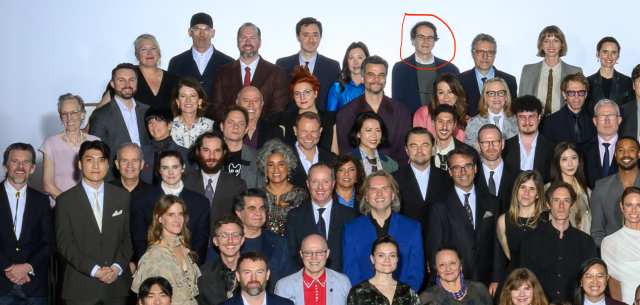
(© Richard Harbaugh/The Academy)




Latest Reviews
See all

Latest Videos
West End vs Broadway: Oh, Mary!—From an Angry Inch to an Angry First Lady, With John Cameron Mitchell and Mason Alexander Park
Mitchell and Park celebrate a decade-long friendship in our latest installment.