
Review: It’s a Wonderful Life: A Live Radio Play on Broadway
Andrew Rannells, Megan Hilty, Tituss Burgess, Harry Hamlin, and Lisa Rinna star in a beloved Christmas story onstage.
 |
Broadway
|
November 23, 2026
(© Matthew Murphy and Evan Zimmerman)
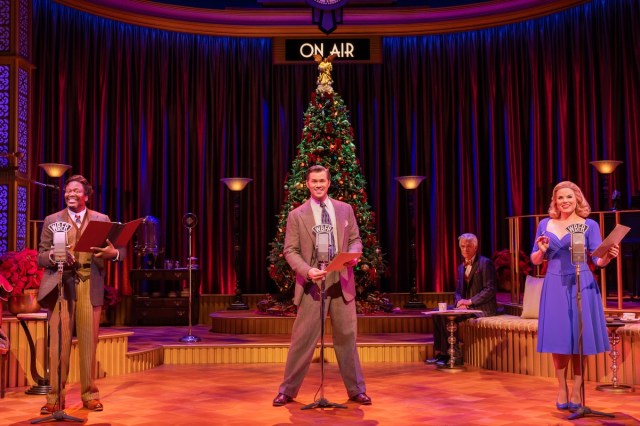
It’s a Wonderful Life is my very favorite Christmas movie. I’ve seen it so many times, I’ve committed the screenplay to memory, as I quickly discovered while watching Joe Landry’s stage adaptation, It’s a Wonderful Life: A Life Radio Play, at the Broadhurst Theatre.
Landry reimagines Frank Capra’s 1946 film (based on Philip Van Doren Stern’s story “The Greatest Gift”) as a radio play performed on Christmas Eve 1946 in front of a live studio audience. A delightfully theatrical throwback to the immediate postwar era, it invites us to marvel at the creation of live sound effects, bask in the ingenuity of voice acting, and really appreciate a story that still speaks to us 80 years later.
An all-American riff on “A Christmas Carol,” it’s the story of George Bailey (Andrew Rannells), the proprietor of a humble building and loan in the fictional town of Bedford Falls, New York. George had bigger dreams for himself, but the needs of his wife, Mary (Megan Hilty), and his young family kept him at home. Always putting himself second even as a boy, George saved his brother Harry (Lisa Rinna) from drowning under ice, an incident that left George unfit for military service on account of a bad ear.
Now, with the war over and decorated fighter pilot Harry on his way home for Christmas, the Baileys should be celebrating a victory lap. But absentminded Uncle Billy (Tituss Burgess) has misplaced $8,000 in deposits, and local plutocrat Henry Potter (Harry Hamlin), who resents the Baileys for providing a housing alternative to his slum rentals, has reported them to the police. George considers taking his own life, but he is stopped at the last minute by his guardian angel, Clarence (Burgess), who shows him what a dark place the world would be without him in it.
(© Matthew Murphy and Evan Zimmerman)
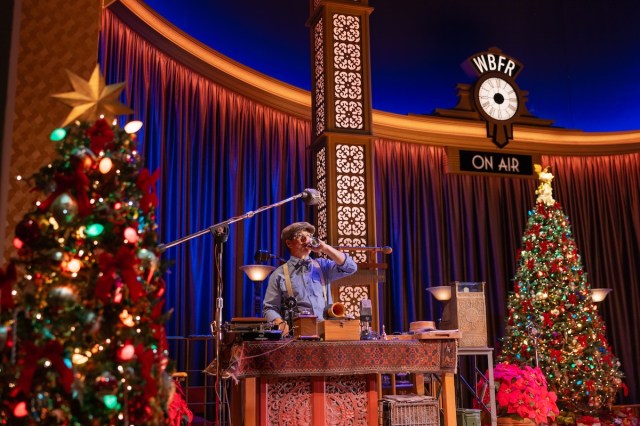
Landry’s 90-minute adaptation has been kicking around for three decades, but this production marks the play’s Broadway debut. It looks like a million bucks under the direction of Jerry Zaks. Santo Loquasto has transformed the Broadhurst into a 1940s radio auditorium, with a golden latticework column lamp and art deco applause signs that look like they were lifted directly from Rockefeller Center. Loquasto’s well-selected period costumes are complemented by Luc Verschueren’s wig design, waves of cascading hair to carry the boys home (Verschueren is with Campbell Young Associates). Lighting designer Kenneth Posner keeps the house lights up in the first part of the play, then slowly, imperceptibly dims them, drawing us into the story onstage. And Palmer Hefferan amplifies and slyly augments the live Foley effects that Leslie Bloome creates on a raised platform stage right.
Watching Bloome and Andy Einhorn, who sits at a grand piano stage left and creates all the musical underscoring, is half the fun of this show, which is a loving tribute to the art of audio production. Bloome slams doors, pours drinks, and creates thunderclaps from his little station—all perfectly timed.
The other half is the beautifully layered performances: 2026 Broadway stars playing fictional voice actors from the 1940s playing iconic movie characters. Rannells has a tough act to follow in Jimmy Stewart, but he takes full ownership of George and his words, which still resonate. His monologue about the right of regular Americans to work and pay and live and die in a couple of decent rooms and a bath (that they own) could very well be a winning stump speech in 2028.
(© Matthew Murphy and Evan Zimmerman)
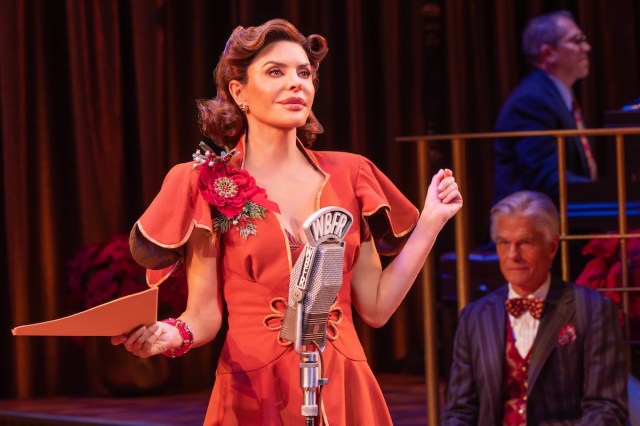
Burgess is similarly adept at merging his own idiosyncrasies with those of Clarence, the sweetly innocent guardian angel who is self-conscious about his wingless second-class status. And as Mary Bailey, Hilty looks like she was abducted from a USO show and stuffed into a phone booth by Vladimir and Estragon.
Rinna is a real scene-stealer in a bunch of roles, from boy-crazy Violet to adorable little Zuzu. She plays men, women, and children with equal relish, modulating her voice and creating instantly distinct characters. She’s everything you want from a voice actor. At the risk of incurring her wrath, I must report that the same cannot be said of Hamlin (who is her husband). He’s the same droning patriarch when playing Joseph (the superintendent of angels) and Mr. Potter, and of all the actors, he seems the shakiest on his lines, with his eyes too often buried in the script.
But despite the occasional squishy performance or flubbed line, It’s a Wonderful Life: A Live Radio Play is still the best Christmas show on Broadway, a joyously inventive spin on a surprisingly timely story. It’s not just about one man’s new lease on life, but a portrait of a generation of Americans who deferred their own pleasure in favor of service, defeated both the fascists and the monopolists, and left their children the entire world. This Christmas is as good a time as any for us, their descendants, to reevaluate what we have done with that inheritance, and how we can still learn from their example.




source on Google
Featured In This Story
Related Articles
See all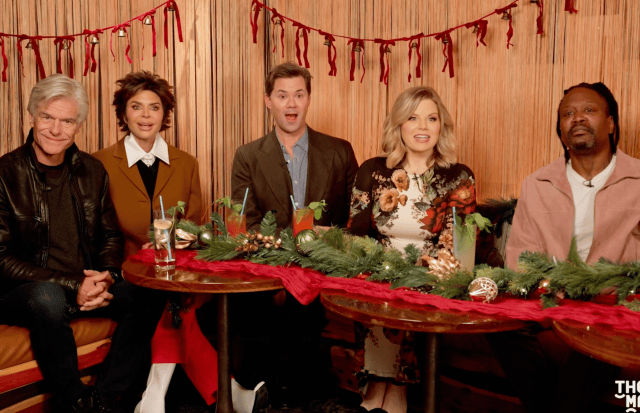
Latest Reviews
See all


Latest Videos
Watch: Dolly Parton's Broadway Family Remembers Their Time With the Country Music Legend
Katie Rose Clarke, Carrie St. Louis, and more share memories of the days they spent in rehearsal with the icon before her passing.