
Review: Chuchitos, Politics, and Family Collide in Fantasma at 59E59 Theaters
Benjamin Benne’s bilingual Christmas drama serves up immigration debates alongside Guatemalan comfort food.
 |
Off-Broadway
|
November 23, 2026
(© James Leynse)
Christmas may be a time of love and togetherness, but it can also host tense political debates between family members. Stir in immigration issues into the mix along tasty Guatemalan food, and you have Benjamin Benne’s engaging Fantasma, now onstage at 59E59 Theaters.
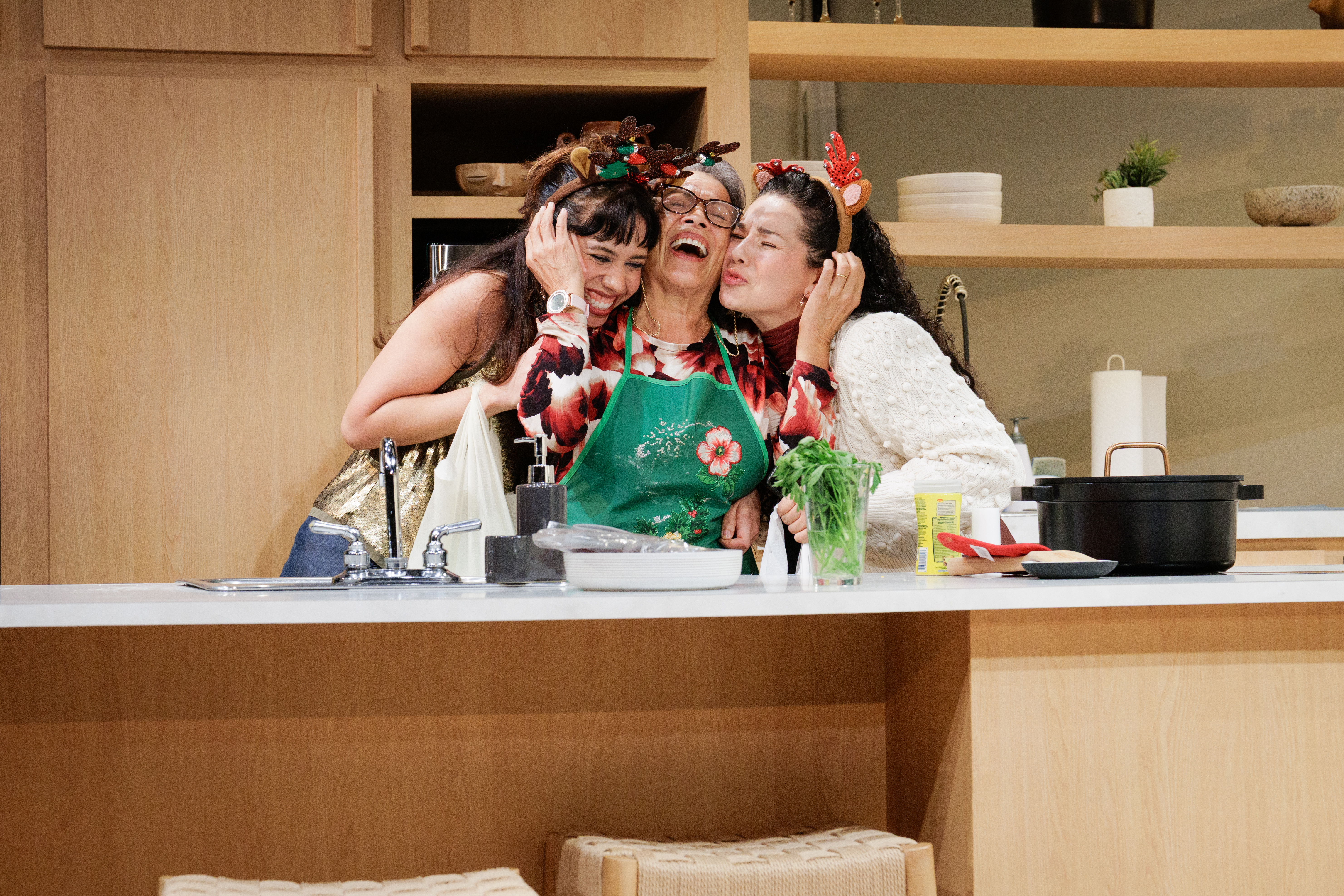
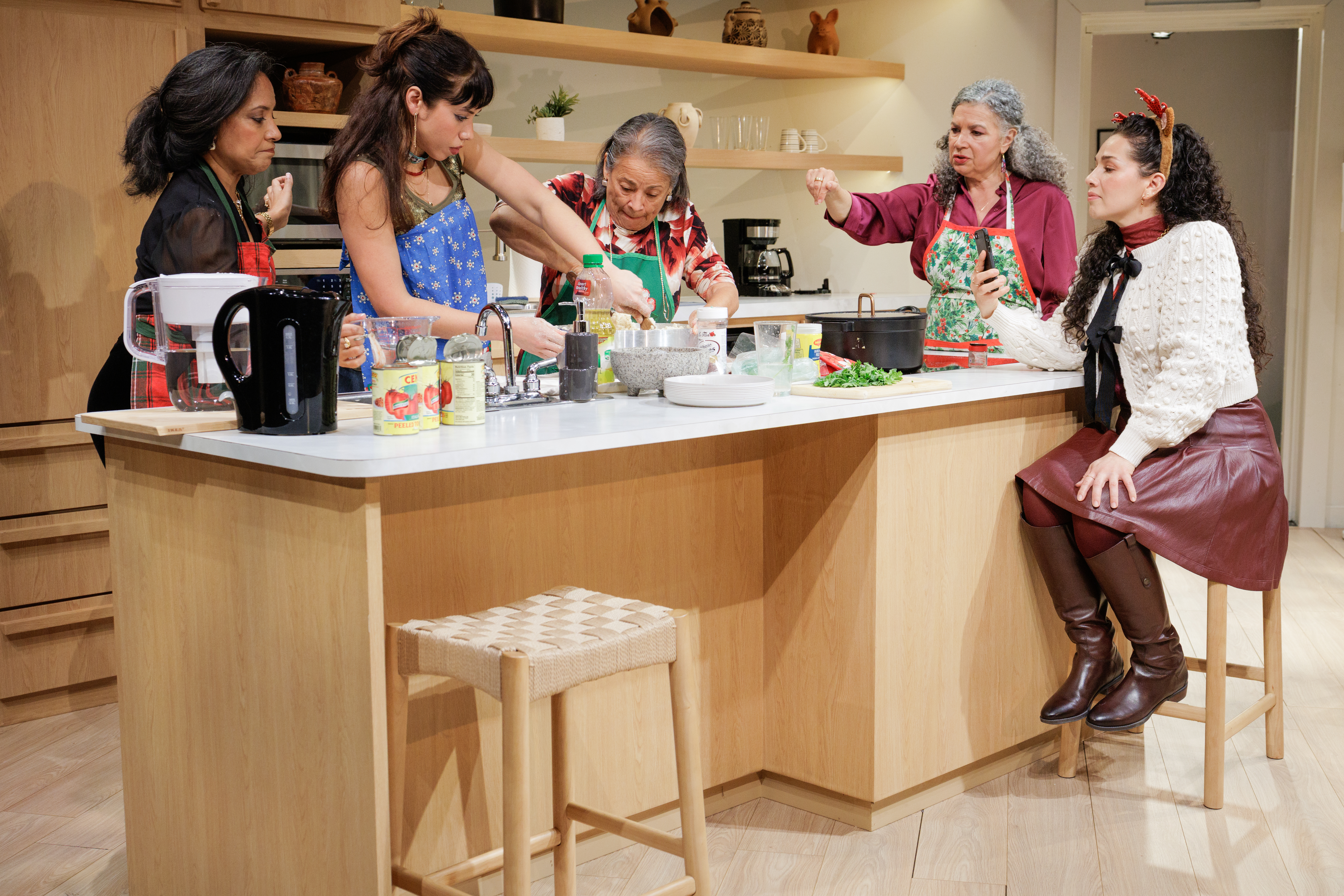
It’s the holidays, and matriarch Rosie (Alma Martinez) is making her traditional chuchitos. In a scene performed largely in Spanish, we’re introduced to her daughters. Capable Ramona (Adriana Sevan, giving extreme oldest-daughter energy) bosses around bubbly but insecure middle child Carmen (Zabryna Guevara), while Patty (Nancy Rodriguez), the baby of the family, is tasked with the least demanding job: toasting sesame seeds.
Soon, another generation arrives: with cell phone cameras and Notes app at the ready, granddaughters Celeste (Camila Moreno) and Lizzy (Elizabeth Ramos) enthusiastically document the cooking process to save the chuchitos recipe, which exists only in Rosie’s memory, for future generations. Though they show up late and their Spanish is weak at best, they genuinely love their grandma and want to learn from her.
The production blends Spanish and English to present a bilingual family, and the cast authentically prepares chuchitos as the play unfolds. The food preparation is so exacting, though, that it begins to strain our patience before real conflict is introduced.
But the play picks up speed when Celeste grills her mom and aunts about who they voted for in the Trump/Clinton election. Despite her family’s attempts to distract her, she digs into the fact that the older generation disparages migrants at the border for coming to America “the wrong way” when they themselves were asylum seekers. This debate splinters the family into two factions: one idealistic but reductive, the other either world-weary and practical or simply hypocritical.
(© James Leynse)
Benne’s layered writing offers room for your opinion to shift as the story moves incrementally forward 20 years. Over multiple Christmases, the girls begin to understand why their family members, whose lives have been repeatedly upended by violence and trauma, might cling to American conservativism, even while knowing the harm it’s done to them.
Some of the choices the younger generation makes within their own set of circumstances render them hypocritical as well. One clever detail involves a character who criticizes the older generation for marrying white men yet has a fiancé named Brad Miller who funds her activist lifestyle and trips abroad. Details like these aren’t used to invalidate either generation’s position, but rather to suggest that understanding comes with time, not interrogations. We see the family assimilate over the years as Spanish gives way to English and the chuchitos steam in the oven.
The performances anchor the strong script. Sevan, Guevara, and Rodriguez give emotionally affecting turns in monologues about life-changing events, but the standout among them is Martinez, who, to communicate a Spanish story to a largely monolingual audience, dives into her physicality to convey meaning without overplaying. “You … understand me?” she intones at the end, and whether we understand the language or not, we get what she is trying to say. Under the deft guidance of director Laurie Woolery, Moreno and Ramos make small changes in their characters that build to very different but still recognizable people at the end of the 20-year journey.
Production elements are generally solid. Haydee Zelideth’s thoughtful costumes use a limited number of pieces to convincingly convey character shifts over the years. The lighting (by Mextly Couzin) helps sell the potentially confusing time shifts of the plot. The set (Efren Delgadillo Jr.) is functional, not much else: there’s a working sink and a steaming stove, but nothing specific to distinguish it for this particular family and their relationship with assimilation.
By the time the cast snacks on the chuchitos, we’ve experienced many delicious layers of this complicated family. Whether you’re planning on fighting with your relatives over politics this Thanksgiving, or avoiding politics at all costs, Fantasma might give you a little insight into the other generations at your table.




source on Google
Featured In This Story

Latest Reviews
See all








Latest Videos
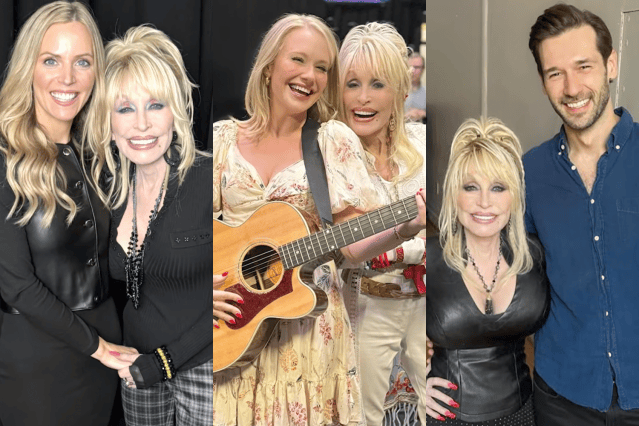
Watch: Dolly Parton's Broadway Family Remembers Their Time With the Country Music Legend
Katie Rose Clarke, Carrie St. Louis, and more share memories of the days they spent in rehearsal with the icon before her passing.