
Interview: Epic Players Founder Aubrie Therrien on 10 Years of Inclusive Theater
The founder of the neurodivergent and disabled theater company discusses paid work, casting barriers, and her vision for the future.
 |
Off-Broadway
|
November 27, 2026
For a decade, Epic Players has given neurodivergent and disabled artists a place to train, perform, and work as professionals. Founded by Aubrie Therrien, the company now serves about 250 players across its New York City and Los Angeles locations. Its junior program reaches roughly 700 students nationwide. Players act, direct, write, stage-manage, and are paid for their work, while the company offers 100 free performing arts classes a year.
As Epic marks its 10-year milestone, Therrien is looking ahead to the next 10. Her priorities are paying actors an hourly Equity rate, finding a permanent space to ease a long waiting list, and presenting productions that show her players can take on lead roles. Current offerings include The Curious Incident of the Dog in the Night-Time at A.R.T./New York. TheaterMania talked with Therrien about how she sees theater as a source of community, opportunity, and change.
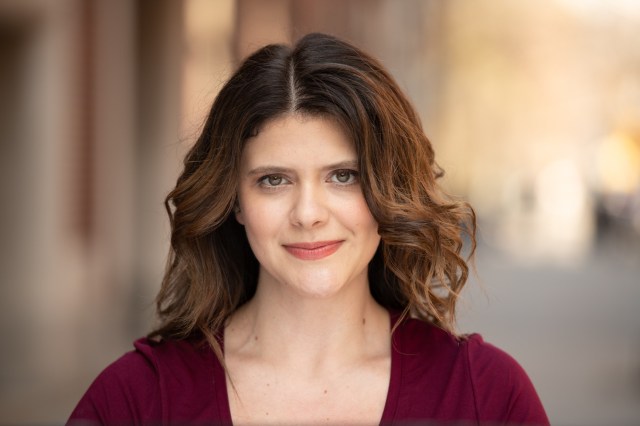
(courtesy Epic Players)
This conversation has been condensed and edited for clarity.
How did Epic Players get started?
Disability has always been a part of my life. My grandmother had polio, so she only had one leg, and so did my grandfather. He died unfortunately young and left her with four young kids, and she was a disabled adult navigating the 1940s without protections.
Neurodivergence has also always been around me. My mom was a teacher for students with disabilities. When I was an actor, I used to go home during Christmas break and write play workshops for her students based on whatever book they were reading. These were students with significant challenges: behavioral, communication, reading, literacy, etc. All of a sudden they were learning their lines, everyone else’s lines, directing the entire show, and then putting it up in front of the entire audience.
After that experience, I thought I want to do something different with my art. This is what theater should do. I really feel like you can be born with a disability and also born with talent. Those things are not mutually exclusive. I decided to start Epic because I wanted to give our artists the opportunity to play roles that have been denied to them, not to do recitals, but to do really beautiful, amazing, high-quality productions and to find work in community.
It’s so great to see something this inclusive, as theater should be. Do you find that disability can be a kind of superpower? I feel like people with disabilities are sometimes the most creative people you meet.
The most creative, the most honest, the most authentic, the most prepared, the most professional. We provide 100 free classes in the performing arts a year, and we’re often told by casting directors, “Aubrie, your actors were the most prepared and professional actors I saw.” They’ll memorize their material and everybody else’s. They’ll have read everything on the character, or if they have reading challenges, they’ll watch and listen to everything on the character. So that’s the skill set they bring to the table.
Do you have any idea how many people you’ve impacted?
Right now we serve about 250 players nationwide, as we have an LA location and a New York City location. In schools, because we have a junior program, we work with about 700 students nationwide.
What feedback have you gotten from students and parents? Has this significantly changed people’s lives?
Absolutely. That’s really why this 10-year milestone is so significant. I reflect on all of the artists in our group and how the community we’ve created has impacted their lives, and then I think about the next 10 years and the sustainability of that and how to keep it going, because it really is not just a theater group; it is a critical life resource for our players.
I think the number one thing our players would say is that Epic treats them like an equal and like a professional. On the more tangible side, we’ve had players come to us barely speaking who are now doing monologues, starring in a show, singing, and going out and getting other jobs. We’ve helped people join the union. We’ve helped them get life-changing jobs that have quite literally changed the course of their careers. We’ve helped players who’ve been unhoused, players who are struggling to get a diagnosis and need support there, and we’ve intervened where other jobs maybe weren’t quite understanding their needs and their access pathways, and we come in and support. So we think about disability in the arts from a systems lens, and we really want to ensure that our players feel supported and are successful not just here, but outside our program.

(© Zui Gomez)
How can people who are interested in becoming a player get involved?
If they want to be a player, they can go online and fill out our form, and then our player liaison, Miles, will reach out and say, “Hi, I’m Miles. Let me talk to you about Epic and let you know what we are.”
And your performances are open to anyone who wants to attend?
Oh, absolutely. Curious Incident is happening at A.R.T./New York in the Mezzanine Theatre [through December 6], and 504 is at Theatre Row [April 16-May 23]. It’s like any other theater company, open to the public. We do a significant number of shows now.
You mentioned the next 10 years. What’s your vision?
I have a lot of dreams for Epic. I mentioned before that we pay all of our players for their time and talent, and our programs are completely free. Our next goal, which we will achieve this next year is paying our actors an hourly Equity rate. That’s really important to us, and it’s happening now. We’re also producing on a higher level because we want to show that our players can play Mark in Rent and the Baker and the Baker’s Wife in Into the Woods. They can play the leads.
Why should audiences come see a show?
I think coming to see a show completely changes your perception of what disability is, what access is, and what the capabilities of disability are. Our actors are phenomenal. A group that was doing some media work with us wanted to bring their advisory board to a rehearsal. We did a run-through of Act One. After the run, as the group was leaving and mingling with our actors, one of them came up to me in awe and said, “I don’t have the words to explain what I just saw versus what I thought I was going to see.”




source on Google
Featured In This Story

Latest Reviews
See all









Latest Videos
Watch: Dolly Parton's Broadway Family Remembers Their Time With the Country Music Legend
Katie Rose Clarke, Carrie St. Louis, and more share memories of the days they spent in rehearsal with the icon before her passing.