
Special Reports
The New Broadway Season Is Here. How Did Only Six New Musicals Make It Into the Last One?
TheaterMania is Tuesday-morning quarterbacking the 2025-26 Broadway season.
 |
Broadway
|
|
Broadway
|
June 9, 2026
“Sometimes singing, dancing, a lot of jokes, and a happy ending is really all you need.” Schmigadoon!’s lead producer Lorne Michaels, delivering one of the most subdued Best Musical acceptance speeches the Tony Awards has ever seen, used his airtime to impart this nugget of wisdom. In a room full of dyspeptic theater professionals, he was Elle Woods going, “What, like it’s hard?”
As inadvertent rim shots go, you couldn’t have written a better one to button this oddball Broadway season, capped by a Tony ceremony that couldn’t duck the question, “Where are all the musicals?” Even Cinco Paul, who joyously accepted his two awards for Schmigadoon!’s book and score, advocated for a bigger field. “We need more new musicals on Broadway,” he said on the Radio City stage (prior to the main CBS broadcast, because we couldn’t possibly bore the people at home with the folks who wrote the shows). “Support new musicals.”
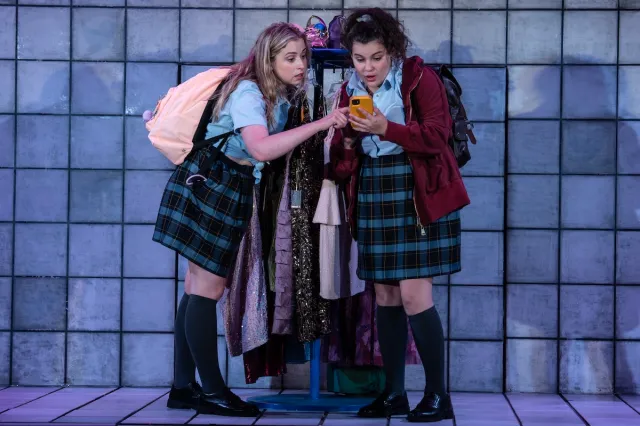
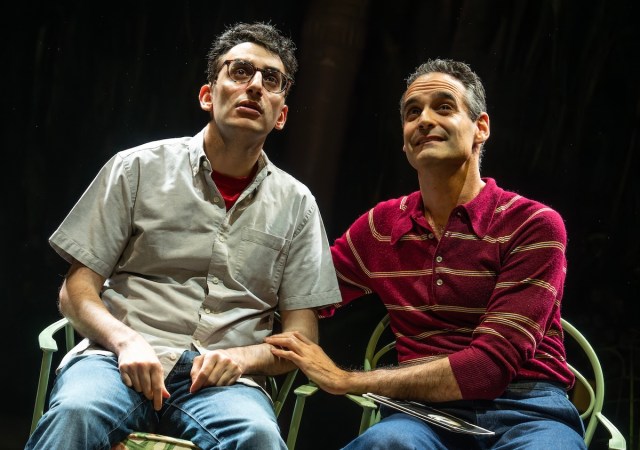
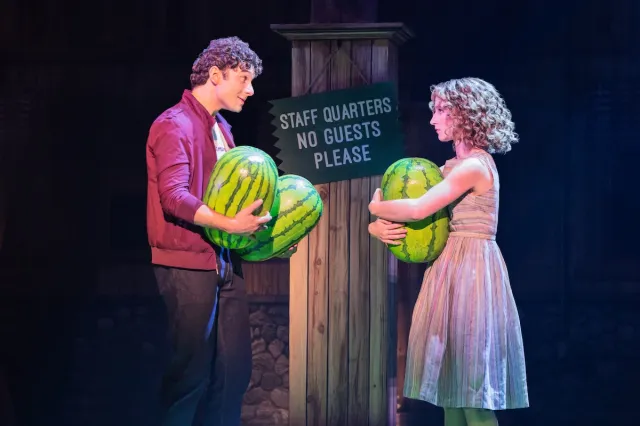
If you’re wondering whether the statistics bear out the angst, here they are: The 2025-26 Broadway season saw exactly six new musicals: Schmigadoon!, The Lost Boys, Titaníque, Two Strangers (Carry a Cake Across New York), The Queen of Versailles, and Beaches (the four that are still running were nominated for Best Musical). By comparison, 16 new musicals opened in each of the prior two seasons. Even the 2019-20 season managed to open five new musicals before Covid shut down theaters in March, and the following two seasons of recovery launched eight and nine new musicals, respectively.
It’s a severe and suspicious drop, and it begs the question: Can we shrug it off as a blip, or are there messages in the tea leaves?
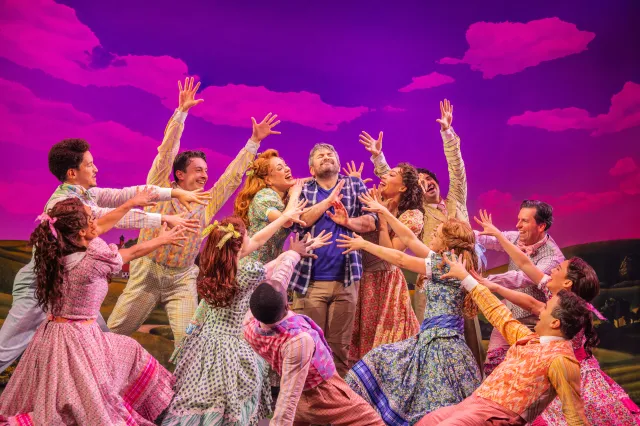
(© Matthew Murphy)
First, it’s worth noting that though the 2025-26 Broadway season opened eight fewer total productions than the 2024-25 season, gross earnings saw a moderate increase ($1.89 billion rose to $1.91 billion) with attendance coming in at 14.58 million compared to last season’s ever-so-slightly higher 14.66 million. Cue the debate about price gouging. The point is, if you were to look at the raw numbers, you wouldn’t see an industry in crisis.
Broadway marquees don’t tell a grim story either. With the exception of the Majestic, which suffered the premature shuttering of Beaches, and the Todd Haimes, which closed its revival of Noël Coward’s Fallen Angels on Tony day, every other Broadway house is occupied (even the Shubert has Celebrity Autobiography planting its flag until August). A city of dusty, derelict theaters this is not. So if we want to know where all the musicals have gone, we have to look at who’s taking up all the space, and why.
Going into the season, Broadway was already out two major musical houses: the Lyric and the Marquis, home to magic-fueled mega-plays Harry Potter and the Cursed Child and Stranger Things: The First Shadow. Popular IP and spectacle have historically been the musical’s domain, but Sonia Friedman, lead producer of both, has shifted the paradigm and proven herself savvy for it.
Then there’s the Winter Garden, famous for housing long-running musicals like Cats and Mamma Mia! But over the past two years, it’s become a lucrative home for limited-run, celebrity-driven plays—safe bets for ticket sales with half of a musical’s operating costs and stars who only have to set aside a few months of their lives. Last year, George Clooney moved in with his blockbuster Good Night, and Good Luck, and this year, Nathan Lane and Laurie Metcalf are filling its 1,500 seats every night with their lauded revival of Death of a Salesman. In the fall, Tom Hiddleston and Hayley Atwell will take their turn with Jamie Lloyd’s Much Ado About Nothing before Lloyd’s Rachel Zegler-powered revival of Evita opens in the spring.
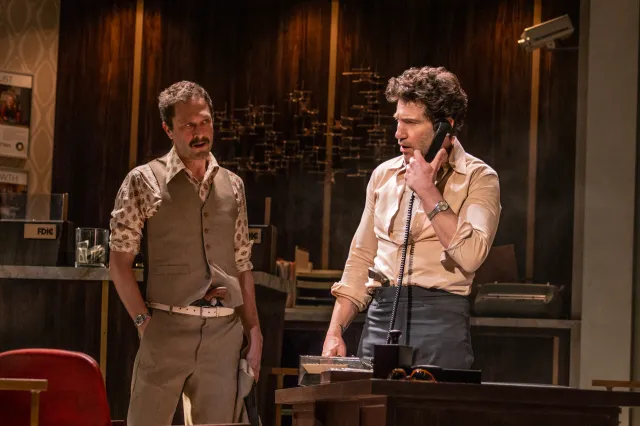
The pattern is apparent all across Broadway: Jon Bernthal is headlining Dog Day Afternoon at the August Wilson, onetime home to big musicals like Cabaret, Funny Girl, and Mean Girls; John Lithgow is giving his Tony-winning performance in Giant at the Music Box, the place you may have caught Tony-winning productions of Pippin, Dear Evan Hansen, or Suffs; and Daniel Radcliffe made a hit of the solo(ish) play Every Brilliant Thing at the Hudson, the same stage on which he earned his Tony for Merrily We Roll Along.
This is not a call to arms against the straight plays ravaging our streets. It’s wonderful that so many people are compelled to pay hundreds of dollars to watch actors talk to each other for two-plus hours without the respite of a dance break. It does, however, reveal a lot about the business mindset driving the Broadway industry and explains why musicals (especially ones that want an open run) are having an increasingly hard time making it to the front of the line.
And let’s not disregard the feat of plays like Bess Wohl’s Tony-winning Liberation that rolled the dice without bankable celebrities. “Saying that it’s commercially viable is [an] audacious claim,” said the play’s Tony-nominated star Susannah Flood at the beginning of its Broadway run in fall 2025. It’s true, and not every producer is down to be quite so audacious.
But while we’re reading tea leaves, this year’s Tony ceremony dropped some hints of its own. In both the Best Musical and Best Revival of a Musical categories, the winners were the shows that most closely resembled the archetypical Musical. Ragtime, a traditional book musical with a sweeping score and thoroughly drawn characters bested its main opponent, Cats: The Jellicle Ball, which turned Andrew Lloyd Webber’s trippiest concept piece into a raucous drag ball. Schmigadoon!, a spoof on the Golden Age musical that still loyally adheres to its structure, style, and tropes, won out over the death-defying feats and indie-rock sound of the emo vampire spectacle The Lost Boys.
Sure, the appetites of Tony voters and ticket buyers aren’t often in perfect alignment. And one person’s reverence for the classics is another’s resistance to progress. Even so, this year can serve as a helpful thought experiment. After all, when we have a skeleton crew of musicals, our priorities and proclivities become especially clear. Perhaps it’s not as cut-and-dry as our dear Tony-winning Lorne Michaels described (I wouldn’t say Ragtime meets the “happy ending” criteria)—but maybe it is time to go back to the basics.
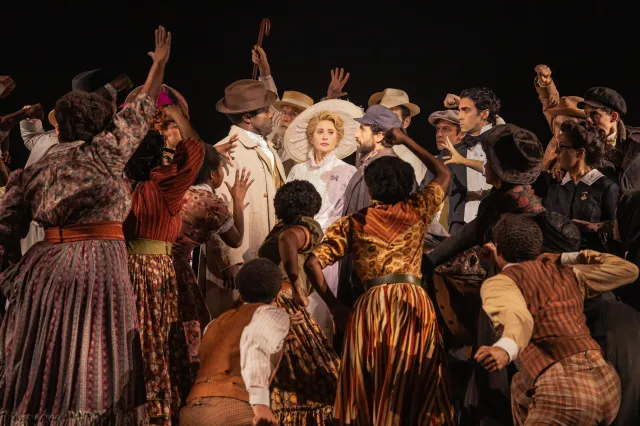
(© Matthew Murphy)




source on Google
Latest Reviews
See all



Latest Videos

Watch the Trailer for Elsinore Starring Andrew Scott
The film is based on the true story of Ian Charleson, who played Hamlet at London’s National Theatre after being diagnosed with AIDS.