
Review: Todrick Hall’s MIDNIGHT Is a Dazzling Spectacle in Need of an Alarm Clock
Hall’s new three-hour musical has a lot going for it—a little too much.
 |
Off-Broadway
|
|
Off-Broadway
|
October 15, 2026
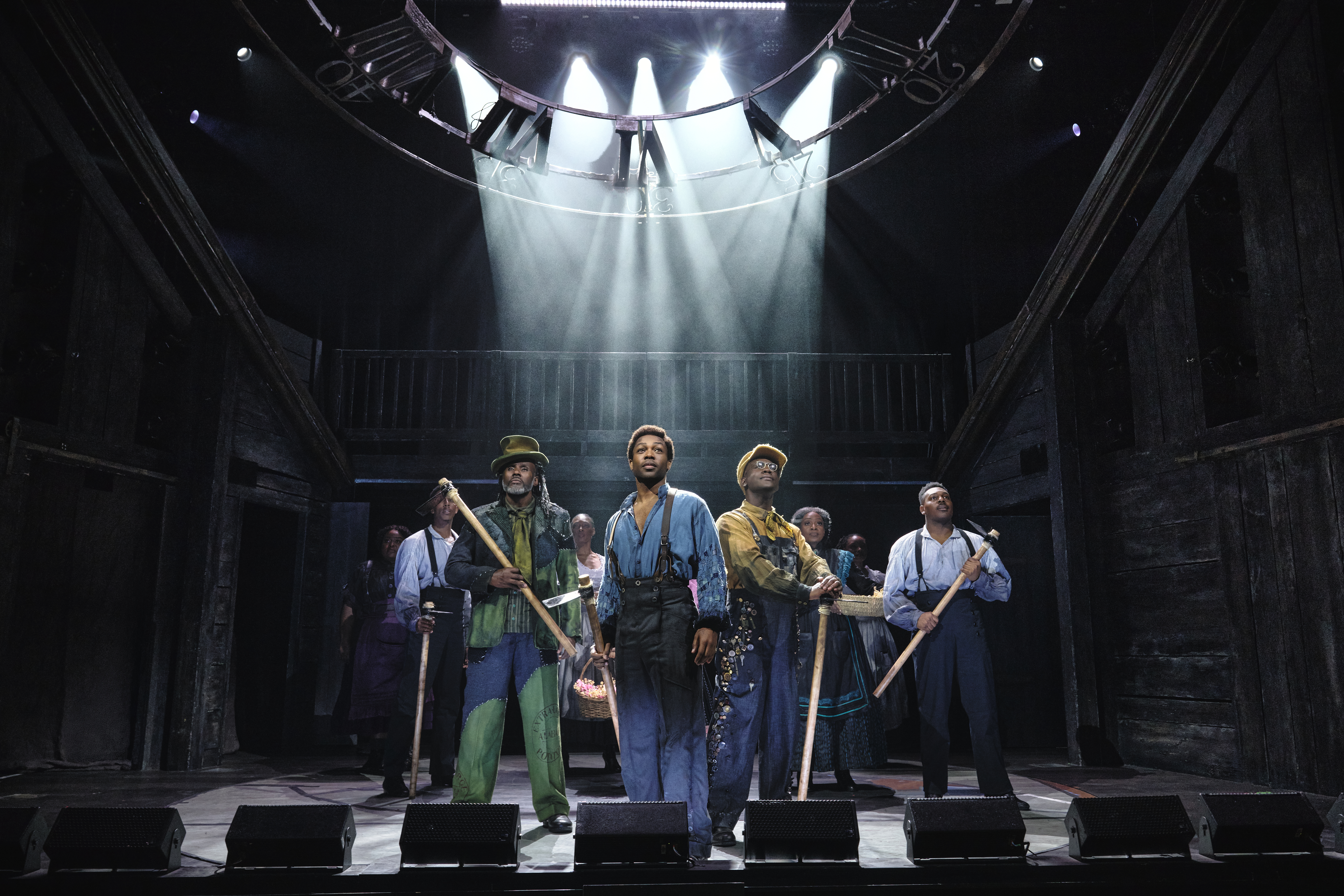
(© Valerie Terranova)
Todrick Hall has become known enough that the sight of his name outside the Daryl Roth Theatre has passers-by commenting on the prospect of his new musical, MIDNIGHT. Many know his songs, choreography, and style from viral videos such as “Nails, Hair, Hips, Heels,” a performance that still mesmerizes me.
MIDNIGHT, a fantastical exploration of race and sexuality in 19th-century America, shows us Hall’s talents on a grander scale. He penned the book, music, and lyrics himself (Mark Crossland and Laurence Stannard orchestrated). He stars in the title role, and directs, and choreographs, and produces. The show is a sung-through musical with an American history backdrop, and it clocks in at a hefty three hours. Hamilton was clearly on his mind.
But the next Hamilton this is not. The story is fictitious, and the eclectic score (gospel, R&B, pop, opera, and more) fails to cohere in a way that can hold its overambitious plot together. It’s giving Cinderella. It’s giving 12 Years a Slave. It’s giving The Color Purple. Honey, it’s giving Bridgerton! By the end you may find yourself in complete awe at the talent you’ve witnessed onstage and the genuine brilliance that Hall possesses in mind, body, and vocal cords. But you will probably also wind up perplexed and exhausted.
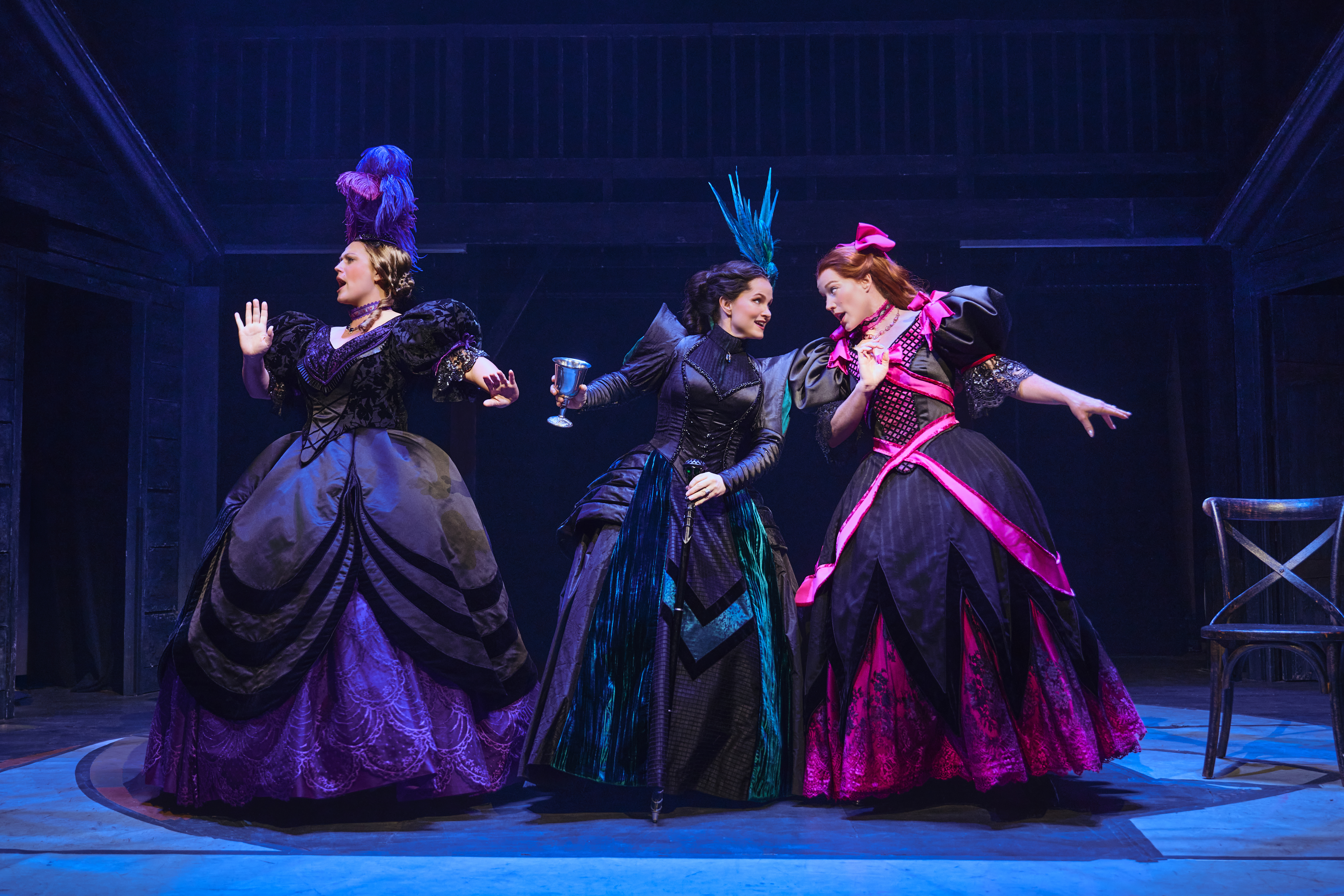
(© Valerie Terranova)
The story takes place somewhere in the American South in the middle of the Civil War years. Rail (Hall), born to enslaved parents, is sold as an infant to a white family by the evil Sylvester (Ciarán McCarthy) and grows up working for the haughty Charlotte (Autumn Hurlbert) and her two daughters, outer-beautiful Scarlet (Kennedy Caughell) and inner-beautiful Violet (Bella Coppola). Rail has captivated Lily Rose (Charlotte Odusanya) with his pretty eyes and gets warned by her friend, “mad as a toad” Happy (Kolbi Jordan), that he better do right by Lily Rose. So he promptly knocks her up.
Things get interesting when Charlotte enlists Rail to serve drinks at a ball attended by two white brothers, angry war veteran Harry (Jimmy Brewer) and handsome Richard (Jeremy Beloate). Richard sees in Rail someone who could help build his house when he marries Scarlet, and maybe he sees a little bit more. Hesitant at first, Rail agrees to help Richard build a new life with his wife, and along the way Richard teaches him to read and write. A friendship blossoms, and then there’s a kiss. Interracial gay love in 1864? Clack the fans!
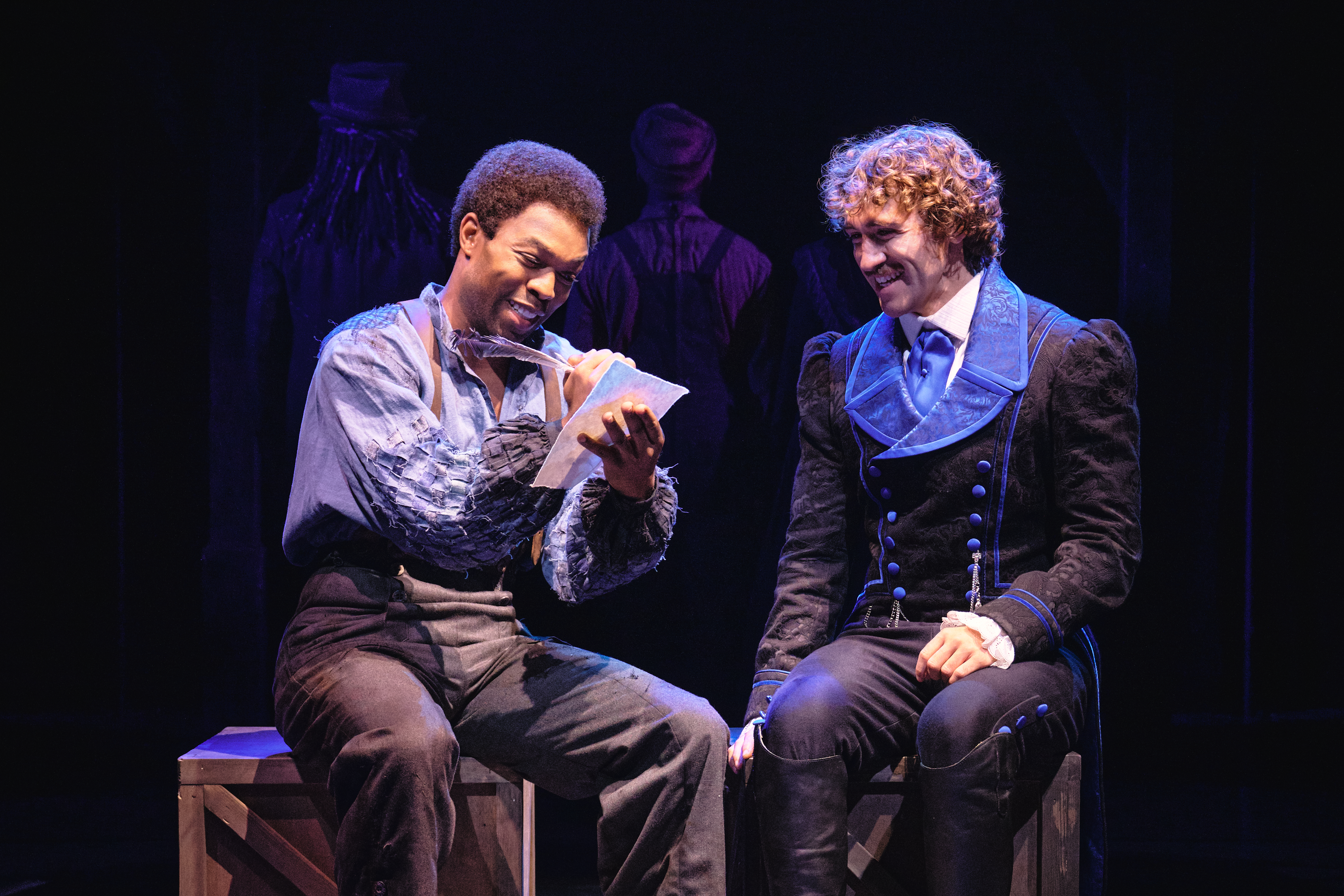
(© Valerie Terranova)
That’s just the first act, which gives us enough characters and complication to sustain a second. But Hall adds a twist, which anyone who’s been paying attention to the lyrics sung early on by the Black characters in the song “Us” can see coming (“If they could be us / Ready or not / Walk a mile in my spot”). You guessed it. During a magical intermission, the Black and white characters swap roles.
In doing so, Hall invites us to ask ourselves queasy questions while subverting our received cultural memory of American history. How does it feel to see whites in the roles of enslaved people? Do we expect certain genres of songs to be sung by certain people? How does clothing impact the way we treat each other?
It’s certainly ambitious, but once the initial shock wears off, we’re left with a meandering second act that seems even longer than the first (it’s actually 15 minutes shorter). Part of this has to do with the musical’s lack of creative perspectives, which might have helped scale back some of its excesses. MIDNIGHT is that rare case of not enough cooks in the kitchen.
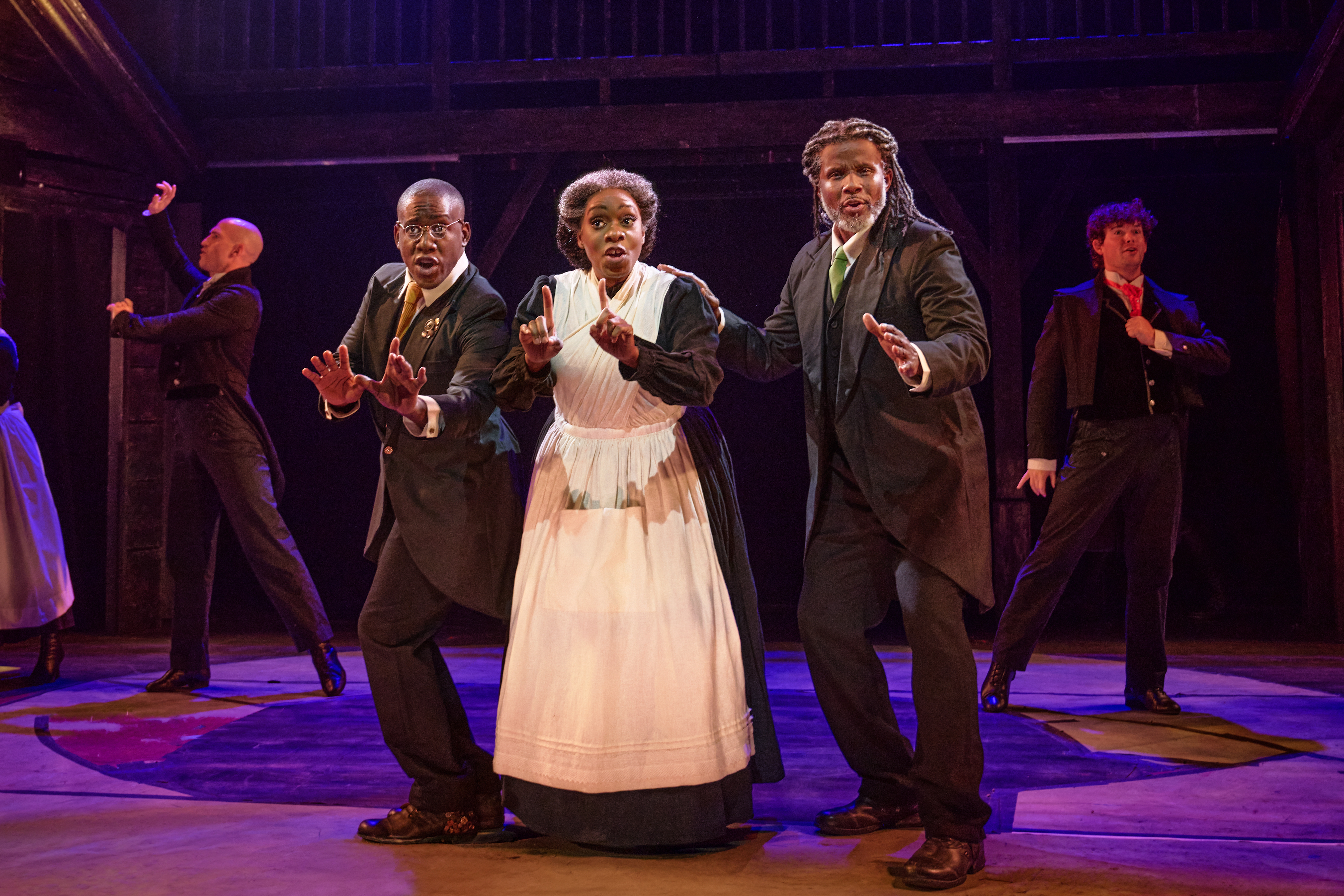
(© Valerie Terranova)
What this production does have in abundance, though, is extraordinary talent. Besides Hall, who sings to the rafters and dazzles with some fine choreo in “Run, Don’t Walk,” Odusanya, Caughell, Jordan, and Coppola treat us to operatic belting that’ll bring tears to your eyes. The whole company comes together for a marvelous lampoon of privilege in “White People.” Beloate’s voice is angelic in the moving ballad “Ready of Not.” Sidney DuPont, Dwayne Clark, and Ayana George comprise a chorus-like trio who comment frequently on the action. George stands out for an incredibly moving rendition of “The Dancing One,” and her opening salvo to both acts (an ear-shattering “Well …”) must have chipped the paint off the ceiling.
Beck Jones’s gorgeous costumes play a big part here, establishing not just the period but also the relationship between “roles” and race (unsubtle black/white motifs permeate the entire production). Jake DeGroot’s lighting makes history look extra dark with an already black stage bathed in swaths of shadow. Sound designer Lawrence Schober buckles under the challenge of small-theater acoustics, too often allowing the ensemble voices to be drowned out. And Morgan Large’s bilevel set design, with its enormous clock hanging over the stage, allows for seamless scene changes while reminding us that time is passing.
Too bad that it seems to pass so slowly during the show’s final hour. Hall tacks on one final song during the curtain call that sends us home on a positive note, but also with heavy eyes. There is, somewhere in MIDNIGHT, a good musical with a life on a bigger stage, but finding it will take a little more time.




source on Google
Featured In This Story
Latest Reviews
See all






Latest Videos
Watch: Aaron Sorkin, Bradley Whitford, and the Cast of A Few Good Men Talk New Broadway Revival
The playwright reunites with his West Wing star for the first Broadway revival of the career-making drama.