
Review: Lost in Del Valle Gets Lost in Its Own Storytelling
Ned Van Zandt’s solo memoir play struggles to find its dramatic focus.
 |
Off-Broadway
|
September 24, 2026
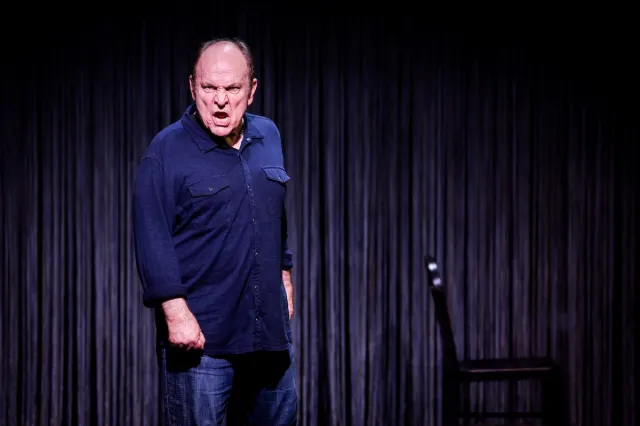
(© Lucas Noonan)
Ned Van Zandt, a featured actor in a slew of mainly single-episode appearances from Spin City to Lost, did a short prison stint in 2006 after becoming a drug dealer to support his heroin addiction. In Lost in Del Valle, which mainly takes a crudely comic tone, Van Zandt catalogs the eccentric cast of characters he met along the way.
Telling your own story onstage invites a unique double criticism. You’re being judged as a human being for the choices you’ve made in your actual life but also as a dramatic presence within a show trying to be good theatrical company. It’s easy to admire Van Zandt personally: he’s mostly nice to people in his stories even when he’s struggling, he’s stayed clean for nearly two decades, he now runs a sober house on the Upper West Side. But warm and fuzzy sympathy clearly isn’t the main goal of the edgy Lost in Del Valle, and Van Zandt’s playwriting just isn’t taut or dramatic enough to elicit as much appreciation for the storytelling as for the storyteller.
His biggest dramatic swing is in the sheer number of roles he takes on from his wilder days—the script lists 20—and, as he seesaws between them, he distinguishes each character clearly enough to tell them apart. But compared with recent chameleonic performances like Jack Holden in Kenrex and Sarah Jones, currently slipping into myriad unrecognizable personas in America, Who Hurt You? at Theater for a New Audience, Van Zandt’s characterizations are serviceable but underbaked. His voices are distinct but largely caricatural, and it’s hard to figure out how old his characters are supposed to be: everybody seems vaguely middle-aged. His TV career has been built on playing a type, not all types.
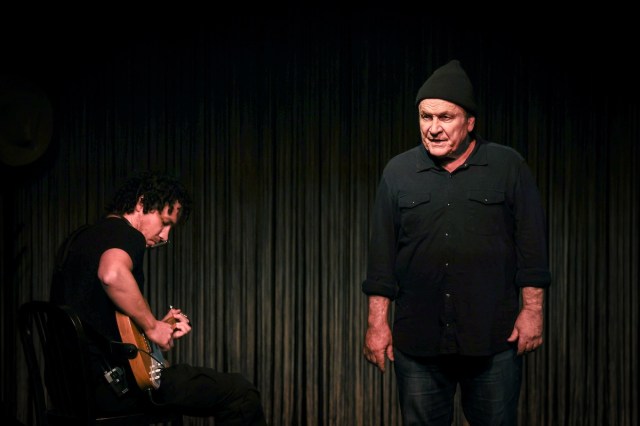
(© Lucas Noonan)
Van Zandt fashions himself as a sort of Zelig of the entertainment world, with an emphasis on (gay) sex, drugs, and rock n’ roll. Jane Fonda, Chaka Khan, and a naked Billy Graham feature in his stories. He was also more or less at the scene of the crime for the Chelsea Hotel murder of Nancy Spungen, girlfriend of the Sex Pistols’ Sid Vicious. The name-dropping and timeline-hopping comes hot and heavy in this particular flashback, and, at if you’re not familiar with the references he’s making, the who’s who and when’s when becomes hard to follow.
And there’s not quite enough satirical lens on the ways the entertainment industry, the drug trade, and the prison industrial complex might conspire to keep good people down. “Actors Equity insurance gives you two rehabs per lifetime,” Ned explains, justifying why he didn’t try to sober up before his imprisonment. “I’ve already used one. I want to save the other for when I really need it.” That’s shrewdly funny commentary, of which there could be more, on how a nonsensical policy can feed an addict’s denial. How can you feel good about asking for help when there’s a cap on how much help you can get?
At times, Lost in Del Valle flirts with the outré. Ned delivers many of his stories in prison while performing fellatio on Donnie, a racial-epithet-spouting member of the Texas Aryan Brotherhood who’s also a would-be actor. But both the generous description of sex acts and the offensive language come across as half-heartedly provocative when the show really has a soft heart. Despite Van Zandt outwardly painting himself as a dirty-minded, foul-mouthed narrator, you can tell he knows he’s also a bit of a wounded teddy bear. His best characterization is that of Belinda, a meth lab goon’s girlfriend, who naively imagines Ned will jailbreak her from her own confined life when he gets free.
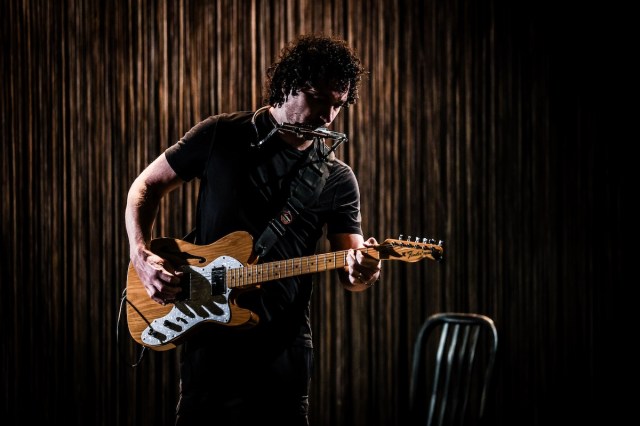
(© Lucas Noonan)
Amir Arison’s staging keeps Van Zandt’s careening between characters relatively cogent, and there’s terrific electric guitar shredding throughout from Mike Moore, including a rather delightful guitar impersonation of a rooster.
Curiously, Van Zandt scoots over his sobriety journey in the matter of a sentence. “CBT, DBT, therapy meeting, lots of meetings. You know the story,” he says. But the Ned Van Zandt we’re seeing live onstage two decades after the show’s events is the story’s real endpoint, and Lost in Del Valle hasn’t told us much about how he got here. What are we to make of Van Zandt’s suggestion that there’s nothing worth telling about his recovery, that all the good stuff happened when he was high? Can good content only come from bad circumstances? Maybe we don’t really know the story at all.




source on Google
Featured In This Story
Latest Reviews
See all








Latest Videos
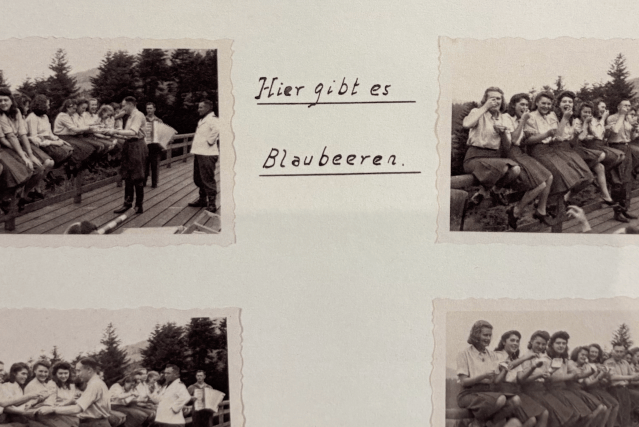
Find Out the Real Story Behind Broadway's Here There Are Blueberries
Moisés Kaufman and Amanda Gronich discuss the new drama along with their cast.