
Review: 2:22 – A Ghost Story, a Boozy Dinner Party Becomes a Late-Night Vigil
Danny Robins’s spooky drama opens in New York.
 |
Off-Broadway
|
November 5, 2026
(© Evan Zimmerman)
“There are more things in heaven and earth, Horatio, than are dreamt of in your philosophy,” Hamlet says to his best friend, right after both encounter the ghost of his dead father. The theater has long been open to the supernatural, and one need not be a psychic to have predicted that, half a decade after the height of trust-the-science hubris, both artists and audiences would crave stories about the uncanny and unexplained.
To our great shame, the British got there first and have sent a trio of spooky shows to play New York stages this season: Paranormal Activity on Broadway, A Ghost in Your Ear at the Minetta Lane, and the latest, 2:22 – A Ghost Story at the Lucille Lortel Theatre. While not the most technically impressive of the trio (that honor goes to Paranormal Activity), Danny Robins’s script is the likeliest to haunt your thoughts, both for its memorable performances and head-scratching dramaturgical liberties.
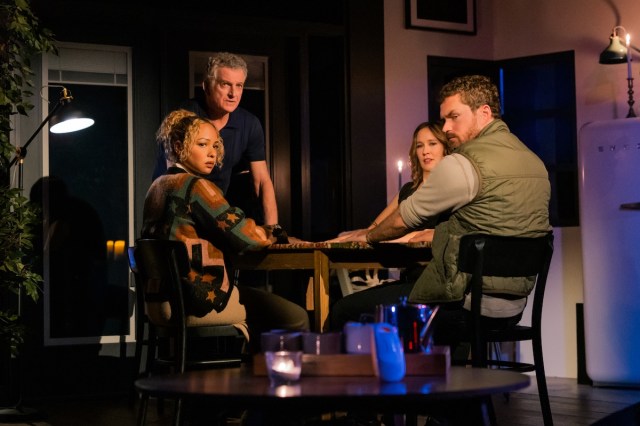
It takes place in a gentrifying neighborhood in East London, in a home undergoing an extreme makeover. Jenny (Jasmine Cephas Jones), Sam (Finn Jones), and their infant daughter are the new residents, but this old house has history, and Jenny fears that the renovation has stirred up something dark, which nightly creeps into their child’s bedroom at exactly 2:22am. We know she’s not crazy, because we hear it happen in the very first scene. Jenny has invited over Sam’s university chum Lauren (Anna Camp) and her new boyfriend Ben (Martin Marquez), ostensibly for a friendly dinner party that will eventually turn into a ghost-watching vigil. Surprise!
Ben, an older cockney who grew up in the neighborhood and believes he can remember past lives, is naturally enthusiastic. Sam, a know-it-all astronomer, is horrified by this relapse into superstition that he thought he has exorcised from his once-religious wife. Lauren, an American psychotherapist with unresolved feelings for Sam, is giddy at the prospect of spending a late night with her old flame and seeing him humiliated. Three Brits and a neurotic Yank, they naturally pass the time until the witching hour by arguing about the existence of ghosts—while binge drinking.
(© Evan Zimmerman)
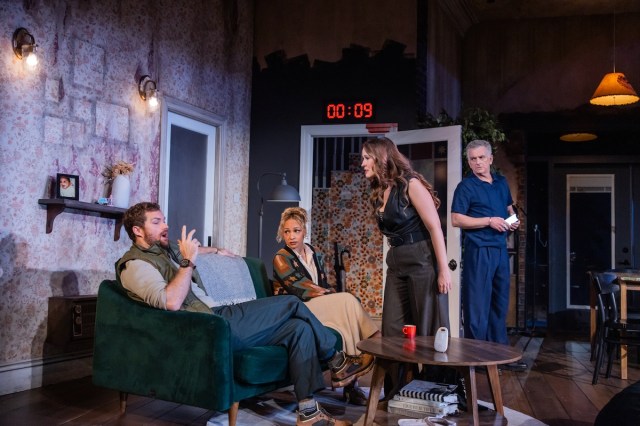
2:22 is best when the veil thins between the characters’ anxieties and the stage action, allowing both sublime doubt and paranoia to slip in. Ben offers Sam a backhanded compliment on the renovation. “That’s what you do though, isn’t it? Your lot,” he growls, his voice fortified by the sediment of resentment building since at least 1979. “You come in, take these old houses and wipe them clean. With your expensive doors and your cheap Albanians. Sneering at the people who used to live here. Ramping up the prices, forcing us out.” Marquez delivers this tirade about the totalitarian arrogance of the professional class with such conviction, I was ready to cast my vote for him.
Jones offers an assist by instantly, effortlessly conveying Sam’s infuriating smugness and impulse to make jokes at others’ expense (Cindy Lin Roferos perfectly costumes him in a demure olive puffer vest, as if he’s ever ready for a hike). Jones has a mocking laugh that could make anyone flush.
We get the sense that Sam’s overweening intelligence is both a source of attraction (Jenny calls him a “walking Wikipedia”, and it surely doesn’t hurt that he’s very handsome) and friction in their marriage. Ideally, a spouse is there to check one’s delusions, but the condescending way Sam does that only fuels Jenny’s rage. Cephas Jones powerfully embodies a woman who resists mansplaining and will not rest until she makes the others see what she knows to be true. It’s a story that plays out in mixed political marriages every day, and the Joneses capture it with gusto.
(© Evan Zimmerman)
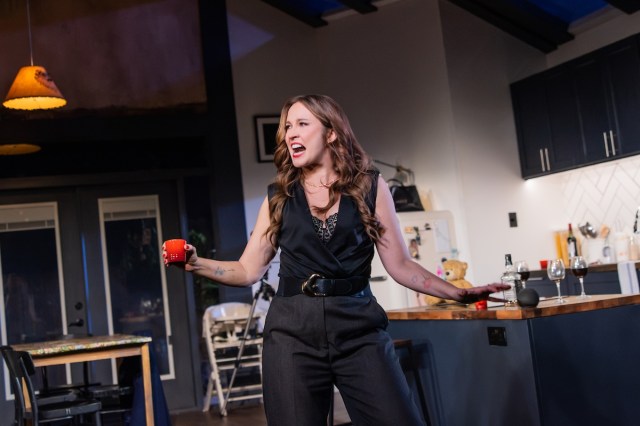
But it’s Camp who really steals the show as Lauren, a mental health professional who thinks nothing of washing down her meds with a big glass of red, a demented laugh regularly escaping her open-mouthed grin like a plume of smoke from Vesuvius. Occasionally, she erupts and throws a drink in someone’s face or shouts an obscenity. Other times she stumbles to the floor. She is absolutely the scariest presence onstage, and if you encountered her in a midtown bar at 2:22am, you would run screaming into the night.
The performances generally succeed despite Matthew Dunster and Gabriel Vega Weissman’s uneven direction. They seem to have instructed the cast to race through the exposition, making the early moments of the show occasionally difficult to follow and leading us to suspect that everyone took a bump of coke before dinner. They also seem to have decided that the best way to keep the audience on edge is through sudden bursts of LED light (by Lucy Carter) and jarring sound cues (Ian Dickinson for Autograph). While the latter certainly activates the fight-or-flight instinct in our reptile brains, it becomes a bit predictable by the fourth or fifth time a blood-curdling scream punctuates a scene.
Thankfully, Anna Fleischile has done fine work with the set, a kind of Frankenstein great room patched together from different eras and design sensibilities, suggesting layers of history. The sooty rectangles on the wallpaper where frames once hung are more evocative and spine-tingling than any dark shadow or crying baby.
2:22 – A Ghost Story is a play that somehow manages to explain too much while also leaving us with big questions, which you can contemplate on the way home depending on how much you care. But that’s the hazard of embracing unreason: a logical or convincing explanation for the events onstage is not always forthcoming.




source on Google
Featured In This Story

Latest Reviews
See all


Latest Videos
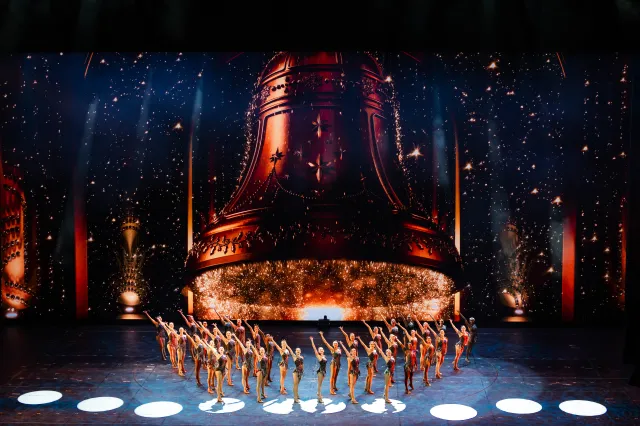
Watch the Radio City Rockettes in the New Christmas Spectacular Number "Ring"
The modern tap number is choreographed by Emmy Award nominee Chloé Arnold.