
Interview: Ryan J. Haddad Turns His Family’s Queer History Into the ‘Gay Romp’ Good Time Charlie
Haddad’s new play is a multigenerational work about gay men, the arts, and the uncle who never got to live his stage dreams.
 |
Off-Broadway
|
|
Off-Broadway
|
September 24, 2026
Ryan J. Haddad has spent much of his career turning his own life into theater, but with Good Time Charlie at the Public Theater, he’s taking his autobiographical storytelling home. The new play, following Hold Me in the Water, Dark Disabled Stories, and Hi, Are You Single? is Haddad’s first non-monologue work, bringing seven actors together to tell a multigenerational story about queer history, artistic ambition, and the ways one generation’s dreams can be inherited by the next.
Inspired by his relationship with his gay uncle Charlie, the play looks at two queer men in the same family who came of age a generation apart, with radically different opportunities to pursue a life in the arts. Charlie dreamed of becoming a song-and-dance man but turned to dentistry instead. Haddad, meanwhile, was completely encouraged run to the Big Apple. Now, decades later, Haddad is putting their stories on stage in what he describes as a “funhouse mirror” version of All About Eve.
In this interview, Haddad discusses turning his family history into theater, the difference between writing about strangers and writing about people who know exactly what you’re doing, and why Good Time Charlie is his most ambitious autobiographical play yet.
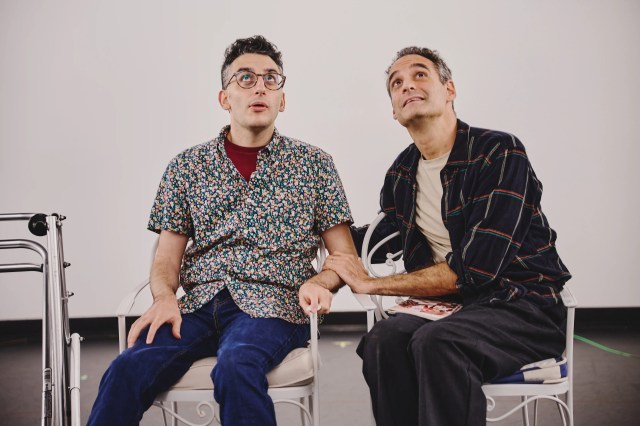
(© Jenny Anderson)
This interview has been condensed and edited for clarity.
Is this your first multi-character play?
This is my first non-monologue play, with scenes and a character breakdown. Dark Disabled Stories had three performers, but we were all sort of being ourselves or helping each other tell one person’s story at a time. This is seven actors, nine characters, and it’s about queer lineage being passed down via the arts across three generations.
And it’s the story of your own family.
I call it a gay family romp. Until it’s not. The conceit is that I did plays with my family in the backyard as a little kid, and now here we are, 20 years later, to put on a play together about our lives. It’s really about me and my gay uncle, who’s actually my dad’s first cousin, and what it was like to come of age in the same family, a generation apart, and have wildly different experiences. Charlie always dreamed of being on the stage—he wanted to be a song-and-dance man—and yet was discouraged, rightly or wrongly, whereas I was vehemently encouraged, and in most cases, it was by the same people.
So, it’s sort of like, “What is it to watch somebody live your dream?” The Ryan character says, “You get to share the spotlight with me tonight, but you have to play by my rules.” That is where a lot of the conflict unfolds.\
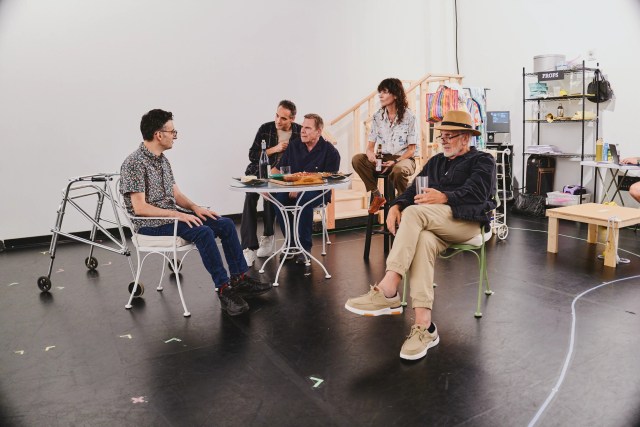
(© Jenny Anderson)
Obviously, you’re no stranger to putting some personal, and in several cases, explicitly personal, things about your life on stage in your plays. But how does the idea of writing about your family so directly compare to writing about, say, losing your virginity at a writer’s retreat?
It’s fascinating. When I did both Hi, Are You Single? and Dark Disabled Stories, a lot of the stories I told were about people I would never meet again, so I had no worry about them because, while they’re real, I would never be able to track them down. They’re certainly never going to track me down. There was an anonymity to all of it. Hold Me in the Water was about one specific person and I took great care in keeping the lover in that play anonymous, and that was very purposeful. That is a person who exists in the world that I know.
With this, the real circumstances were that I quit my day job, I wanted to apply to the emerging writers group, I knew that this was the play I wanted to apply with, and so in the first two weeks after quitting my day job, I went home to Cleveland and spent five or 10 days in a row at Charlie’s house asking him about his life. Sometimes he was giving me sugar-coated things and sometimes he was telling me the unvarnished truth, and I had to decide which was which.
The play has a lot of references to queer media and pop culture, and even some material based on your cast. Can you talk about that, without giving too much away?
From my point of view, it starts with Brandy’s Cinderella. All About Eve is referenced numerous times, because it’s like, “Are we watching a funhouse mirror version of All About Eve“? We go as deep as Song of Norway with Florence Henderson and Calamity Jane with Doris Day. There are a couple of references to Fun Home, which are made all the more delightful because Beth Malone is in the cast. There’s a reference to Smash, in which I’m sitting at a table talking to Michael Cristoffer; in these cases, it’s meta on meta on meta.
What is the real Charlie saying about all of this?
I think he was amused and entertained. He’s been abreast of the entire process from the first drafts. Charlie, I think read it two or three months before my director, Danny Sharron, who has been with it for eight years. I did 10-20 hours of recording of Charlie and then I did two hours of his partner, Lou, and Lou gave me more in two hours than Charlie did the entire time. Because Charlie knew that it was going on record, even if he didn’t know where it was going to go. But he gave his blessing when I was still a kid starting out in New York, and now he’s given his blessing again.
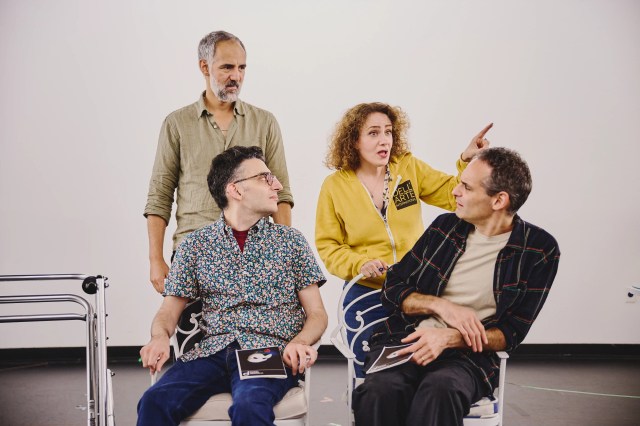
(© Jenny Anderson)




source on Google
Featured In This Story
Latest Reviews
See all






Latest Videos
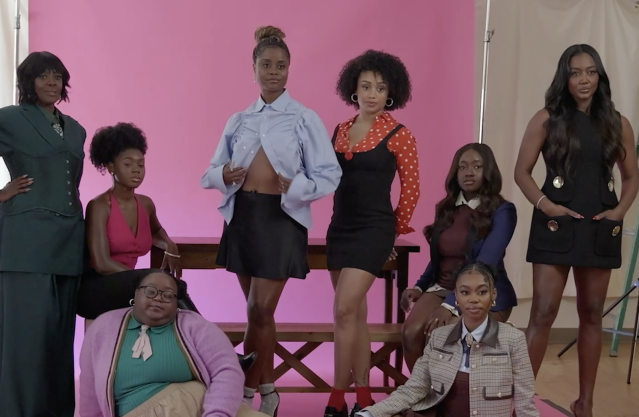
Jocelyn Bioh, Whitney White, Jasmine Amy Rogers, and Patina Miller Talk School Girls
The playwright, director, and stars of School Girls; Or, the African Mean Girls Play discuss the comedy, sisterhood, and themes behind the new Broadway production.