
Interviews
Interview: Oedipus Tony Nominee Robert Icke Makes the Classics Dangerous Again
No great play should be able to be solved like algebra.
 |
Broadway
|
|
Broadway
|
June 1, 2026

(© Jan Versweyveld)
Robert Icke has a way with the classics. Rather than create the kind of staid, reverent adaptations that audiences have come to expect from centuries-old texts, Icke, one of the “bad boys” of the British and international theater scene, turns them into fearless contemporary dramas. His productions are driven by moral arguments, incredible acting, and a sense of danger that makes these works feel urgent, rather than like dispatches from the past.
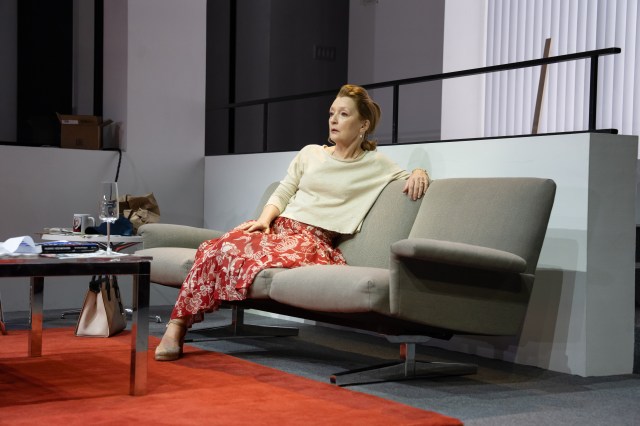
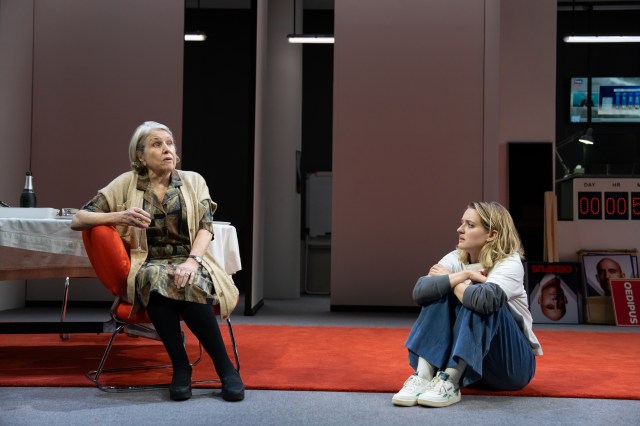
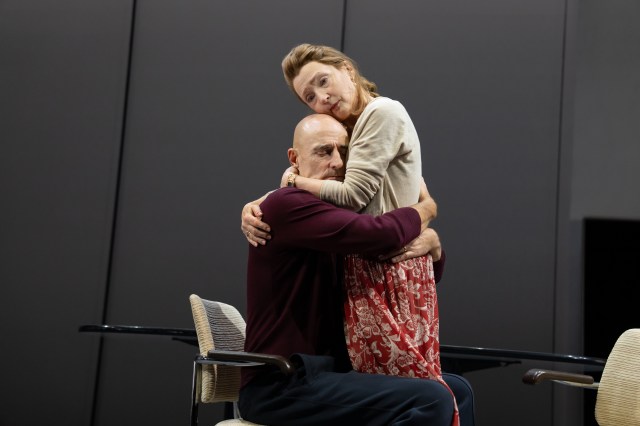
In his Tony-nominated adaptation of Sophocles’ Oedipus, a 2,500-year-old premise is reborn as a terrifyingly immediate piece in which a politician and his family wait for the results of an election that will determine whether he has become the country’s next leader. Over the roughly two hours portrayed onstage, the man discovers that nearly everything he has ever believed about his life is a total lie. A Greek tragedy becomes both a political thriller and a horror story.
There’s a discomfort that comes from watching an Icke production. You feel as though the whole thing is working without a safety net. And yet, there’s an innate calm: you know you’re in good hands. “There should be a German word for it,” Icke muses, “where in the first five minutes of a play as an audience, you relax because you think, ’Oh, they’ve got this.’”
(© Julieta Cervantes)
That was certainly the case with Oedipus, which earned Icke Tony nominations for Best Director and Best Revival of a Play, alongside acting nods for stars Mark Strong and Lesley Manville and nods for several of the production’s designers. Icke hasn’t worked extensively on Broadway; except for 1984, which he co-adapted and directed with Duncan Macmillan, all his New York productions have taken place inside the cavernous Drill Hall at the Park Avenue Armory. You wouldn’t expect this kind of recognition to matter much to an iconoclastic theatermaker whose work regularly traverses the globe. But it does.
“Of course, it’s thrilling to have the recognition,” he says. “The nice bit is that just about the whole team got checked, and that’s really lovely.”
The origins of this Oedipus came from a practical question: Icke wondered how he could stage a play by Sophocles in real time, and how he could keep his characters in a single location in a way “that wasn’t contrived and silly.” The answer came from Theodore H. White’s JFK book, The Making of the President 1960.
“It has a vivid description of JFK pacing like a tiger to where the fax machine is,” he says, “walking past all these reporters who have agreed not to pester him, and the trapped-ness of that situation suddenly occurred to me. That was one of the very few moments in contemporary life where a world leader may actually have to be in one place and not do anything for a while.” It also reminded him of election night 2016, when Hillary Clinton was similarly holed up in a hotel room as she awaited the results.
He wrote the play in 2018 for the ensemble members at the Internationaal Theater Amsterdam. “Undoubtedly, the performances of Hans Kesting [as Oedipus] and Marieke Heebink [as Jocasta] and that whole gang must have influenced it,” he says, “because I rewrote it under them and they were playing it back to me, and I’d be like, ‘There’s too many syllables in there.’”
Apart from when he’s staging Shakespeare (he’s got a Romeo and Juliet on in the West End now), there’s no real division in the rehearsal room between Icke’s functions as a writer and director, and the script isn’t a sacred document that should be preserved in amber. “It’s a blueprint from which a house is to be built,” he says, “not a house itself.”
(© Julieta Cervantes)
In rehearsal, he chooses to get down and dirty with the actors, placing himself just outside the scene, which is “a discipline that arose from quite a few years working in Dutch, a language that I didn’t speak at all, and working in German and Swiss German. You’re trying to be present for the people who are doing things in front of you.” The words themselves are monitored by stage management.
The final product, if there is such a thing, is therefore shaped by the performers. So much time had passed between the Dutch and English mountings that the Oedipus Strong and Manville performed felt like a brand-new piece. He even had Tony-nominated scenic designer Hildegarde Bechtler flip the set to become a mirror image of what it was in Amsterdam, “so that I couldn’t get unconsciously tempted into repeating the same physical patterns.”
Another way he keeps the material alive is through a practice he calls “grenades.” They’re alternate lines or speeches that are secretly embedded into his plays as a way of keeping the actors on their toes during long runs. The concept originated during his Oresteia, when actor Angus Wright questioned a line in the script about crying. “Angus said to me, ‘You don’t want me to do theater crying, but what if I haven’t got real tears for you?” Icke recalls, before explaining how he proceeded to give Wright two options, one for nights when he could summon the waterworks, and one for shows when he couldn’t.
Icke honed the concept over the next few years, and the system has proved capable of becoming far more elaborate. In his staging of Schiller’s Mary Stuart, Juliet Stevenson and Lia Williams would determine each night who played Mary Stuart and Elizabeth I with a coin toss. And that wasn’t even the grenade. With actor Calum Francis, playing the French ambassador, “We turned a two-line [English] speech into an 18-line speech, but it was in French. Elizabeth I said something snippy to him, and then he launched into this diatribe in French. He didn’t play that every time, but every so many shows, he would feel so irritated with her that he’d do the French version.”
While the company is warned that the pin has been pulled, actors know only their own grenade lines, forcing them to remain fully present onstage every night. “The rules of grenades are, you learn it, and then when you want to, you put it into a performance in front of the audience.”
Icke is drawn to works where there are opposing ideas at play without easy answers. Oedipus is a case in point. “There are great arguments for the truth, and there are also great arguments sometimes for just allowing a lie to exist because what’s under the lie is there for a reason and maybe it’s better left there,” he explains. “I can see that both ways. It’s that that becomes compelling for me. I think it’s Schiller who said that in a great play, there are at least two right answers. It shouldn’t solve like algebra.”
As Strong recently hinted, he and Icke could potentially next collaborate on a production of Macbeth. Icke pitched him the idea back in 2016 and Strong wasn’t interested, but over years of conversations, Icke has been able to convince him there’s something hidden within it that Strong could reveal.
This belief, that canonical texts still contain possibilities, remains at the heart of everything that Icke does. “If you’re brave enough, you go, ‘Maybe it isn’t the play everybody thinks it is.’ Even if it goes wrong, it’s always a fun adventure building that house of cards and seeing if you can make it stand up.”
(© Julieta Cervantes)




source on Google
Latest Reviews
See all






Latest Videos

Watch the Trailer for Elsinore Starring Andrew Scott
The film is based on the true story of Ian Charleson, who played Hamlet at London’s National Theatre after being diagnosed with AIDS.