
Interview: Mexodus Creators Brian Quijada and Nygel D. Robinson
The musical runs at Audible’s Minetta Lane Theatre.
 |
Off-Broadway
|
|
Off-Broadway
|
September 26, 2025

(© Curtis Brown)
Having previously thrilled audiences in Baltimore, Washington, DC, and Berkeley, the two-person, live-looped musical Mexodus has now taken New York audiences at Audible’s Minetta Lane Theatre by storm. It tells the fictional story of how Carlos, a Mexican medic, helps Henry, an enslaved person who has escaped from Texas by crossing the Rio Grande.
TheaterMania recently spoke to the show’s creators and two performers, Brian Quijada and Nygel D. Robinson, about how the show came about, their musical prowess, its evolution from its three previous productions, and the importance of telling this story in 2025.
This conversation has been condensed and edited for clarity.
How did you guys first meet, and how did you create the idea of Mexodus?
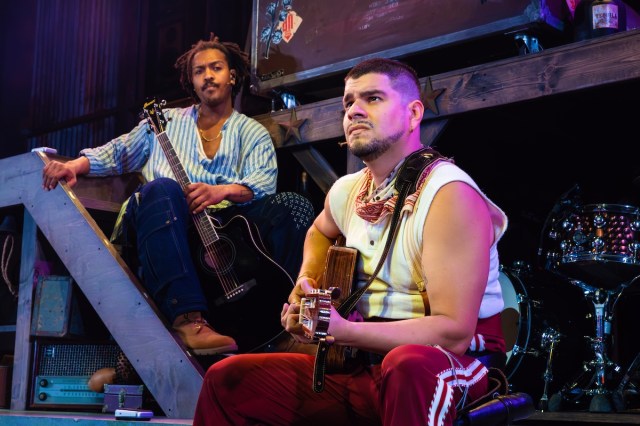
Nygel: Oh, the origin story! In February 2020, Brian and I were both guest speakers at an actor-musician conference in New York. I was talking about playing music and Brian was talking about looping. He was the most avant-garde and the most energetic person in the room. There was just this voice in my head that said I needed to go talk to him. So, I did, and he invited me to his studio apartment, with his wife there, and we just nerded out for hours.
Brian: I had stumbled on this article on history.com in 2018 called “The Undertold Story of the Underground Railroad That Went South.” On my own, I write a lot about immigration and my parents and politics, and this felt like a reverse border story that needed to be told. But I knew I couldn’t write a show on my own, even though that article had been on my Notes app for a long time. So that day, as we were nerding out, I asked Nygel to write what became Mexodus with me.
(© Curtis Brown)
What was the writing process like?
Nygel: Coincidentally, at the time I met Brian, I had already written this spiritual—which is now in the show—so I showed him that music. And then we began to think about what a live-looping show would look like. And since we figured we had time because of the Covid shutdown, we wrote one track a month, via text, emails, whatever, with the idea to present our concept album live at New York Stage and Film in July 2021.
Musically, the show is extraordinary—and it’s just both of you playing all these instruments. How many instruments do you each play?
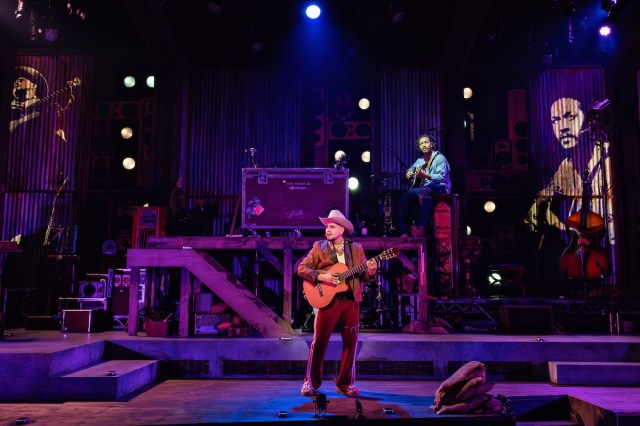
Brian: If you count scissors and hand-held percussion instruments, in the show, we play 15 instruments altogether.
Nygel: I play five instruments well. I grew up in church and in a musical family, where everyone sings, and they saw me playing piano in a way on the pews at church. Then I moved onto drums and guitar and trumpet throughout middle school and high school.
Brian: I learned guitar in college, and once you learn guitar, you discover you can play any string instrument from the ukelele to the banjo. I eventually realized, though, if I wanted to sound like a band on my own—as a looper— then I needed to learn piano/keyboard. But you just have to be a jack of all trades as a multi-instrumentalist, master of none for a looping show.
How much of the show’s narrative is based on your families’ history?
Nygel: Those personal stories we tell within the show, like the one about my childhood, are totally true. But there wasn’t a lot of material about this underground railroad, so we grabbed tidbits we found here and there that contained some truths, and we made this fictional story.
(© Curtis Brown)
How has the show evolved from its previous productions?
Brian: In previous productions, the characters of Henry and Carlos had to work together, but the major drama really came about because of the big external dramatic events in the show like battling the flood or escaping the bounty hunters. In this production, we wanted to look more closely at their relationship and explore where their internal racism and biases come out. Now, the dramatic effect at the end is the audience realizing how they were able to meet in the middle.
The show ends with a strong political message about the treatment of Black and brown people in this country, both past and present. How important is it to both of you to express those feelings in 2025?
Nygel: We’re not holding hands at the end. Solidarity is about my willingness to give up some of my comfort for your comfort. It doesn’t mean I like you, just that I respect you enough to give up some of my comfort so we can be equal. It’s not that everyone ends up on top, it’s that everyone ends up being in the middle and feeling equal. It’s also about having mercy on the proud—those people who don’t understand there are systems that are trying to divide us and keep us in bondage.
Brian: I agree, but I want to add that the truth we tell is approached with joy and hopefulness. Even though times are tense, we want everyone to leave the theater, hopefully, hopeful.




Featured In This Story
Related Articles
See all
Latest Reviews
See all
Latest Videos
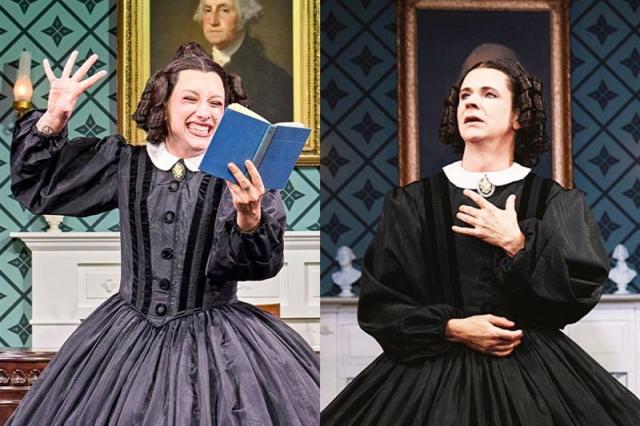
West End vs Broadway: Oh, Mary!—From an Angry Inch to an Angry First Lady, With John Cameron Mitchell and Mason Alexander Park
Mitchell and Park celebrate a decade-long friendship in our latest installment.