
Interview: Martin Moran on Compassion and Other Bodies: "I Wanted to Use the Theater to Call People Together"
The playwright and performer discusses how pandemic continued his journey toward greater empathy, and completing a trilogy of solo works that began with The Tricky Part.
 |
Off-Broadway
|
November 17, 2026
For Martin Moran, March 12, 2020, was another day at work—until it wasn’t.
Moran was in tech for the upcoming Broadway musical Sing Street when the start of the Covid-19 pandemic brought the theater industry to a close. But the shutdown would ultimately set him on a very different path.
In Other Bodies, his new solo play premiering at the Barrow Group November 19-December 20, Moran revisits that turbulent period as a means of examining his upbringing, otherness, and the blind spots that can stand in the way of compassion. Directed by his longtime collaborator Seth Barrish, the production marks the third installment in a trilogy that began with the The Tricky Part and continued with All the Rage.
Moran spoke with TheaterMania about finding his way toward empathy, the communal power of theater, and the vulnerability of putting a deeply personal story in front of an audience.
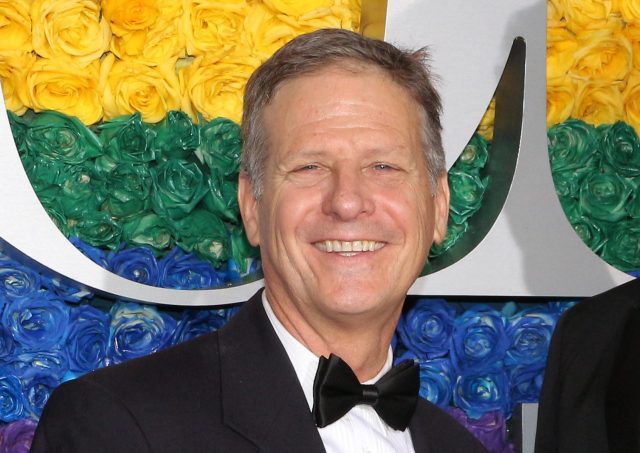
(© David Gordon)
This conversation has been condensed and edited for clarity.
Other Bodies basically starts on March 12, 2020, the day Broadway shut down. You were in tech for Sing Street.
Yeah. You’ll have your own version of this, but something shifted that day and then shifted more and more. And I think, somehow, it really took hold of a lot of us. Things happened to us internally and externally and communally that we’re still making sense of. Maybe, in a way, this is my way of trying to make sense of how turbulent it was, through the lens of a kind of baby elder.
Was that the impetus for this play?
I think what happened on many levels was my own wake-up call to my American miseducation, in a sense. There was a thread of me that struggled so much around my journey as a queer person feeling different and other, and there was something about the pandemic that drove home the otherness. I needed to look at myself and say that this is something that made me. And there was a part of me that actually needed to have mercy on my own upbringing so that I could see more clearly my way toward compassion for others. It opened my eyes to the plight of the people who had to go to work. People who had to be out there, like the delivery guys and mail carriers and MTA workers and nurses and doctors.
There was this tender communal reality that was so vivid because it was so clear how borderless our lives are. A virus is borderless. Something in me, as an older white guy, was looking at all of that. I feel nervous talking about it, but I really was deeply affected by the global reaction to George Floyd’s murder. It was a singular event that was linked to countless events for all sorts of marginalized people. I felt shaken. So, I think the play has been my writing my way toward looking at myself and owning up to my own blind spots. I wanted to use the theater to call people together.
It’s interesting that you use the lens of losing Sing Street to do so, since, as you say, you were an older white guy in a group of young people with all sorts of backgrounds that were different from your own.
Totally. That cast was really young and they were revolutionary. And I was suddenly like “Oh, my God, who’s that old dude?” Those kids were so amazing. Talented. And they were all days away from making their Broadway debuts, and it never happened.
I have to imagine the evaporation of Sing Street is not something you’d ever experienced before in theater.
No, not like that. One of the weirder ones, off-off-Broadway, the producer suddenly had no money, or was embezzling, and I showed up at the theater and there was a padlock on the door. But that was 40 years ago. And my first Broadway show was the revival of Oliver! with Patti LuPone. Very short lived. But never anything where somebody said, “All of Broadway is closing down in an hour.” It was painful. And I was in a very different position than they were. It was the first big job for many of them. I had that feeling of “I’m gonna be ok.” But it was complicated.
How do you navigate the vulnerability that comes with putting a new piece of work into the world?
It’s interesting, because so much of the time I feel anxious and doubtful about what has emerged. When I’m actually in the room with people, I realize that, as vulnerable as it all feels, I feel comforted by the connection. It’s scary, but there’s a communion that happens.
Tricky Part, All the Rage, and this new play, Other Bodies, are like a trilogy. In the center of each one is an inquiry that revolves around a mystery, in a sense. In The Tricky Part, it’s the mystery of forgiveness. In All the Rage, can you feel rage and compassion at the same time? The inquiry at the center of this is circling the unknowable, or the truth that you can’t say. I don’t have answers, of course. It’s so mysterious. There’s so much about dying that hums through the piece.
The short answer, in my chatty way, is that there’s a solace in communing, in connecting. I feel that in the moment when I’m with everyone. Most of the rest of the time, I’m apoplectically terrified. But there’s a part of my body where I’m like “Oh, this feels familiar.” The dressing room, half hour, the rumble out there. There’s a rigor and discipline, vocally, physically, all of it. I’m looking forward to doing it. It’s great to be engaged in your calling.
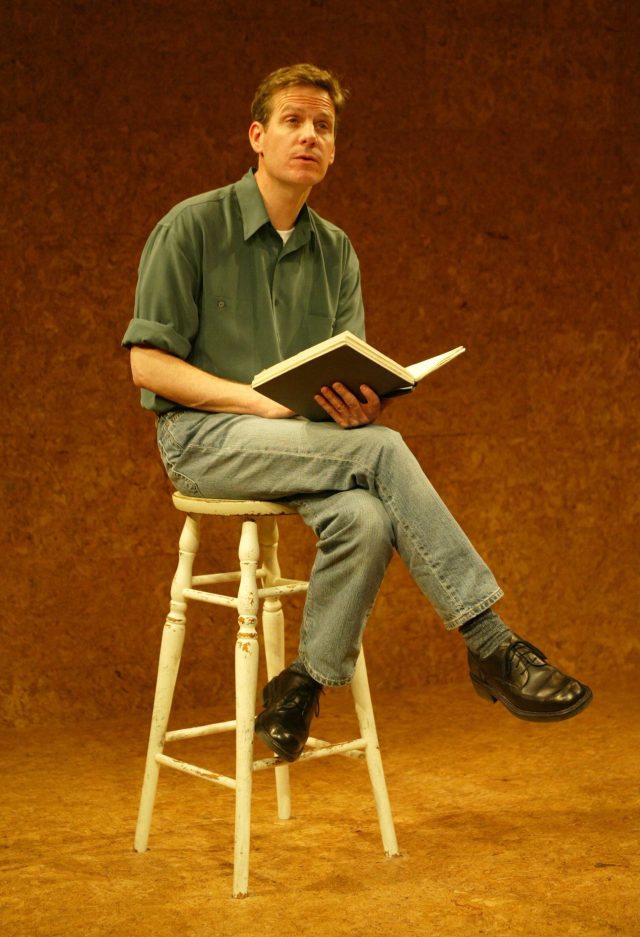
(© Joan Marcus)




source on Google
Featured In This Story

Latest Reviews
See all





Latest Videos
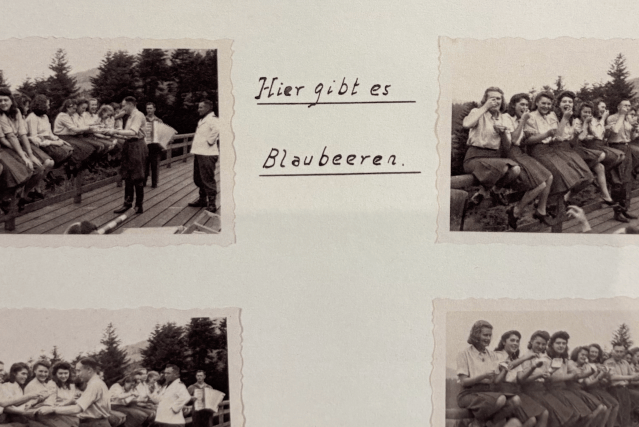
Find Out the Real Story Behind Broadway's Here There Are Blueberries
Moisés Kaufman and Amanda Gronich discuss the new drama along with their cast.