
Interviews
Interview: Justin Guarini on the Successes and Failures He’s Lived to Write About in Center Stage Confidence
Guarini, an American Idol alum and Broadway performer, writes a guidebook on building confidence and learning from failure.
 |
Broadway
|
October 21, 2026
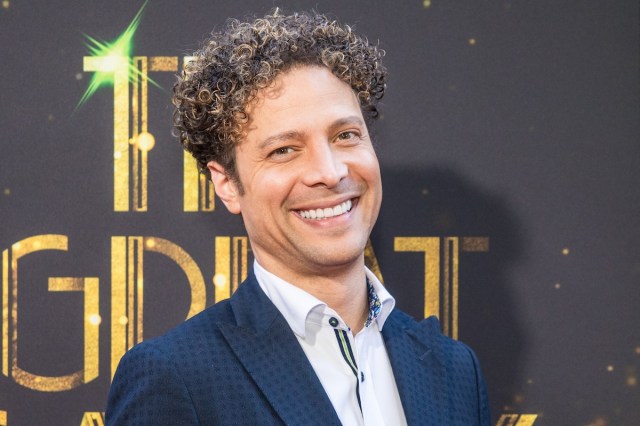
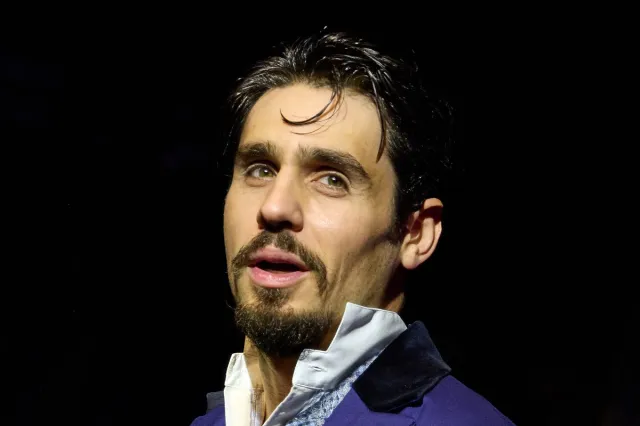
(© Tricia Baron)
For some, Justin Guarini will always be American Idol’s inaugural runner-up. But since being shot out of a cannon on live television in 2002 alongside Kelly Clarkson, he’s become both the indelible voice of Diet Dr. Pepper and a Broadway mainstay. He made his Broadway debut in 2010 in Women on the Verge of a Nervous Breakdown and went on to star in shows like American Idiot, Wicked, and most recently, the Britney Spears-fairytale mash-up Once Upon a One More Time.
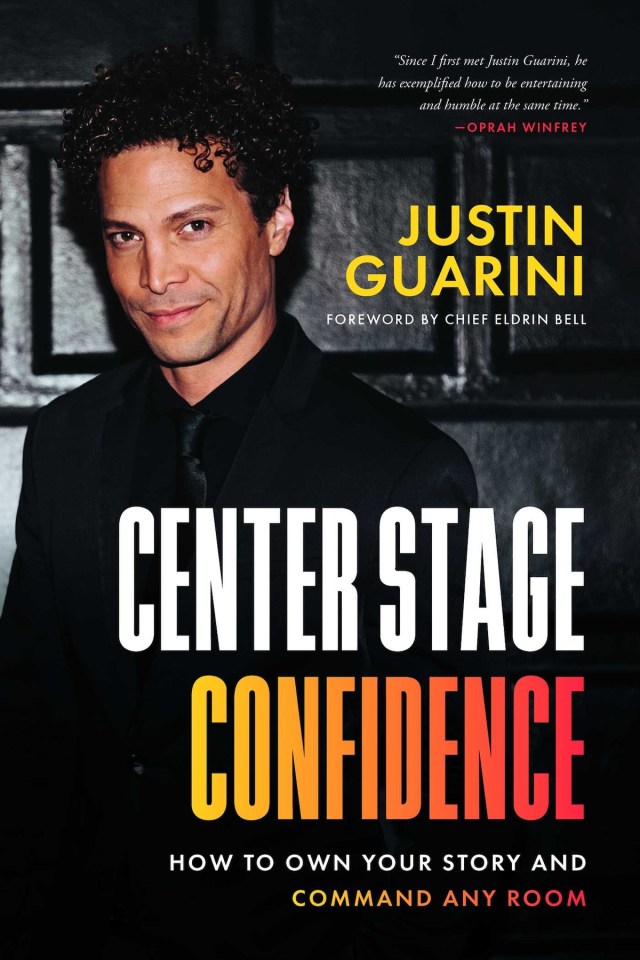
Now, Guarini is bottling the lessons his career of highs and lows has taught him about commanding a room and keeping mental demons at bay in his new book, Center Stage Confidence. “I love empowering people, whether it’s fellow entertainers or people in the business world,” Guarini said in a phone conversation about the book—a how-to guide sprinkled with personal anecdotes and Q&As with other Broadway folks like Jordan Fisher and Amber Ruffin. “I could have written a memoir,” Guarini added. “But I wanted to write something that would actually be valuable for people and give them a return on the investment they made in me.”
This interview has been condensed and edited for clarity.
Congratulations on the book! Tell me the backstory behind your decision to write it. Why add this facet to your career as a performer?
As entertainers, we’re taught that being a commodity is normal. There’s always gonna be somebody who’s gonna do it for less than we’ll do it for. If we’re sick or injured, there’s hundreds of thousands of people who can replace us. I just got to a place where being a commodity is no longer what I want to be. I want equity. When I’m asleep, I want to be making an impact. When I am traveling on vacation with my kids, I want to be making an impact. I want to be making a profit. And so I was like, “OK, what value do I have that can be translated into equity?” And so I took my experience and I took my love of learning and teaching, and that was what this book was about. How can I positively create an impact?
Your book is really an instruction manual for cultivating confidence. Has that always been a topic you find yourself offering advice about?
All the time. I love it. And I think that whether it’s seven Broadway shows or American Idol in front of 30 million people or Lil’ Sweet or the voice of Cat Burglar—whatever room I’m in, I’m just employing the same set of skills. Confidence is a learnable skill. It’s not something that you’re just born with. So I love to share everything that I’ve discovered over the years about it.
You tell a story in the book about how, back in 2003, you found out you were dropped by your record label from a joke on Saturday Night Live’s Weekend Update. What did that experience teach you? You frame it as a turning point in your life.
I allowed someone else, who was just telling a joke, to define me. Tina [Fey] was just doing her job. But that moment of finding out, along with the viewers of Saturday Night Live, that I had been dropped by my record label, became an identity, and I sat in that identity for a long time. It colored everything I did. But there’s two paths: You either sit with that identity and allow it to determine the direction of your life, or like everyone who’s ever been successful at anything, you recognize it as an event. Something that happened.

(© David Gordon)
Where do you go from there?
The next time something like that comes along, you do something a little bit differently, and you begin to build evidence that you can do the thing. Because confidence loves proof. And if it’s been done before, you can do it. Just look at Roger Bannister, the first person to break a four-minute mile. For decades, scientists said couldn’t be done. If it has been done, you can do it. Anybody and everybody who has had a success that you want has gone through public failure. But they become experiences, not an identity.
You also talk about what you learned from your time as a bar and bat mitzvah dancer. It’s not every day that you hear how that gig imparts important life lessons.
In the theater, we will experience different audiences that have different attitudes. And yet, there is no more challenging crowd I’ve ever faced than 13-year-olds with money. [laughs] But I feel like it prepared me for everything I went through on American Idol with 30 million people having an opinion every single night. My job as a bar and bat mitzvah dancer was to create an environment of fun and joy, and to deflect a lot of the energy that would bring the room down. Whether you’re onstage or in an audition room, it’s understanding that you control the narrative. No one else can tell this story like you can.
In the book, you describe four As: Awareness, Acceptance, Awakening, and Action. I want to skip to Action, since that’s always the toughest one to follow through on.
Just take action every single day. What’s the one small step I can take today and the next day and the next day and the next day? And then you begin to build that thing that we were talking about all the way at the beginning of this conversation: Evidence, which is what confidence loves. Confidence says, “I can because I already did.”




source on Google
Latest Reviews
See all






Latest Videos
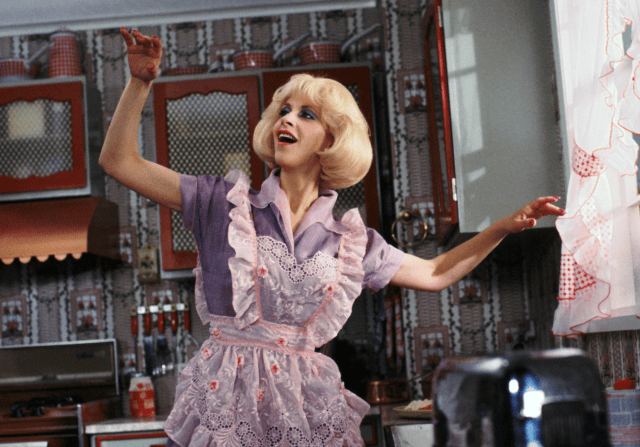
Watch: Ellen Greene Reflects on the Enduring Legacy of Little Shop of Horrors
Frank Oz’s cult classic movie-musical has gotten a new 4K restoration in celebration of its 40th anniversary.