
Interview: For Bess Wohl, Liberation's Big Questions Speak to Our Past and Present
Playwright Wohl discusses her latest drama’s big questions and “radical” acts.
 |
Broadway
|
|
Broadway
|
October 28, 2025
Bess Wohl is thrilled that her new play, Liberation, is getting people talking. Not just about the play itself—though its lens on a women’s liberation group in 1970s Ohio is both compelling and rife with parallels to the present day—but also because, with everyone’s phones locked in pouches for the duration of the show, there’s nothing else for audiences to do besides, well, talk with one another. “The number of people who have told me during intermission, my mother or my daughter, we had a conversation that we had never had before. It’s so incredible,” she remarked.
Wohl, the playwright behind works like Grand Horizons, Small Mouth Sounds, and Make Believe, was inspired to write Liberation because of her mother, who worked at Ms. magazine when Wohl was young. In the play, Lizzie (Susannah Flood) steps into the past to try to understand her mother’s choices, playing her as she organizes a local consciousness-raising group while also breaking the fourth wall to speak to the audience in the present.
Here, Wohl discusses making Liberation a memory play, the “radical” moment in its second act, and why she hopes people leave the theater and re-enter the world “a little braver.”
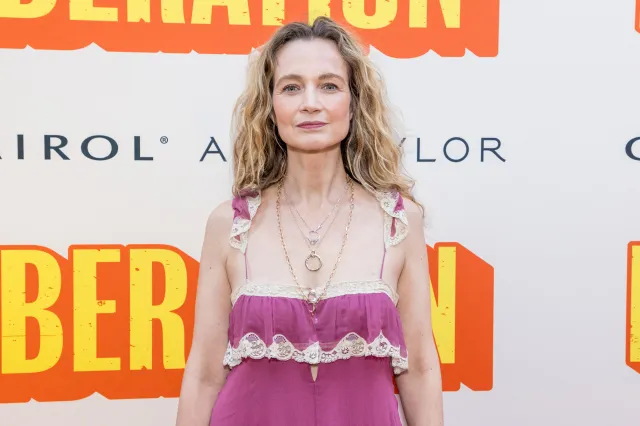
(© Tricia Baron)
This conversation has been condensed and edited for clarity.
What made you want to write about something so close to you?
It’s a scary thing, I’m not gonna lie. What’s been so gratifying about this experience is finding that things that I thought were just my personal questions are actually these much larger questions among women. Does my mom regret the choices that she made? Would my mom have been happier in a different life? Even though it’s really scary to write from a vulnerable, personal place, it’s also incredibly gratifying when you see that the things that you thought were your personal secrets or questions are shared. It’s a huge feeling of freedom—liberation, if I can say—to experience that.
The characters in the play are all fighting for the same things, but from their own vantage points of age, race, marital status.
It was important to me to have a multiplicity of points of view and to create multiple points of entry for the audience. It’s intentionally a play where hopefully almost everyone can see themself in one of the characters, or multiple characters. I think what unites them through all their differences is this desire to tell the truth about their lives, and through telling that truth, change the world and collectively move things forward for all of us. That’s something that hopefully empowers people who go to the play to think about how they might do that in their own lives.
I love that the show was structured as a memory play, because it could have easily just been set in the ‘70s, but this creates a very different experience. Can you tell me about how you landed there?
It’s funny that you say that, because I did try writing that version that was just the ‘70s, and it just felt like it was missing something. It was fun to meet these people, but it felt like I could see this as a TV show or a movie, and I really wanted to create something that was uniquely theatrical. Having a present-day narrator speaking to the audience, bridging the gap between then and now, felt like a way to invite the audience into the play in a visceral way, because the play really is asking questions about now. It’s saying, how did we get here? What happened between then and now that we still don’t have equal pay, that our healthcare rights are still under assault? What gains did the movement make, and how far do we have left to go? It made me feel like I could ask those questions in a direct and urgent way.
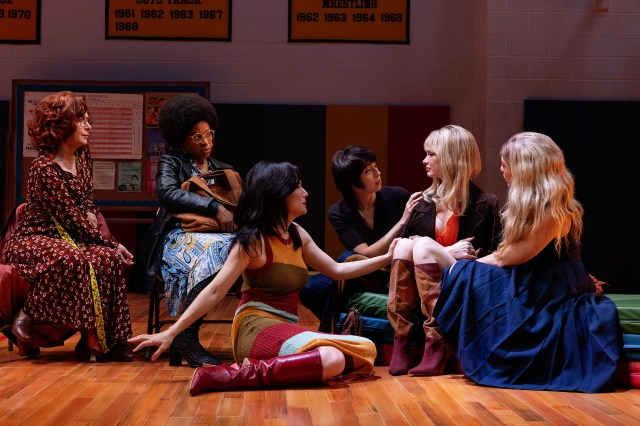
(© Little Fang)
The world has certainly changed a lot in the few months since it ran off-Broadway.
Leading up to the Roundabout run, I did not know whether we would be in a Kamala Harris presidency or Donald Trump presidency. Unfortunately, in my opinion, the outcome was what it was. We made the play sort of in post-election shock—we were in rehearsal on the day of the inauguration in January. Now we’ve seen the effects of the Trump presidency on people’s lives throughout our society, and I feel like the questions have only become more urgent. Everything just feels more painful, but also more necessary. It doesn’t feel like different questions, exactly, but they feel like they take up more space and we’ve lived with them a little longer, so there’s a richness in the work that we’re just all living with in the room together.
What has Whitney White’s perspective as a director brought to the work?
I’d admired Whitney’s work for so long, so I knew that I wanted her for this play. I sent it to her, out of the blue. She didn’t know me at all, so thank God, she responded to it. She brought her perspective as a woman from a different generation than me. I grew up in Brooklyn, the play’s set in Ohio, she’s from the Midwest, she’s a Black woman. Her Shakespeare knowledge was also important in terms of how the play breaks the fourth wall. We were able to really collaborate in this way where we’re very different, but we challenged each other in a way that creates something incredibly alive.
I want to ask about the scene where the group meets while nude. Aside from this being a thing people did, why did you want to include that moment and what did it bring to the story?
As you said, this is a thing people did. All of the women that I Zoomed with when I was doing my research really wanted to talk about it. It was something that they were carrying with them like a a symbol of their bravery and courage, and also of how much more radical people were in certain ways back then. It was definitely something that I was a little bit scared of. I had never written a scene like that before, and I wasn’t sure whether the nudity would be so present that you kind of can’t follow the story or hear anything else that’s happening. So I was really happy to see that it worked in the way that I wanted it to work.
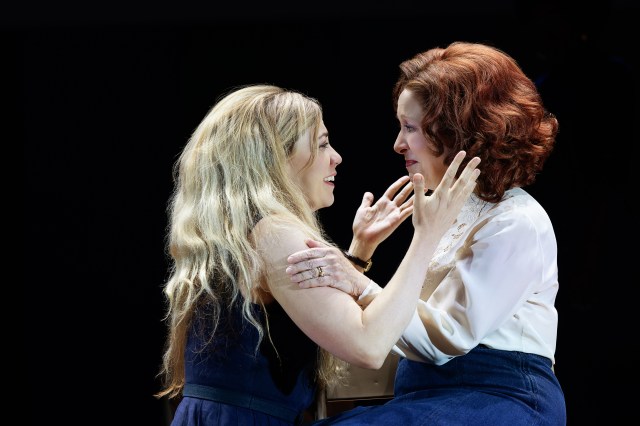
(© Little Fang)
To have a scene that involves nudity but is not about sex feels pretty remarkable, I have to say.
I know, like, when do you see women’s naked bodies in a way that’s not sexualized? That felt radical to me. And I felt like we were really saying something about how the female body is understood in our culture.
How do you hope this play resonates with people?
I hope that the play itself is consciousness raising—helping people see things that they haven’t seen before and creating the spark that gives people that fire to go back in the world and maybe be a little braver. Things by and large, are not going in the right direction for, not just women’s rights, but immigrants, trans people, people of color. We are in a difficult moment for all marginalized people. And I hope that the play creates a reminder of a time when people came together to change the world, and an invocation for people to find courage to do that again. Because it’s not just a one-time thing. We have to keep doing it. And that’s part of what the play is reminding us of.
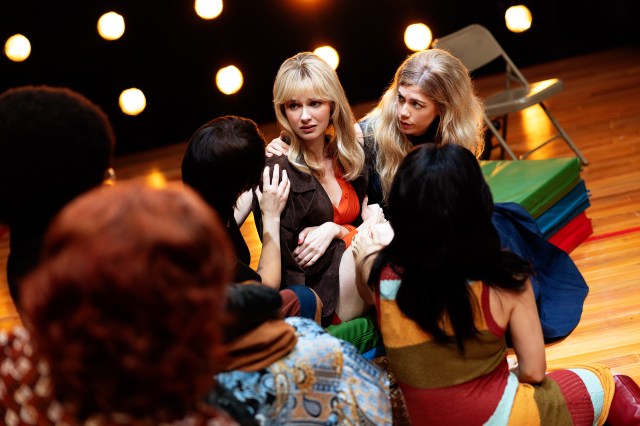
(© Little Fang)




source on Google
Featured In This Story
Latest Reviews
See all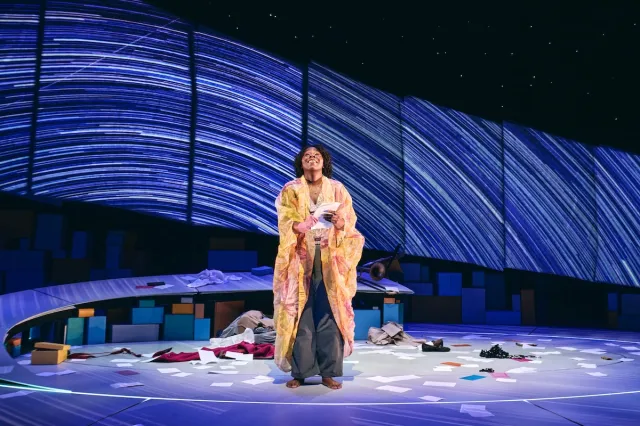



Latest Videos
Watch the Trailer for Elsinore Starring Andrew Scott
The film is based on the true story of Ian Charleson, who played Hamlet at London’s National Theatre after being diagnosed with AIDS.