
Interview: Alana Raquel Bowers on the Revolutionary Joy of The Ripple, the Wave That Carried Me Home
Bowers leads Christina Anderson’s memory play about a family of civil rights activists at Playwrights Horizons.
 |
Off-Broadway
|
November 12, 2026
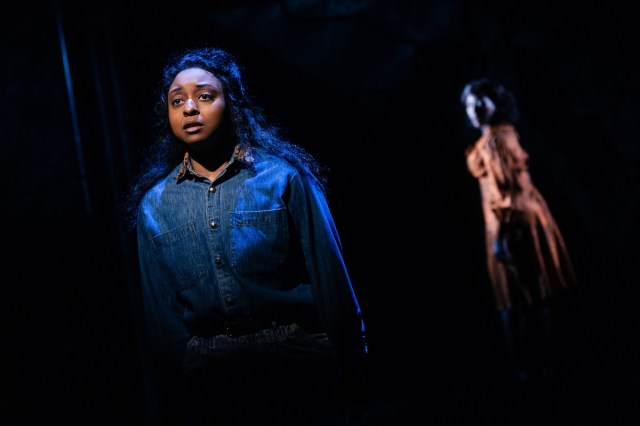
(© Marc J. Franklin)
Alana Raquel Bowers first auditioned for Christina Anderson’s the ripple, the wave that carried me home at least seven years ago—or, as she approximates with our favorite modern metric, “pre-pandemic.” It’s an especially relevant line of demarcation in Bowers’ career, having kicked off this new era with a 2021 Broadway debut in Douglas Lyons’s Chicken and Biscuits and continuing to build a life in the theater that earned her the title of Rising Star at the 2026 Black Women on Broadway Awards.
“My year this year has been an incredible marker,” says Bowers. The ripple… is her third off-Broadway production of 2026, coming on the heels of Ro Reddick’s dark comedy Cold War Choir Practice where she inhabited the mind of a Reagan-era 10-year-old, and Erica Murray’s Irish Rep production of The Loved Ones, where she played a pregnant 21-year-old Brit.
Now in Anderson’s play, she’s Janice, a 34-year-old wife and mother in 1992 Ohio who cut ties with her Kansas hometown, the place where her activist parents made Black access to swimming pools their all-consuming mission. As she narrates the painful memories of that uphill battle, Rodney King becomes the latest face of the same grueling fight.
“I was not 34 in 1992, but I am 32 in 2026, and unfortunately, I too still question if things are different from before,” says Bowers. “To end my year with a play that I can see myself and the people that raised me in—it’s been wonderful to stretch myself and also come back to myself at the same time.”
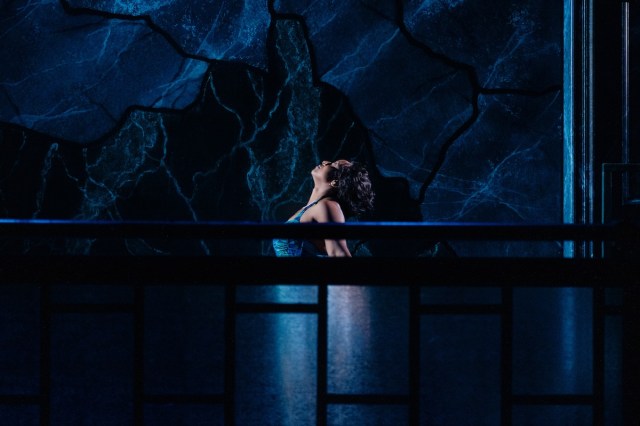
(© Marc J. Franklin)
This interview has been condensed and edited for clarity.
What was your first introduction to this play?
I actually auditioned for it pre-pandemic [when it] was done regionally. I never knew that it would come back into my orbit in this way, playing the main character. Before I think it was like, “Oh a job.” Now it’s, “This is the kind of work that I want to be doing.” That’s a cool dynamic that happens when you continue to grow in this industry.
You play Janice, who isn’t just the main character but also the narrator who takes us through the entire story. How do you approach something that massive?
I was petrified when I saw this. I was like, “You want me to say all these words?” Cold War Choir Practice was a version of leading a show but there were so many other parts that I could lean on that just don’t exist in this story at all. So I was very scared. But that’s one of the reasons why I wanted to tackle it.
Was it easy for you to understand Janice?
We think very similarly. I feel myself floating in and out of memories and having that influence how I approach present moments. I don’t know if my internal monologue is as poetic as Janice’s, but it is just as messy and complex. I also feel like it’s important to tell stories of Black folks who weren’t necessarily struggling to put food on the table. Middle class stories get lost in the sauce, but there’s so much more to those stories. And I know because it’s my story. I had a great childhood, and also struggled a lot with figuring out what kind of person I wanted to be in the world outside of the world that my parents created for me. I deeply relate to having that moment when you realize that what you want for yourself is different than what your parents want for you.
Janice spends most of the play avoiding going back to her hometown of Beacon, Kansas, where her father is being honored for his work fighting for Black access to swimming pools. Why reject her family and their life of activism so vigorously?
I totally understand it. I was a freshman in college when Trayvon Martin was killed, and that spearheaded my own activism. I can’t tell you how many protests I attended and meetings I went to. And then once George Floyd happened, something just—the air deflated from my body. The trying, the protesting, that form of revolt felt meaningless at that point. And I stopped. I stopped protesting, I stopped going outside, I stopped posting, because I was exhausted. It just felt like it was all falling on deaf ears, and I was like, the best thing that I can do for myself in this crazy time is to go to sleep. Turn my phone off, not speak on anything, and just keep my own sanity.
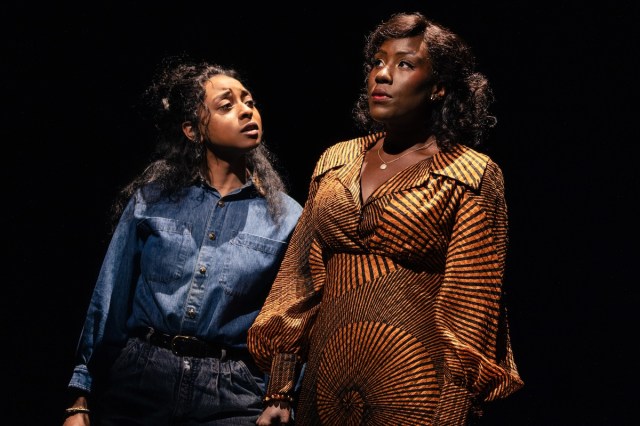
(© Marc J. Franklin)
Have you been on your own journey, like Janice, of finding your way back to it?
I have not returned to protesting in the way that I was doing it in college, but I have found other ways. And I’ve witnessed how people in my life show their protest. My sister works for NASA. She’s maybe gone to one protest in her life, but she is leading a program of people, mostly old white men, as a young Black woman in the STEM field. That itself is revolutionary. There are people like my sister and my parents who are educators, whose protest is going to work every day. Every day is a chance for you to either succumb to the realities of the atrocities, both past and present, or you can choose joy. I think the fact that we get to watch Janice’s journey to joy is even more of a reminder for me that that is revolution. That is protest.
Of all the juicy poetic language you have in this play, what line feels the best to speak every night?
The line that really sums up how I feel about the justice system is, “Evidence. Proof. It is everything and nothing.” I doesn’t matter where my brain is on the day. That will always be a line that I sit in and that just feels so true. And then, I think there’s something about the line, “I am 60 percent water.” In the beginning, Janice enlightens the audience that we are all 60 percent water. And then right before I drink, there’s a line in the script that says, “I am 60 percent water.” I always question why lines are said again. But I’ve discovered it’s ritualistic. It is a reminder that sometimes the thing that we are trying so hard not to ingest or be is already a part of us. You can either use your time on this earth to revolt from it, or you can just accept it. And what the play leaves us with is a snapshot of joy. A collective joy. A generational joy. [That’s] the only real resistance we have in our hands.




source on Google
Featured In This Story

Related Articles
See all
Latest Reviews
See all





Latest Videos
Find Out the Real Story Behind Broadway's Here There Are Blueberries
Moisés Kaufman and Amanda Gronich discuss the new drama along with their cast.