
Review: The Loved Ones Finds Fresh Life in Grief, Motherhood, and Mystery
Erica Murray’s drama charms with wit, warmth, and unexpected turns at Irish Rep.
 |
Off-Broadway
|
|
Off-Broadway
|
June 23, 2026
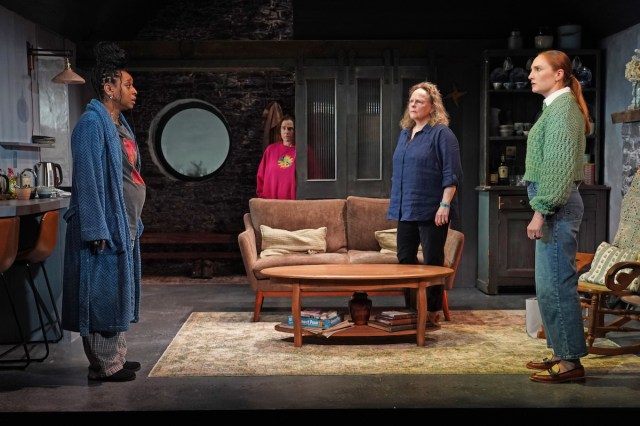
(© Carol Rosegg)
My book club has an on-going joke that any story about a woman 20 to 35 years old has an obligatory accidental pregnancy subplot. It’s so ubiquitous that we actually note when a book doesn’t have one. So I was pleasantly surprised by Erica Murray’s The Loved Ones at Irish Repertory Theatre. A rare story that incorporates an unexpected pregnancy, fertility issues, and the experience of grief without totally falling into cliché, The Loved Ones is unusually charming.
Nell (Maryann Plunkett) is mourning her son, Robin, who died six months earlier. Despite having a distant relationship with her prim daughter-in-law, Robin’s wife Orla (Clare O’Malley), Nell invites her to visit and scatter Robin’s ashes around the property. The weekend is meant to be a time of healing and calm, but Nell’s side business of running an AirBnB (“You’re looking at a Superhost,” she explains dryly) results in their weekend being disturbed by two strangers.
One is Cheryl-Ann (Donna Lynne Champlin), an American birdwatcher on a solo vacation. She’s thrilled at the “real farming action” she gets to experience at the remote home in the Irish countryside (convincingly rendered by Tatiana Kahvegian’s detailed design). The other is Gabby (Alana Raquel Bowers), a young woman who claims to be pregnant with Robin’s baby—a shock to everyone else.
Over the course of the weekend, the women confront each other about their pasts, presents, and futures, and reckon with a man who left a complicated legacy that each of them only has pieces of. Its major themes relate to childbearing and motherhood, exploring both the struggle to conceive and the challenges of raising children as an unpartnered mother. These and other issues, such as one character’s hinted-at abortion, are potentially controversial, but Nicola Murphy Dubey’s measured direction has made this production largely apolitical. In the context of post-Roe v. Wade America, any tension in the play that might be derived from the climate around women’s choice is absent.
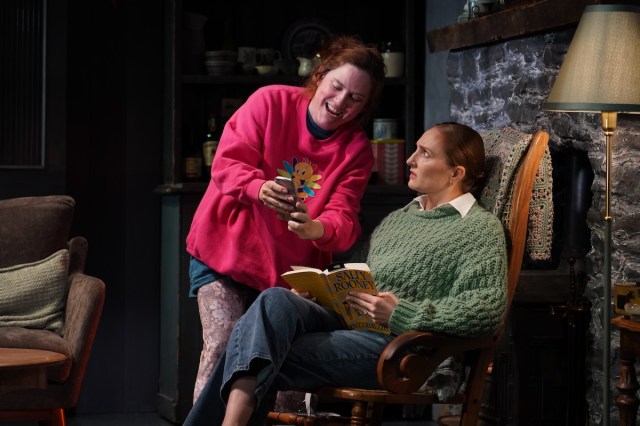
(© Carol Rosegg)
This plot dances along the edge of predictability, but the actors bring the story back from the brink. Bowers as Gabby is sympathetic and funny, hitting all the right beats to make the jokes land. We see her pull from deep emotional reserves to bring extra depth to the character. Similarly, Plunkett gives a compelling and realistic portrayal of a mother’s grief.
O’Malley has less to work with (her character is not as funny as the others). But her efforts pay off, especially in scenes where she’s interacting with Bowers, shifting from comradery with her husband’s affair partner, to hatred, and back again.
However, the standout here is Champlin, who’s so appealing it’s almost wrong for the play. Cheryl-Ann’s constant chattering about her bird obsession is meant to be grating, but Champlin plays her with such big-hearted sweetness that it’s hard to imagine not wanting to spend time with her. When her character gets a darker, emotional moment, she delivers there too. In a play where the characters are obvious types, the cast creates enough texture to resist an easy slide into trite territory.
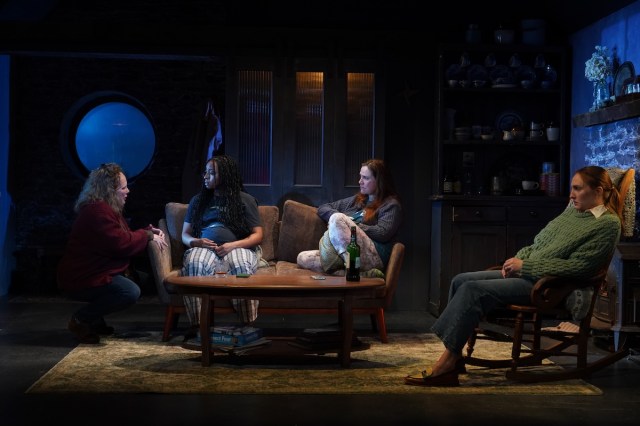
(© Carol Rosegg)
Throughout, the play also rejects timeworn plot points. I was ready to cringe at what I guessed would be a predictable ending. But Murray takes things in an unexpected direction, indicating little about what would happen to the characters and instead refocusing on their shared grief. The play’s open-endedness comes from a bonding moment between two unlikely characters and implies that through this conversation, something is freed within each of them. Resisting the urge to tie up the loose ends of these characters’ journeys and instead letting them dangle as they would in real life says more about the similarities between parenting and losing a loved one than a pat ending could.
The only hints about the characters’ possible futures come in the lights (design by Kat C. Zhou) that flicker at significant moments. Is it a sign that Robin is trying to contact them and tell them they will be OK? The answer is never revealed, but it feels appropriate for The Loved Ones, a play that creates appealing theater out of mediating on questions instead of answering them.




source on Google
Featured In This Story
Latest Reviews
See all

Latest Videos
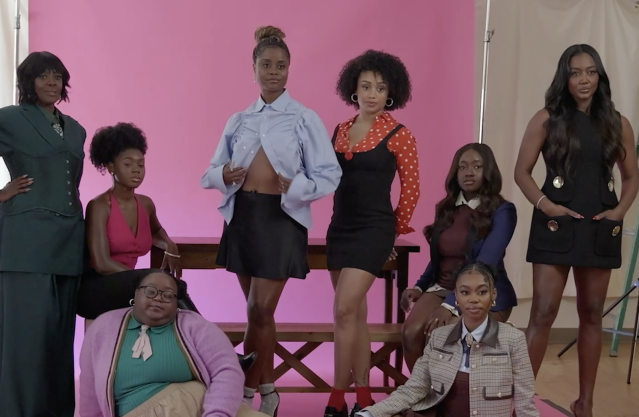
Jocelyn Bioh, Whitney White, Jasmine Amy Rogers, and Patina Miller Talk School Girls
The playwright, director, and stars of School Girls; Or, the African Mean Girls Play discuss the comedy, sisterhood, and themes behind the new Broadway production.