
Special Reports
Historian John Monsky and Astronaut Cady Coleman Explore the Human Stories of Space in New PBS Musical Film
PBS’s We Chose to Go to the Moon airs on November 10.
 |
New York City
|
November 9, 2026
History comes alive through music, archival footage, and firsthand accounts in We Chose to Go to the Moon, a musical and theatrical production created by John Monsky and filmed at Carnegie Hall. Ahead of its November 10 PBS premiere, we spoke with Monsky and former NASA astronaut Cady Coleman about bringing the Apollo program to life on stage, the families and sacrifices behind the space race, and why the story of exploration belongs to everyone.
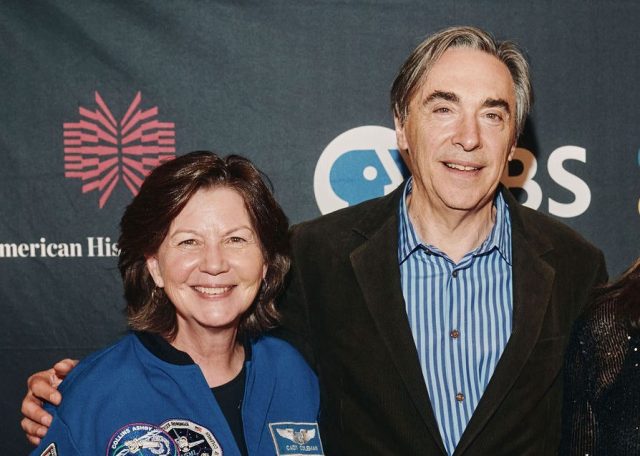
(© Valerie Terranova)
This conversation has been condensed and edited for clarity.
John, how do you describe this kind of show to people, with its mix of music and history?
John Monsky: It’s hard to explain until you see it. I call it emotional history, and at the core is the orchestra, the vocalists, and the spoken word. I wanted to be a history professor. I called up my dad and said, “I’m going to try to become a professor.” He said, “did you look at how much student debt you have?” So, I became a lawyer, but I didn’t want to lose my attachment to history.
I started collecting flags and I started doing a talk on Flag Day. It was a real neighborhood thing. My wife would play the piano. Kids and their parents would come over. Then it got to be a thing. We added music, found friends on Broadway, and we did it at the New-York Historical. Then, one day, I got a call from Carnegie Hall.
As we performed this, we reached out to the astronaut community, like Cady, Mike Massimino, Neil Armstrong’s son Mark Armstrong, and Dave Scott, who walked on the moon. What you’re hearing here, as it’s evolved from rehearsal, is their voice. It didn’t come out of a bunch of books.
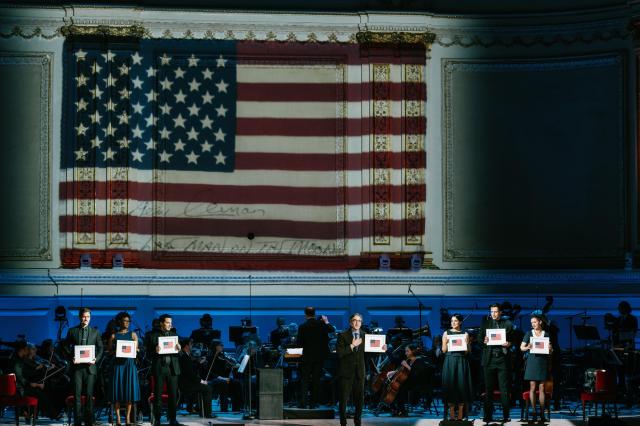
(© Fadi Kheir)
Cady, tell me about watching this particular program and what that’s like for you.
Cady Coleman: It means a lot to me. My job meant a lot to me and I’m very proud of the missions that I had, especially living for almost six months up on the space station. What’s important is that it will be useful to inform the present and the future. So many people like me didn’t grow up recognizing themselves in any of the photos or videos or talk shows. We just weren’t there. Even growing up in an exploration family, it never occurred to me to have this job, and it wasn’t until I was in college and Dr. Sally Ride came and spoke that I thought “Wow, maybe I could try to do that.”
The ways that John has woven real people into these stories is so significant. If astronauts are up on a pedestal and everybody thinks “We can’t be them,” we lose so much of what we could do. It’s making us and our families relatable, [which is what I love] about this film.
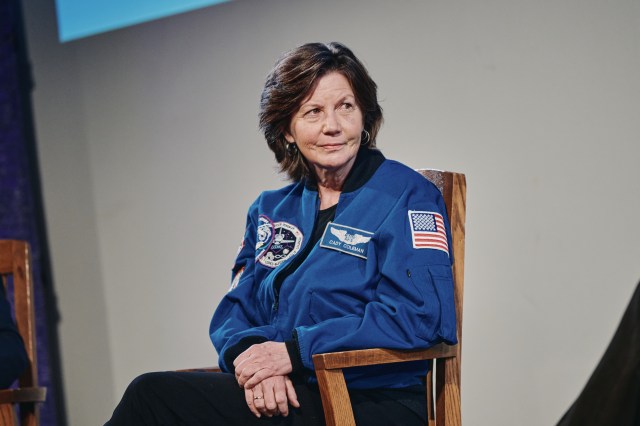
(© Valerie Terranova)
The show touches on not just astronauts, but their families. Can you talk a little bit about the family aspect and balancing that with work? I feel like I don’t have enough hours in the day to work and see my own kids, and I basically work from home. I can’t imagine what it’s like to be in space for six months.
Cady: Unfortunately, and I’m not saying you’re doing this, but people only ask the women, you know, how did it feel about leaving your family back on earth. But I know that’s not exactly what you’re asking, and I really like that you ask this question. You know, you never feel like you do enough to be on the right side of that balance. At least, I don’t. I have two sons. One is 43 and one is 26, and he was 10 when I was on the space station.
Watching the film with him, some of the sad parts [made me emotional]. PBS Independent Lens made a documentary that features myself and a few other astronauts and their families about exactly this. I gave the director all of my family videos and you can see a snapshot of our family conferences on Sundays. The family stuff is so important.
John: What’s different about this show is that it’s not just about astronauts walking on the moon. It’s about family and sacrifice. You see this moment, which isn’t really told, about the Apollo 1 fire, where each astronaut’s wife gets the news that their husband [Gus Grissom, Ed White, and Roger B. Chaffee] died on the launch pad and goes back to tell their children.
Cady: There are things that happen in the space business, right? We had a very, very dangerous mission—known as the most dangerous launch in the history of the space shuttle program—that actually did not end in an accident, the STS-93 mission. There was an electrical short and a leak, but it deployed the most amazing X-ray telescope ever. I think, just as we’re daunted by ordinary things, in showing the astronauts’ spouses and when astronauts went to the people’s houses to notify them, it shows what a community it is, and that it is not just about the people you see on the rocket.
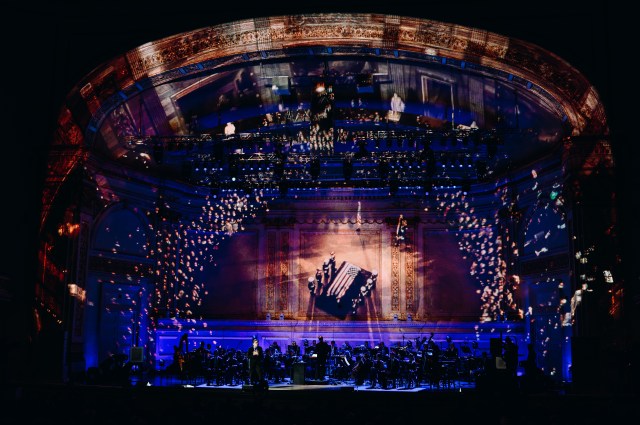
(© Nina Westervelt)
John, how do you determine a set list for a show like this?
John: Everything starts with pure history. Every one of those songs is from the historical moment and push the story forward. “Up the Ladder to the Roof,” shows you can break glass ceilings and all kinds of barriers. David Bowie’s “Space Oddity,” where was his big break? Carnegie Hall. And it came out nine days before Apollo 11 lifted off. You’ve got “Also sprach Zarathustra,” made famous in 2001: A Space Odyssey to most people that didn’t know classical music. And guess who went to see that movie before they lifted off? The astronatus of Apollo 8, the first human beings to orbit the moon. They were joking on the flight over that they were gonan say they saw a monolith. I’m glad they didn’t do it.
Cady: I especially loved hearing “Space Oddity.” We have several astronaut bands, and one of them, Bandella, has endured over the years. Some of us have been playing music together for more than 30 years. Chris Hadfield from Canda actually famously, with permission, redid the video and redid the words, and our band play sit when we’re on the road. It’s amazing that it’s still a key thing that brings communities together.
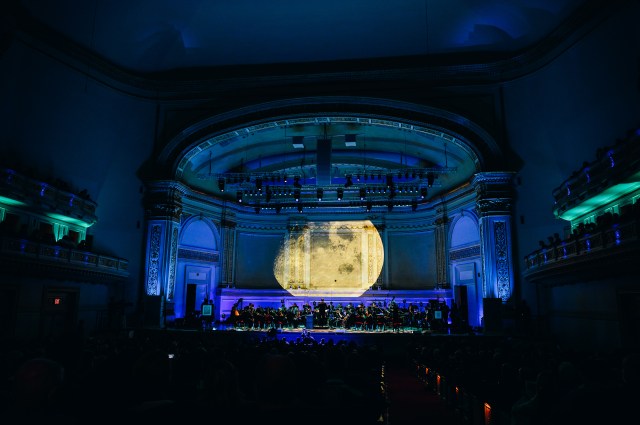
(© Nina Westervelt)
Cady, this is probably reductive, but for a lay person like me, the closest I’ve gotten to space is an airplane. What is it really like up there?
Cady: I always try to answer that question with what I really think when I’m looking at the person who asks it. In a way, I think the question you’re really asking is, “Could that be me up there?” And the answer is, absolutely. When I left earth, I always thought space was going to be different. That I would be in this different place. What I learned was that home is bigger than we thought. Space is a place that belongs to all of us.




source on Google
Latest Reviews
See all




Latest Videos
Find Out the Real Story Behind Broadway's Here There Are Blueberries
Writers Moisés Kaufman and Amanda Gronich discuss the new drama alongside their cast.