
Under the Radar Review: Samuel Beckett's All That Fall
Mabou Mines mounts Beckett’s lesser-known work as part of the Under the Radar festival.
 |
Off-Broadway
|
|
Off-Broadway
|
January 12, 2026
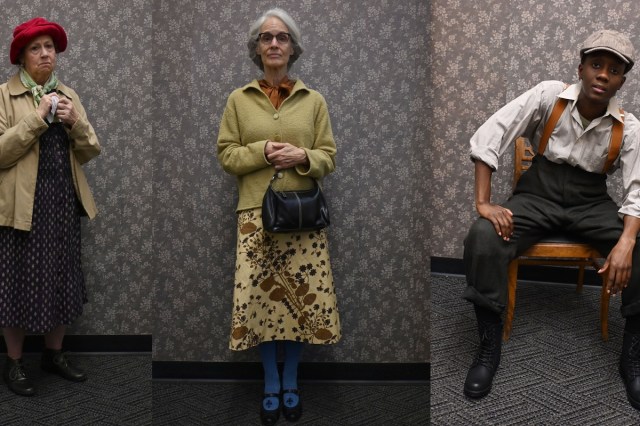
(© Jeri Coppola)
For all their overlapping themes of isolation and despair, Samuel Beckett’s plays—the ones audiences know best—are visually distinct. Iconic even. Pals in bowler hats? Obviously Waiting for Godot. Sad man with a reel-to-reel and a banana? Clearly Krapp’s Last Tape. Heads poking out of trash cans? Must be Endgame.
It’s no surprise that Beckett’s 1957 radio play All That Fall, mandated by the writer’s estate to remain an auditory experience, is one of his less produced works. Still, every so often, theater makers assume the challenge of “staging” the one-act—adding visuals that ultimately have to say, “don’t look, just listen.” Mabou Mines, an experimental theater company with a deep bench of Beckett productions, is taking its swing for this year’s Under the Radar Festival. The results are mixed but the effort is noble.
Director JoAnne Akalaitis conceives the production as a soundscape (expertly crafted by Bruce Odland) swirling around a king-size diorama (eye-catching work by scenic designer Thomas Dunn). We have a God’s-eye-view of a rural Irish town that could be described as quaint if it didn’t also have the markers of a junkyard. There are cute little houses, light spilling out their windows, a stream of blue water cutting through the center of town. There’s also a dirt-filled tire and broken bicycle collapsed on a rickety railroad track. Lighting cues (by Jennifer Tipton) draw focus to various parts of the landscape and indicate shifts in mood, but the otherwise unchanging view for all 75 minutes of Beckett’s uneventful story—not a live actor in sight—primes the mind to wander.
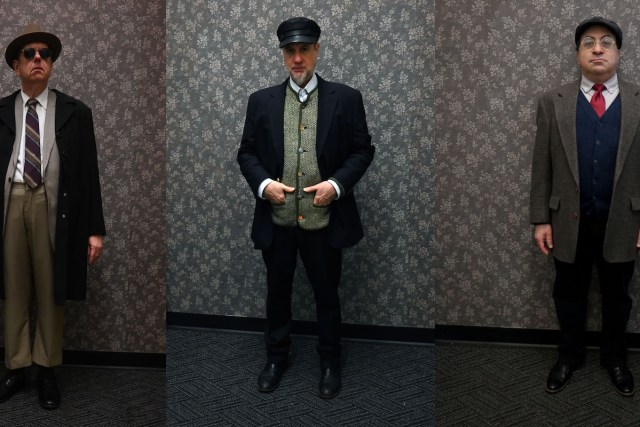
(© Jeri Coppola)
The story, in short, is a laborious journey to and from a train station. The elderly, crotchety, and purportedly portly Maddy Rooney (voiced by Randy Danson) travels there to meet her blind husband Dan (Tony Torn)—a special treat for his birthday (though his age is unknown even to him). A dragging hinny, a bum bicycle, and a groaning automobile (and their owners) greet her along the way, portending the fourth and final malfunctioning mode of transport.
Dan’s train is delayed for mysterious reasons he refuses to tell his wife as they make their way home. When the truth finally does come out amid a brewing storm (some of the most ground-shaking portions of the soundscape), it’s awfully dark—as is the rest of Maddy and Dan’s panting conversation through trudging their return trip. The greatest bit of levity is their cackling fit at the idea of a benevolent God (“The Lord upholdeth all that fall,” quotes Maddy before dissolving into hysterics).
It’s signature Beckett absurdism that makes you chuckle amidst an existential crisis. It also reminds you that most of the playwright’s dark and often bawdy humor is failing to break through the wall of sound. Without punctuation, visual or otherwise, all we absorb is the Rooneys’ drudgery. With only one chance to listen, we need to be able to hear more.




Featured In This Story
Latest Reviews
See all


Latest Videos
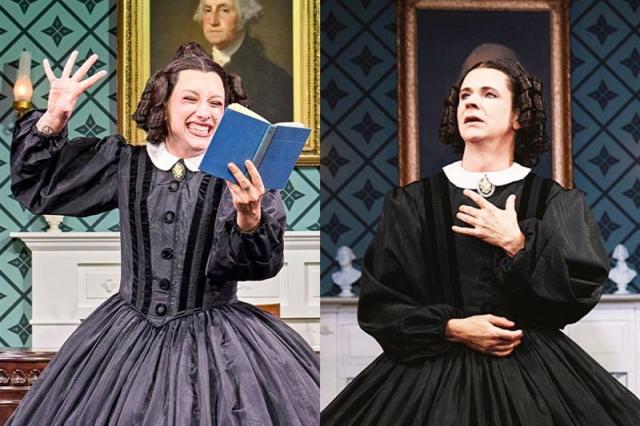
West End vs Broadway: Oh, Mary!—From an Angry Inch to an Angry First Lady, With John Cameron Mitchell and Mason Alexander Park
Mitchell and Park celebrate a decade-long friendship in our latest installment.