
Review: Meat Suit and the Body Horrors of Motherhood
Aya Ogawa’s new play is presented by Second Stage.
 |
Off-Broadway
|
|
Off-Broadway
|
February 25, 2026
(© Joan Marcus)
Second-wave feminism framed motherhood as trapping women a la The Stepford Wives. Today’s cultural moment more often portrays mothers as being so possessed by their inner animal instincts that they turn feral, or even into monsters. Aya Ogawa explores this idea with the playful and sometimes sinister Meat Suit, or the shitshow of motherhood, presented by Second Stage at the Pershing Square Signature Center.
Meat Suit is a series of scenes that depict the unexpected, darker side of motherhood that come fast and furious. Liz Wisan plays Momo, a new mother grasping at normalcy by going to brunch with her friends, only to have her breastmilk spill literally everywhere. Marina Celander and Maureen Sebastian are moms of infants who subtly one-up each other as they compare notes about their parenting choices. Cindy Cheung is a woman who wakes up to the nightmare that she has an overbearing mother, a horny husband, and clingy children, none of whom she can remember. These five actors, rounded out by Robyn Kerr and all playing multiple roles, guide us through a kaleidoscope of situations, most of them biting and satirical.
The more bonkers the sketch, the more relatable Meat Suit becomes. Trying to look normal while going to brunch with your child-free friends, feeling like your life has careened out of control and you are now a deformed monster leaking out of every orifice—these are not unfamiliar experiences for mothers. You probably look exactly the same, but it certainly feels like everyone is running away from the engorged freak you have become. Making these uncomfortable situations funny is Ogawa’s strength as a writer and director. Much of the show strikes a similar tone to The Substance’s manic body horror/comedy, matching that film’s ingenuity and creativity.
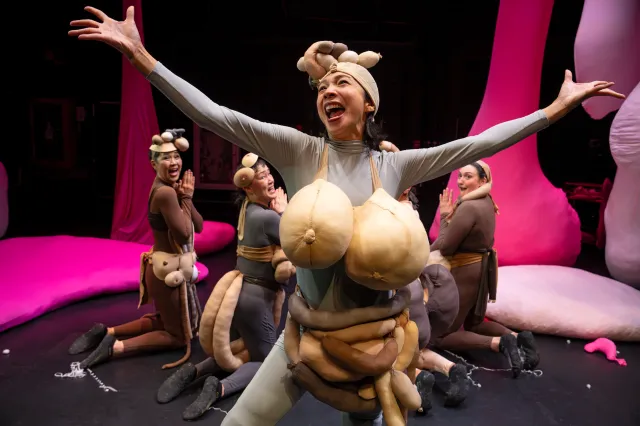
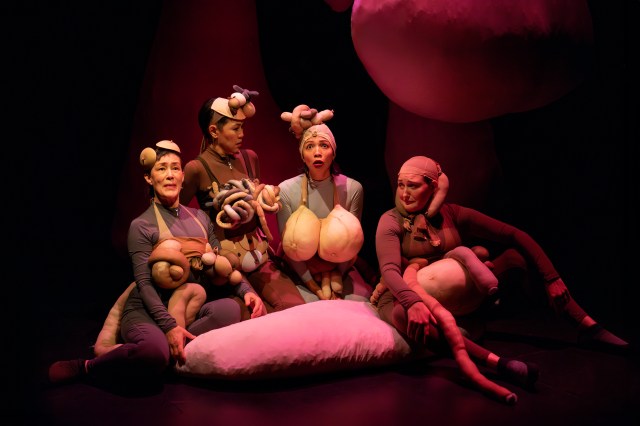
A huge part of the production’s creativity comes from the costumes by Jian Jung. Versatile and disquieting, Jung’s creations revel in disgust. Ropes of intestines become infants, elongated breasts become penises, and penises become microphones, all visceral reminders of our own “meat suits.” Jung also did the set design, with boob-like appendages descending from the ceiling. It would have been fun to see the actors play with those a bit more, but that didn’t diminish the effectiveness. (On the other hand, Megumi Katayama’s pulsating sound design muddles the lyrics to original songs by Leyna Marika Papach. The softer songs are more enjoyable.)
Wisan’s anxious, twitching body has a zombie-like vibe that many zonked-out parents will recognize. Celander and Sebastian shine as the rival moms who decide to become friends, while already aware they’ll stop speaking when their kids go to different preschools. Cheung radiates terror as she awakens from her nightmare, and Kerr is a standout jack-of-all-trades, crafting highly specific characters, all while wearing a rather charming penis fascinator.
Meat Suit becomes less edgy and more heartfelt as the narrative veers away from the early days of parenting and into the relationships between mothers and their adult children. Some audience members might be craving these kinds of emotional beats after an hour of bawdy humor, but I didn’t feel Ogawa’s depictions of aging parents were as sharply observed or as uniquely presented as the earlier ones. The final scene returns to the brunch friends we saw in the opening, but with all the characters now elderly. I’m not totally sure what we are supposed to glean from this scene, which is no longer about motherhood, but existential dread.
However, Ogawa’s deft direction made the transition from early motherhood to late life smoother, navigating the audience through big shifts in tone and theme. Meat Suit is one to take in, ponder, and discuss over brunch.
(© Joan Marcus)




Featured In This Story
Latest Reviews
See all
Latest Videos
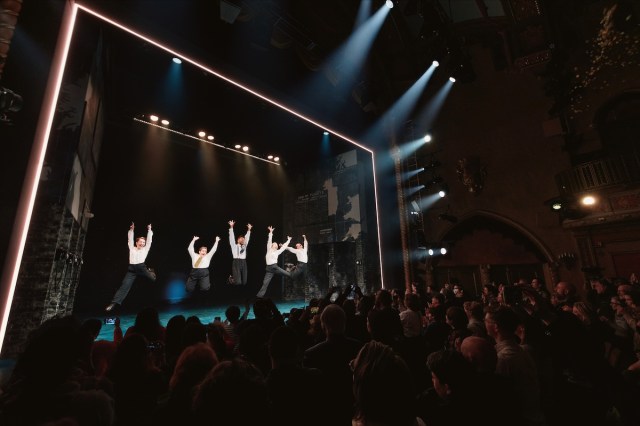
Watch the New Broadway Cast of Operation Mincemeat Take a Bow
The show just entered its second year of performances at the Golden Theatre.