
Review: “Master Harold” ... and the Boys Still Stings—but This Revival Doesn’t Fully Land
Geffen Playhouse mounts a tense but off-balance production of the Athol Fugard classic.
 |
Los Angeles
|
|
Los Angeles
|
April 20, 2026
(© Jeff Lorch)
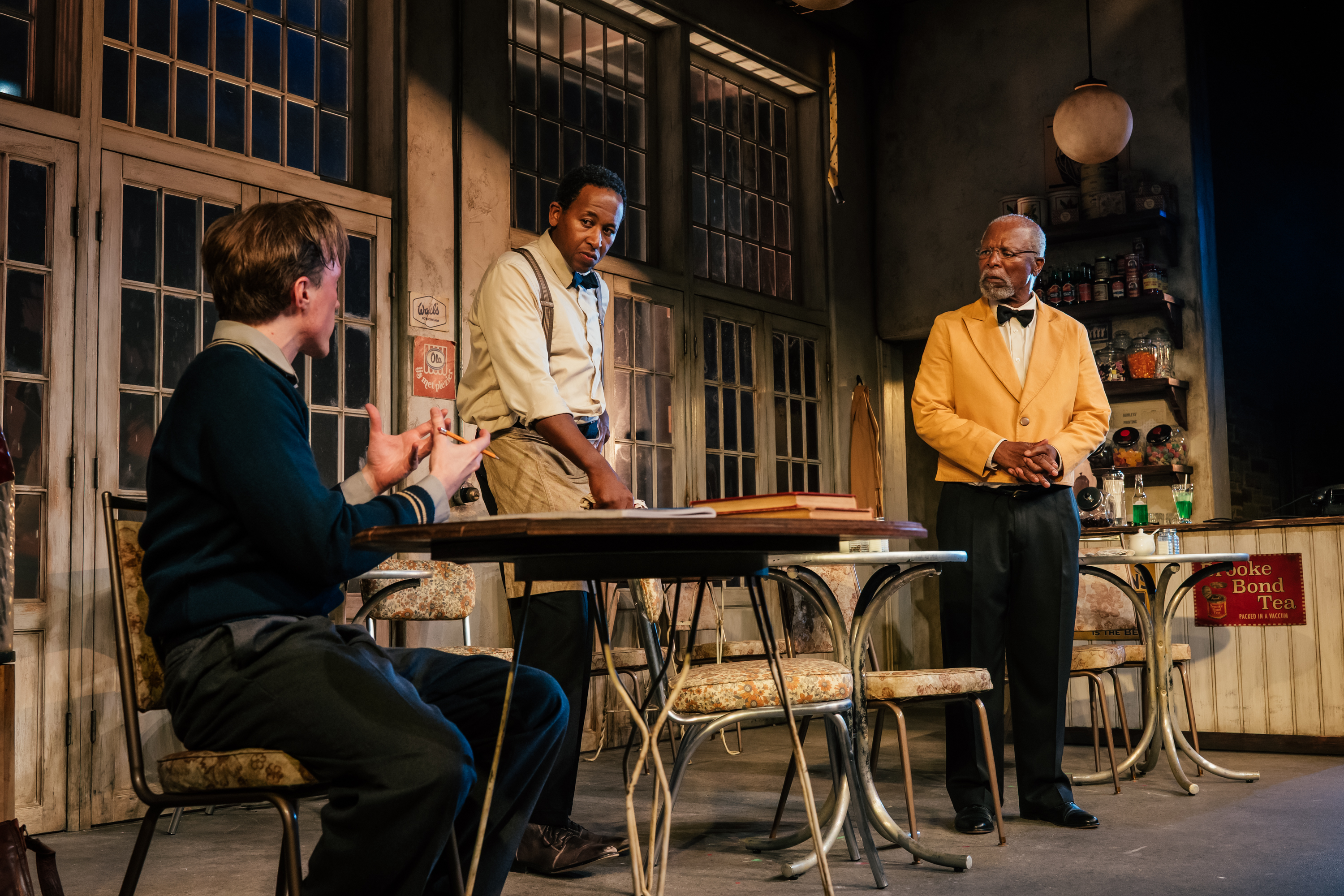
Geffen Playhouse’s piercing revival of Athol Fugard’s “Master Harold” … and the Boys proves that the 1982 play is still relevant, but a handful of elements translate uncomfortably for modern audiences. Despite two powerful performances by John Kani and Nyasha Hatendi, the three‑person drama stumbles because of Ben Beatty’s flat turn as the title character.
Set in a less‑than‑accommodating tearoom in Port Elizabeth, South Africa, in 1950, the play centers on two Black servants, Sam (Kani) and Willie (Hatendi), as they practice for a ballroom dance competition. Hovering nearby is Hally (Beatty), the white teenage son of their employers, who reluctantly studies while reminiscing with his “boys.” Sam and Willie have effectively raised the 17‑year‑old, whose mother is emotionally distant, and whose father, disabled during World War I, has become a bitter alcoholic.
One of the most remarkable aspects of Fugard’s play is that it was written while apartheid was still the law of the land in South Africa (the country’s parliament would not repeal major apartheid laws until 1991). At the time, Fugard could offer only hope and prayer that the brutal system would one day be dismantled. Drawing from vivid personal memory, Fugard revisits his own youthful prejudice—he based Hally on himself—without begging for forgiveness or granting his autobiographical stand‑in any more grace than he deserves. By putting his past behavior on trial without a defense, Fugard displays uncommon self-examination.
(© Jeff Lorch)
The play’s most troubling element, however, is Willie’s repeated, casual references to beating his girlfriend and dance partner for presumed promiscuity. Although the play does not condone the violence, it also stops short of condemning it outright. For contemporary audiences, that moral ambiguity is difficult to reconcile for a likable character.
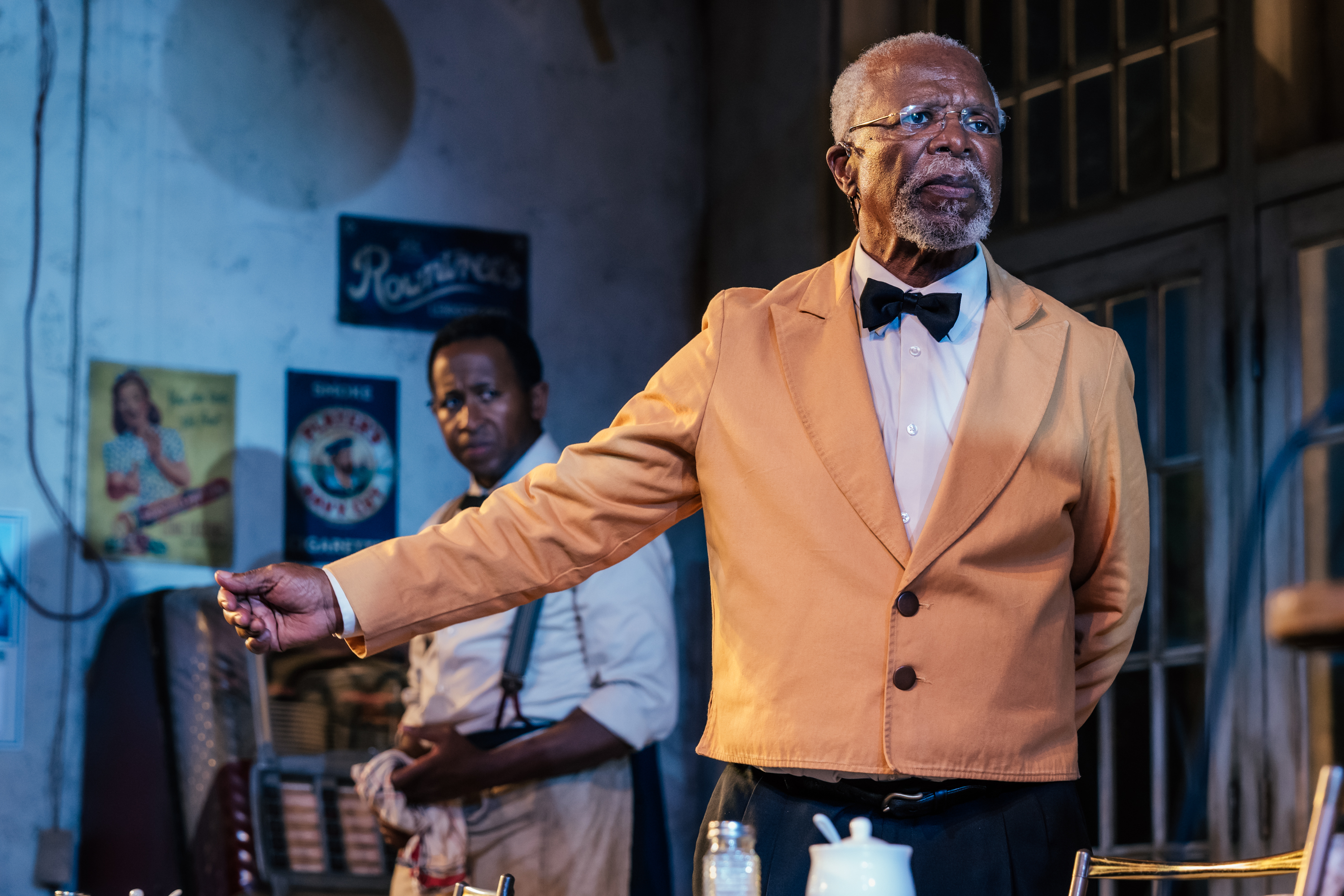
Kani is a major figure in Fugard’s theatrical legacy. He won a Tony Award in 1975 for Sizwe Banzi Is Dead, which he co‑wrote with Fugard and Winston Ntshona, and he portrayed Willie in the 1985 television adaptation of “Master Harold” opposite Matthew Broderick and Zakes Mokae. Here, Kani is brilliant as Sam. When he laughs, he suppresses his giggles—a subtle gesture that feels rooted in decades of being infantilized by white society. After enduring his young charge’s cruelty, Kani radiates dignity and restraint, confronting the devastating realization that the boy he helped raise has become just another racist.
Hatendi is also outstanding as Willie, the younger servant who remains deeply subservient to his white employers. Less self‑assured than Sam but simmering with rage, Hatendi brings volatility and emotional weight to the role.
(© Jeff Lorch)
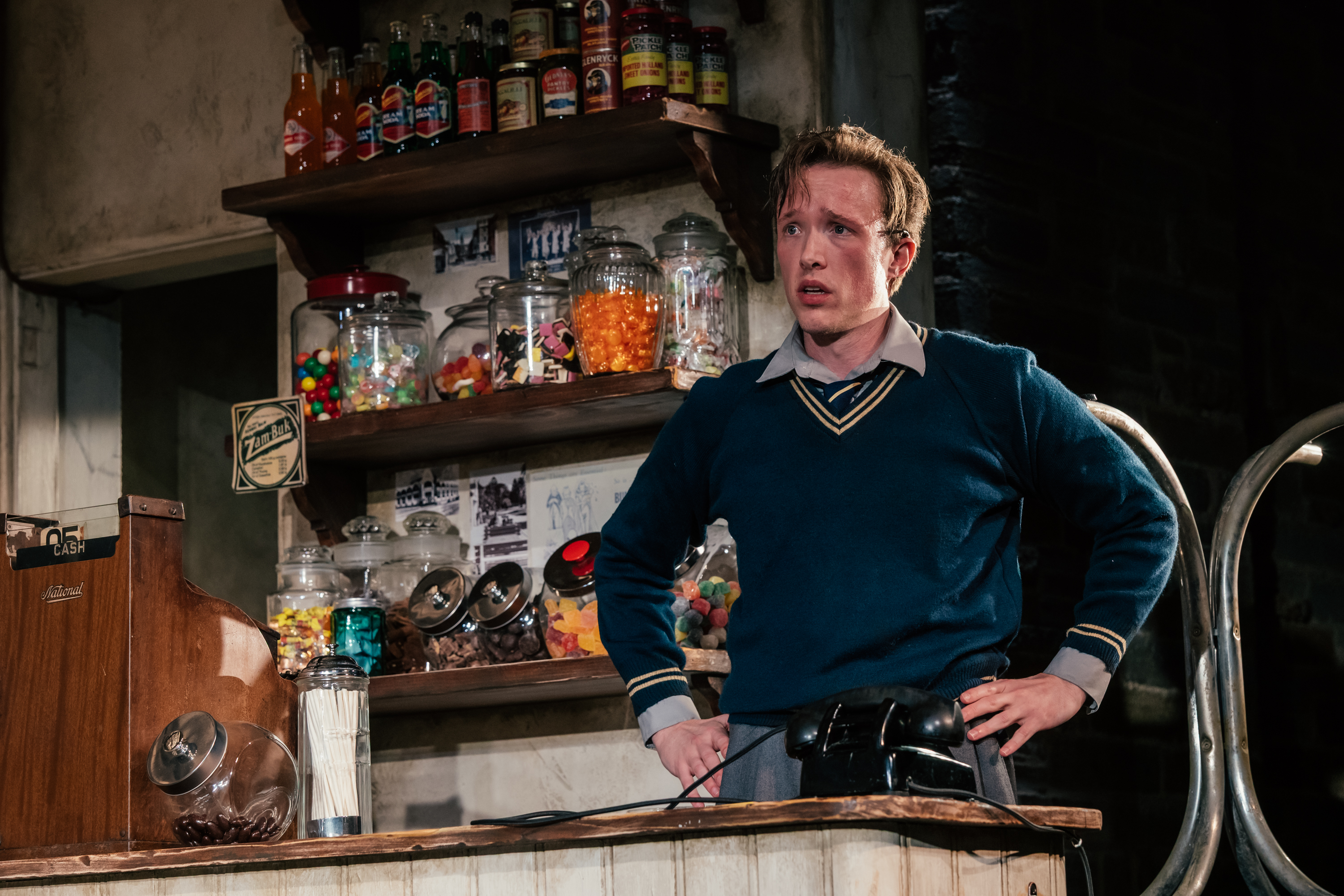
It is Beatty’s performance—or perhaps directors Emily Mann and Tarell Alvin McCraney’s shaping of it—that misses the mark. Beatty, the son of Warren Beatty and Annette Bening, feels ill‑suited to portray a 17‑year‑old. This has less to do with his actual age (31) than with his overall presence. Hally’s developing character requires vulnerability and moral malleability. Beatty, however, plays Hally with a maturity that negates the possibility that Hally will grow into a more empathetic man.
For “Master Harold” … and the Boys to fully land, Hally must exhibit moral gray areas that show us a cruel young man who was once a frightened, lonely boy. Beatty’s Hally instead registers as consistently spiteful, condescending, and irredeemable. That missing complexity undercuts his performance.
(© Jeff Lorch)
To their credit, Mann and McCraney otherwise excel at sustaining tension, even during moments of idle conversation. There is a constant sense that another shoe is about to drop, making the play’s eventual eruption feel both inevitable and explosive.
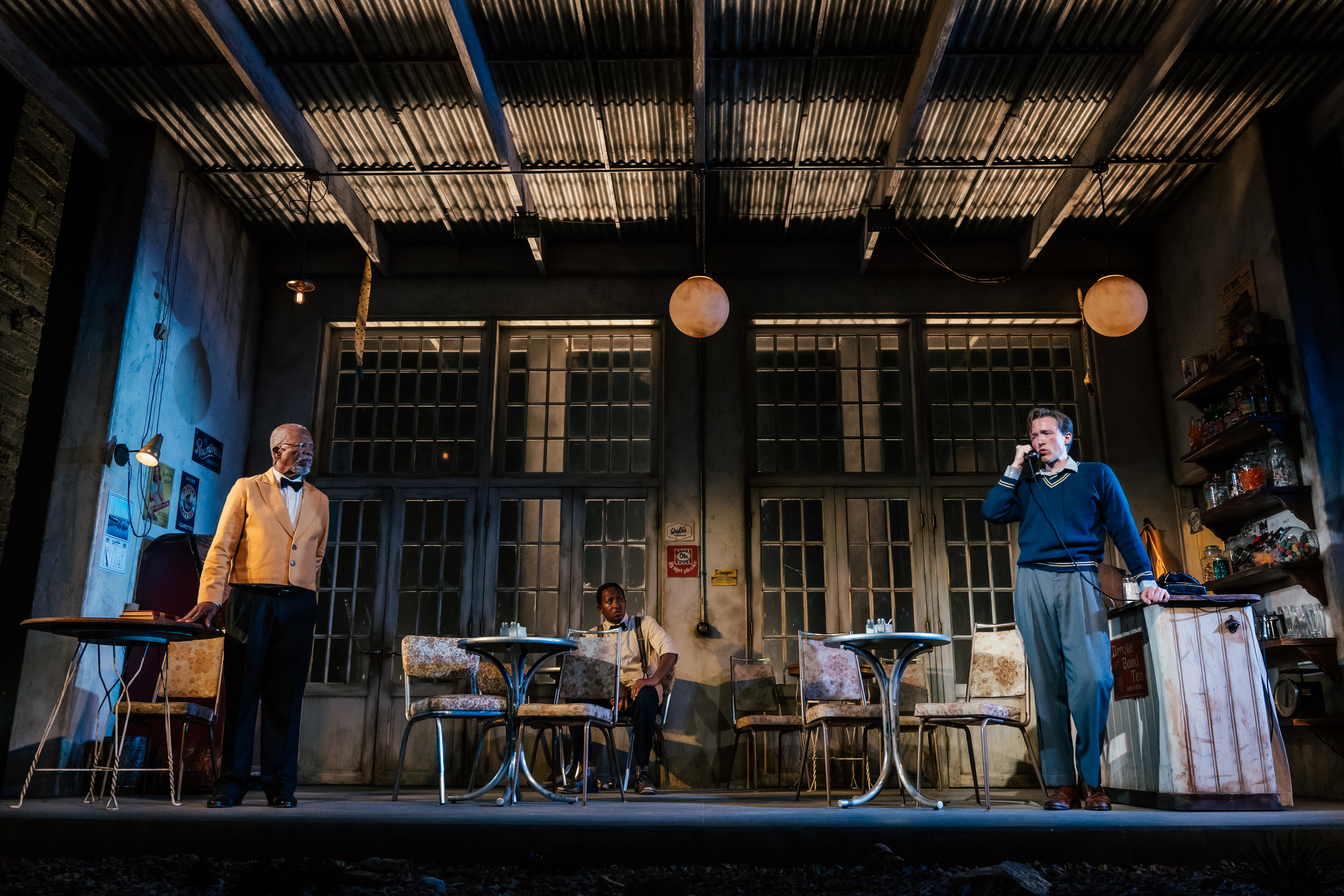
Beowulf Boritt’s set dazzles immediately, with walls of groceries, an old‑time jukebox, rusted light fixtures, and rainwater pounding against a tin roof in an immersive environment. Susan Hilferty’s costumes further define the social order: Hally appears in a crisp, prep school uniform, while Sam and Willie wear neatly pressed waiter attire.
“Master Harold” … and the Boys remains a harrowing condemnation of racism, one that still feels disturbingly relevant. The Geffen Playhouse production benefits from the welcome presence of previous Fugard collaborators and a strong creative team. It is ultimately frustrating, then, that a central role lacks the nuance and layering necessary to fully support the play’s devastating power.




source on Google
Featured In This Story

Latest Reviews
See all






Latest Videos
Watch: Aaron Sorkin, Bradley Whitford, and the Cast of A Few Good Men Talk New Broadway Revival
The playwright reunites with his West Wing star for the first Broadway revival of the career-making drama.