
Review: Label•less, an Obama Era Throwback Dance Spectacular
Drew and Lea Lachey’s dance concert opens on 42nd Street.
 |
Off-Broadway
|
|
Off-Broadway
|
June 18, 2026
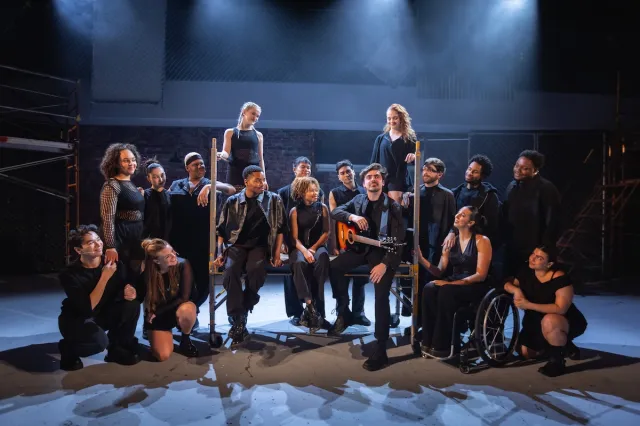
(© Angie Lipscomb)
Music and dance are universal languages, able to move different people who otherwise do not share a word in common. Aren’t they the ideal tools to bring us all together and, as a wise pop star once crooned, heal the world?
That certainly seems to be the driving assumption behind Label•less, the dance concert (with a side of drama) now performing off-Broadway at the Duke on 42nd Street. The creation of husband-and-wife team Drew Lachey (formerly of the boy band 98 Degrees) and Lea Lachey (who choreographs), Label•less aims for transcendent universality but achieves generic banality.
We get the gist of the show in the first several minutes, when a voiceover informs us, “We’re people. Black, white, asian, latine, gay, straight, rich, poor, male, female, neither…people.” It acknowledges the conflicts that can spring from identity, but insists “We can do better,” leading into the original song “Walk” (an original number by Paul Duncan) and then “Where Is the Love?” by Black Eyed Peas. Label•less places original songs (mostly by Duncan and Lachey) right next to well-loved pop songs, dangerously inviting comparison.
Further monologues (thankfully delivered by live performers) explore bullying (“Cheap Seats” by Paul Duncan), impossible beauty standards (“Enough” by Isabella Langley), sexism (“It’s a man’s man’s man’s world” by James Brown), depression (“Anything Worth Holding Onto” by Scott Alan), and racism (“A Change Is Gonna Come” by Sam Cooke). It is so predictable that, halfway through a monologue about being gay, I knew the next number had to be Lady Gaga’s “Born This Way” (it was).
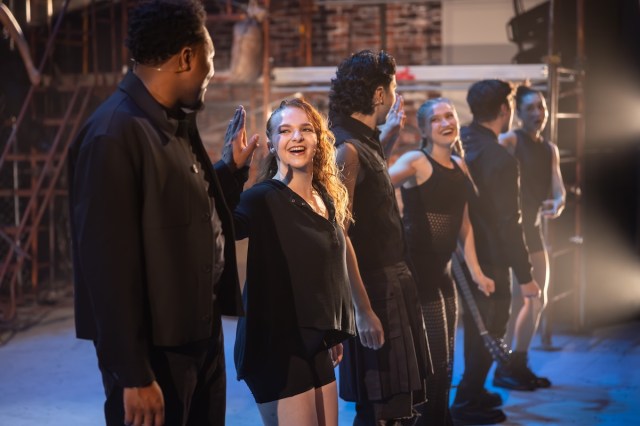
(© Angie Lipscomb)
The monologues are purportedly derived from the performers’ own experiences. But they lack the specificity that makes a show like A Chorus Line so interesting to watch. Kiwi Villalobos’s monologue about working as a cleaner while attending university offers a rare glimmer of personal detail, something for the audience to cling to while floating in a sea of anodyne clichés about empowerment.
A later monologue titled “Family Heirloom” gives audiences a visceral feel for the anxiety of existing as a Black person in America and seems to represent a sudden improvement in the Lacheys’ writing (though when we open the program, we are unsurprised to learn this section was written by someone else, Maliyah Gramata Jones).
Who is this show for? Who in the off-Broadway audience still needs to be told that racism is wrong and gay people deserve dignity? Label•less gestures toward brave truth-telling but delivers a message so inoffensive it could be produced at most American high schools without much pushback (for all the show’s rainbow flag-waving, trans issues are conspicuously absent). It feels like something you might have seen onstage at the 2016 Democratic National Convention, an earnest song-and-dance routine celebrating pluralism and the fact that we’re Stronger Together. In 2026, that feels like an unsatisfying response to a world on fire.
The bland and too-broad subject matter would be excusable if the staging offered something new, but Lea Lachey’s dance competition choreography lacks flavor and perspective. When in doubt, she throws in a turn and a high-kick and calls it a day.
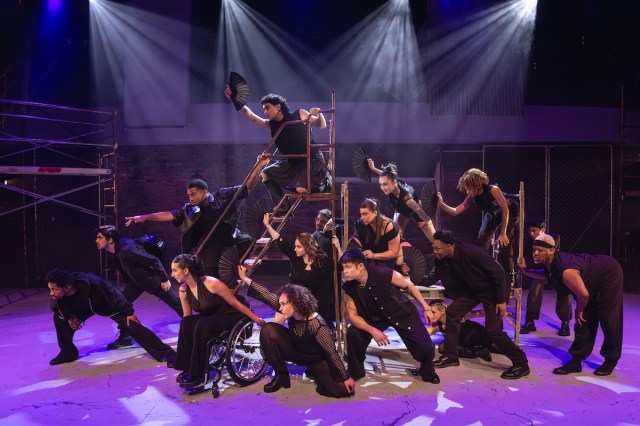
(© Angie Lipscomb)
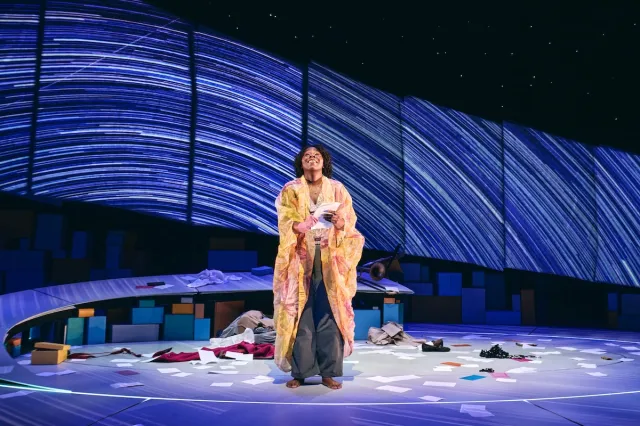
The dancers move in formation around and on the moving scaffolding and stairs that constitute the most dynamic elements of the set, which suggests an urban construction site. It’s a bit like John Napier’s original design for Cats, but with less whimsy (no designer is credited). Jen Irvine outfits the cast in a variety of streetwear silhouettes, all in black, perhaps in an effort to simultaneously convey individuality and uniformity, which really gets at the central contradiction of this show’s message that we’re all the same but somehow also special. The drab costumes at least expand the surface area for Brave Berlin’s busy projections, which are frequently unnecessary and veer into cringe: “It’s a man’s man’s man’s world” is illustrated by cascading female symbols, like a screensaver at Ms. Magazine.
The performers are blameless, all enthusiastically showing up for the job and some even managing to distinguish themselves. Micah Day, the only performer to also play an instrument, exudes an affable magnetism. Abby Docherty brigs her big voice and even bigger heart to every note. And Aaron Gillis Jr. gives us chills with his powerful vocals on “A Change Is Gonna Come.” These are hugely gifted performers, and I hope they will all soon be cast in a show that makes better use of their talents.
But right now, they’re in Label•less, a show that, in its effort to mean all thing to all people, ends up feeling meaningless.




source on Google
Featured In This Story
Latest Reviews
See all


Latest Videos
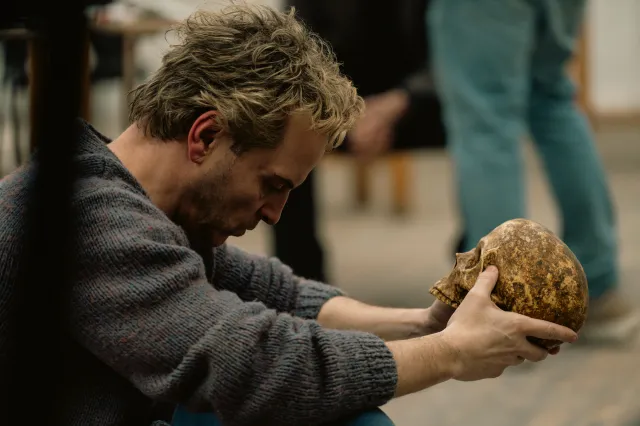
Watch the Trailer for Elsinore Starring Andrew Scott
The film is based on the true story of Ian Charleson, who played Hamlet at London’s National Theatre after being diagnosed with AIDS.