
Review: In Falls for Jodie, John Hinckley Jr. Makes a Friend
Eric Micha Holmes’s play about Ronald Reagan’s would-be assassin makes its New York premiere at the Tank.
 |
Off-Off-Broadway
|
September 28, 2026
(© Cason Doyle)
“They’re not like you and me … these blue bloods,” a hungry young man says to another in Eric Micha Holmes’s Falls for Jodie. “But their days are numbered … and let me tell you why: Ronald. Wilson. Reagan.”
He essentially dares the audience in 2026, neck-deep in the curdled waste of Reagan’s liberal promise, to laugh. To the credit of the crowd at the Tank, where this play is making its New York premiere, they mostly don’t. We understand how a vision of free markets and free people might look profoundly liberating to a guy like him, stuck in a dead-end job serving Ivy league jerks, told not to reach too far above his station. We too would like to be liberated from the corrupt and entrenched aristocracy that has resulted from 46 years of deregulation and tax cuts for the rich.
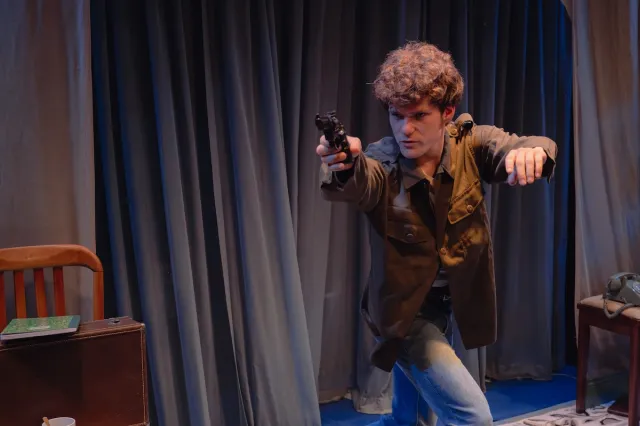
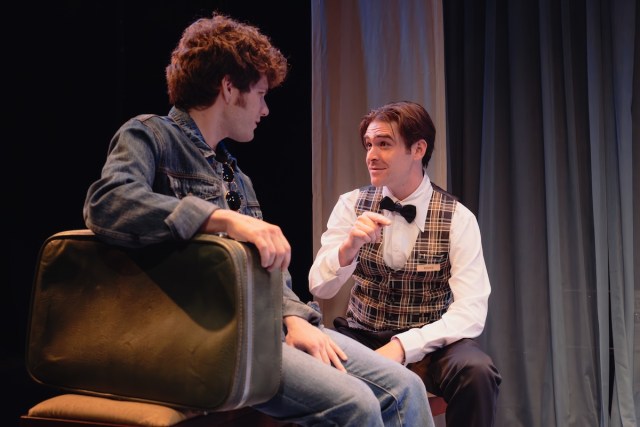
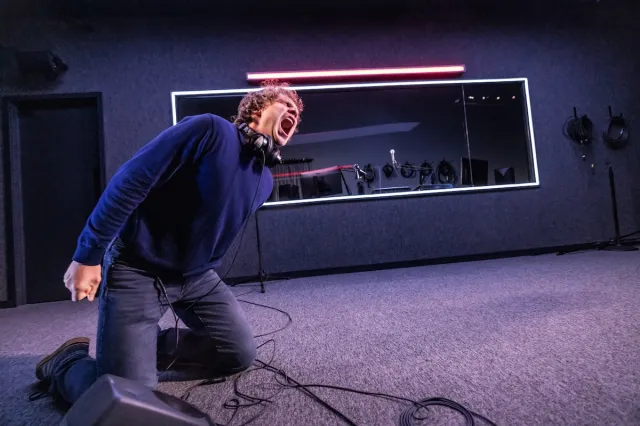
Our hopeful protagonist is Eddie (Harry Thornton), a night concierge (read: drug dealer) at the Colony Inn in New Haven. He is addressing the hotel’s newest guest, John Hinckley Jr. (Boone Sommers), who has checked into a suite in the hope that his proximity to campus will help him attract the attention of freshman Yalie Jodie Foster, with whom he became obsessed after seeing her performance as a trafficked sex worker in the film Taxi Driver—when Foster was just 12 years old. Five months later, in pursuit of that same objective, Hinckley will attempt to murder President Reagan outside the Washington Hilton.
(© Cason Doyle)
Holmes’s play, which takes place entirely within the hotel room, is the story of a business relationship between two men. Eddie smells Hinckley’s family money (his father runs an oil company) and spots a potential investor for his fledgling mail order catalogue business. Hinckley thinks the title of “President” will impress Foster, and he makes it a condition of writing Eddie a check. It’s a deal, but Eddie soon learns what most of us discover about the wealthy: If they pay you, they’ve bought you, and they’re not particularly interested in the dreams of their possessions.
“Not once have I met a lunatic who was also like, an active listener,” Eddie explodes in frustration when John casually asks, “Who is Joan?” (Joan is Eddie’s crush, whom he has absolutely mentioned before.) It’s a line that gets a well-deserved laugh for Thornton, who manages to draw plenty of relatable humanity from a character who could easily come off as a sleazy hustler.
As John, the wild-eyed Sommers effortlessly embodies the main character energy of a child of generational wealth, accustomed to being denied nothing and driven mad by the unobtainable. He seems annoyed that Foster is taller than he expected, and it enrages him to see her flirt with her fellow actors at the rehearsal where he is stalking her. It becomes horrifyingly clear that he covets a celluloid fantasy of a 12-year-old girl, not the real Jodie Foster.
In a manner reminiscent of Bret Easton Ellis’s American Psycho, Holmes’s script exhibits keen insight about the way consumerism warps our humanity, turning other people into products and our relationships into transactions.
(© Cason Doyle)
Unfortunately, director Terrence I. Mosley’s production exudes a lethargy the performers cannot shake. This is despite tense interstitial music by Hillary Bonhomme, impressive period costumes by Rodri Hernandez Martinez, and eye-opening projection design by Gavin Strawnato, who has spliced together a video that ties the Hinckley story to the long and growing tradition of angry young male shooters in America. It’s sobering stuff, so why doesn’t it grab the audience by the collar?
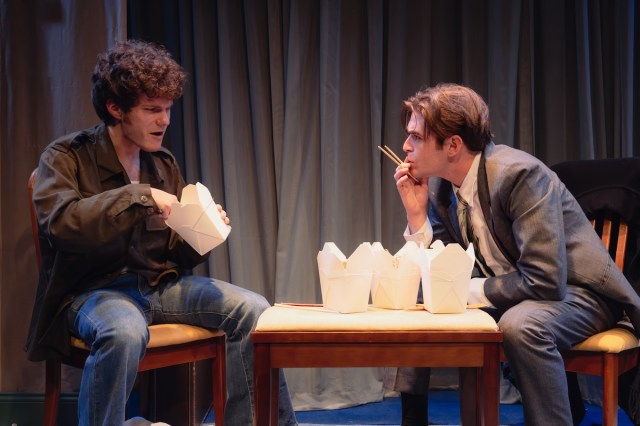
No one goes to the Tank for the spectacular production values, but rigor can often make up for a slim budget. The cloth walls of Chen-Wei Liao’s set would be ignorable if Mosley hasn’t directed Thornton to pin a check there (it fell off the night I attended). A later scene shows the two actors removing already opened (and clearly never folded) Chinese food cartons from a plastic bag, a red flag for sure. The moment passes without comment from the actors, but it takes the audience out of the moment. These are easy fixes that I hope Mosley makes later in the run.
Production issues aside, Falls for Jodie is a play with a lot of potential, using an incident from the not-too-distant past to illuminate the ongoing crisis of purpose for American men. It’s a great companion piece with Else Went’s Degenerates or Max Wolf Friedlich’s The Holes, both of which are playing in New York.




source on Google
Featured In This Story
Latest Reviews
See all




Latest Videos
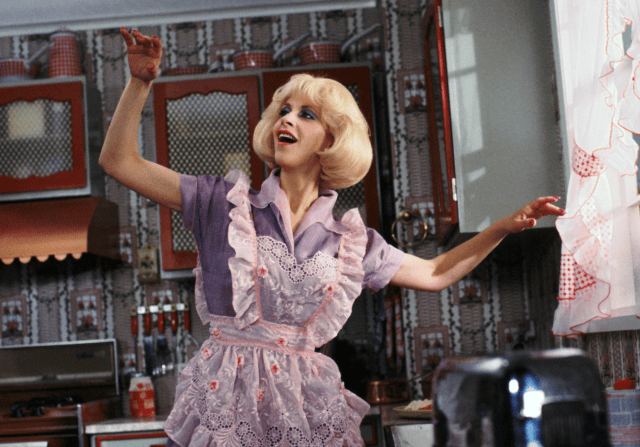
Watch: Ellen Greene Reflects on the Enduring Legacy of Little Shop of Horrors
Frank Oz’s cult classic movie-musical has gotten a new 4K restoration in celebration of its 40th anniversary.