
Review: Chez Joey, Starring Myles Frost, Brings High Energy and Excitement to Arena Stage
Savion Glover and Tony Goldwyn direct an updated version of the Rodgers and Hart classic.
 |
Maryland | Virginia | Washington, DC
|
|
Maryland | Virginia | Washington, DC
|
February 20, 2026
(© Matthew Murphy)
There’s always been something a little slippery about Pal Joey. The 1940 Rodgers and Hart musical introduced audiences to a charming heel who sang beautifully and behaved badly, and while the score has always endured, the man at its center has proved harder to love through the decades.
With Chez Joey, now playing at Arena Stage through March 15, that problem disappears. Instead, what emerges is a revival that doesn’t simply dust off a classic, it reclaims it, reshapes it and roots it in something far deeper.
Co-directed by Savion Glover and Tony Goldwyn, with a newly revised book by Richard Lagravenese, Chez Joey relocates the story to the Black jazz scene of 1940s Chicago. The transition, though, is more than cosmetic, it transforms Joey Evans from a shallow opportunist to an artist navigating ambition, race, love, and survival in a world stacked against him.
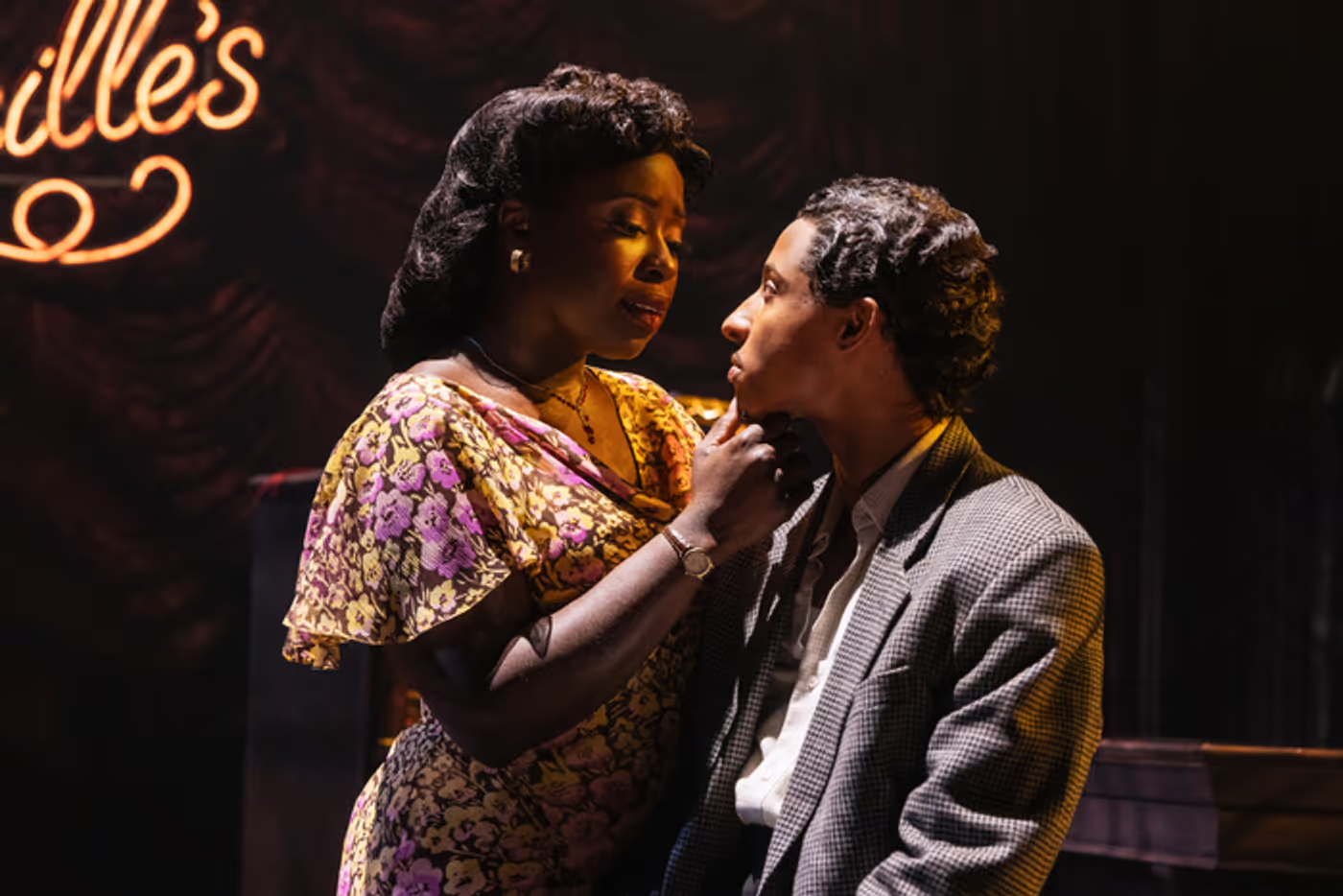
The show begins with a six-piece jazz ensemble gradually assembling onstage at Lucille’s, a nightclub that feels lived-in from the first downbeat. The musicians warm up, trading riffs and glances, until the whole audience is bopping along. When Myles Frost finally slips into view as Joey, the temperature rises.
Frost, best known for his Tony-winning turn as Michael Jackson in MJ, brings that same electricity here, but without imitation. His Joey is polished and magnetic, but there’s also calculation behind his grin. Frost embodies a man who understands that talent alone isn’t enough, and his every song (marvelously sung!) feels like both a performance and a negotiation.
Opposite him, Awa Sal Secka’s Linda English refuses to be anyone’s stepping stone. Her voice is luminous, but it’s that emotional layer beneath that makes her performance so compelling. In quieter moments, she allows vulnerability to seep through, yet she never lets Linda fade into the background of Joey’s dreams. When she delivers “My Funny Valentine,” it’s not a torch song, it’s a reckoning.
As Lucille, Angela Hall commands the club with a seasoned presence that anchors the show’s emotional core. Samantha Massell’s Baroness Vera Simpson, the wealthy widow who becomes entangled with Joey, avoids caricature and isn’t naive as the character was originally written, but Massell gives Vera intelligence and hunger, making her choices feel complicated rather than convenient. Kevin Cahoon provides some lighter moments as Melvin, though his “I Like to Recognize the Tune” seems a bit out of place.
Lagravenese’s book occasionally struggles to balance its expanded themes with the mechanics of the plot, particularly in the first act. At times, it seemed more like watching a variety show of amazing dancing and singing than a full-blown musical, but the narrative starts to solidify in Act 2.
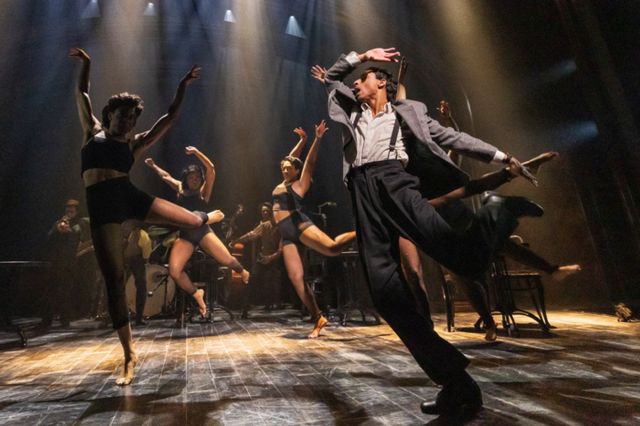
Without question, Glover’s choreography is the show’s heartbeat. This isn’t ornamental tap inserted for applause; it’s narrative and the rhythms speak to history. The ensemble moves with precision and purpose, whether in tight, percussive unison or explosive athletic bursts that bring the house to its feet.
Throughout, the ensemble proves indispensable, functioning as both atmosphere and propulsion. Whether gliding across the floor in sleek, synchronized club routines or digging into Glover’s rhythm-heavy combinations, they create the world that Joey inhabits. In larger numbers, they fill the stage with controlled swagger, while in quieter ones, they linger at the edges, watching and reminding us that in a club like Lucille’s, no one’s story unfolds in isolation.
The score, expanded with selections from across the Rodgers and Hart catalog, benefits from lush, jazz-forward arrangements and the onstage band is more than up for the task. “The Lady Is a Tramp” swings with swagger while “Bewitched, Bothered and Bewildered” aches with longing.
Visually, Derek McLane’s set contrasts the intimate warmth of Lucille’s with the sleeker ambition of Joey’s namesake club. Emilio Sosa’s costumes capture the era’s sharp tailoring and glamour without slipping into nostalgia. Adam Honoré’s lighting bathes the stage in smoky ambers and midnight blues, enhancing the sense that we’re witnessing something electric.
What makes Chez Joey resonate is its sense of purpose. By centering Black artistry and experience within a story long separated from it, Glover and Goldwyn uncover layers that feel both historically grounded and urgently contemporary.
By the final moments, Joey’s journey feels less like the rise and fall of a smooth-talking singer and more like a meditation on what ambition costs and who pays the price. It’s a richer interpretation that honors Rodgers and Hart while daring to push beyond them.
In that sense, Chez Joey doesn’t just revive a musical. It gives it a pulse.




source on Google
Featured In This Story

Related Articles
See all
Latest Reviews
See all

Latest Videos
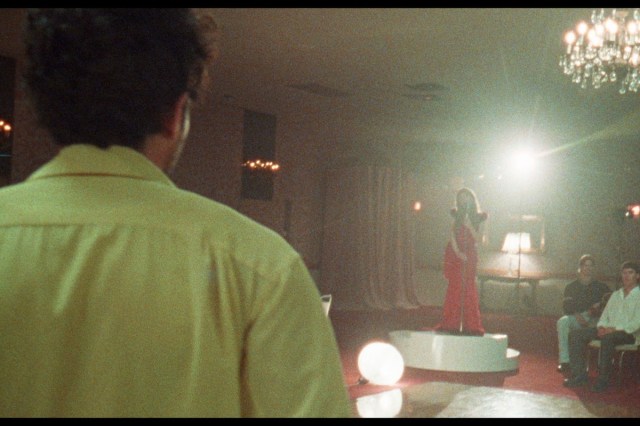
Alden Ehrenreich Stars in New Carly Rae Jepsen Music Video, Directed by Jeremy O. Harris
“Don’t Leave Me on the Dance Floor” is the latest from the “Call Me Maybe” singer-songwriter.