
Interviews
Interview: Willem Dafoe Talks Global Theater, Emerging Artists, and His Viral Wooster Group Clip
The Oscar nominee discusses this year’s Venice festival, mentoring emerging actors, and the decades-old performance clip that keeps resurfacing online.
 |
Venice
|
|
Venice
|
June 15, 2026
For the second year of his tenure as artistic director of Biennale Teatro Festival in Venice, Willem Dafoe has continued his mission of introducing audiences to artists and theatrical traditions that exist outside the mainstream. This year’s festival, running through June 21, is built around the theme Alter Native, a title that reflects Dafoe’s interest in work shaped by distinct cultural perspectives, theatrical languages, and ways of seeing the world.
The 2026 edition brings together artists from across the globe, including companies and performers from Japan, India, Indonesia, Rwanda, Samoa, Greece, and beyond. It also marks the continuation of Dafoe’s efforts to nurture the next generation of theatermakers through the Biennale College Teatro conservatory program for emerging actors.
Midway through the festival, Dafoe spoke with TheaterMania about the response to this year’s programming, the challenge of discovering new work without simply following industry buzz, the rewards of working with young performers, and why a decades-old clip of him singing with the Wooster Group isn’t nearly as obscure as the internet would have you believe.
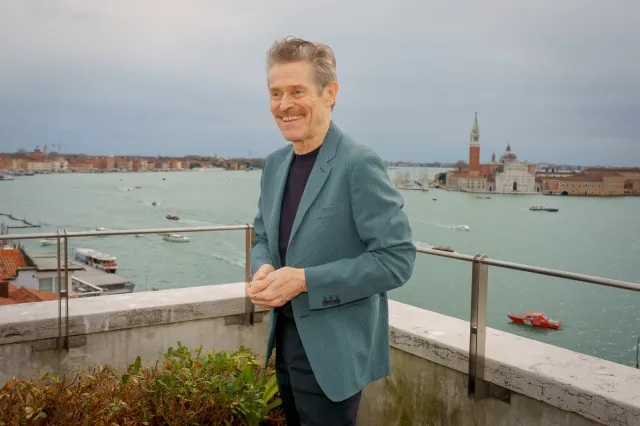
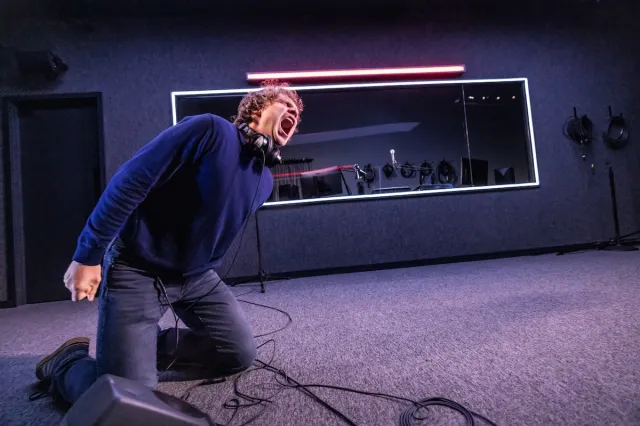
(© Andrea Avezzù/ La Biennale di Venezia)
This conversation has been condensed and edited for clarity.
How is it going over in Venice?
Great. Not quite halfway in the festival, but it feels very good. The response is good. All the performances are filled. There’s an excitement. It’s what I felt last year, an instant community is created that’s very turned on and excited. They’re woken up, and I feel that already. I felt it very much by the end of the festival last year, but I feel it very strongly this year.
Do you think there’s a difference between the two, or is it that people know what to expect from you now?
I try not to compare them. I try not to judge. I just know it feels good. The selection is very different this year. The impulse behind it is very different, but I think after one year, we feel a little more comfortable, and we know how to structure things a little bit better.
The first year, I didn’t quite know how things worked. I leaned on my experience. I invited people that I had worked with before, people I admired whose work I knew very well, or people that historically were very important to developing new theater language or had a big impact on the theater. So that was that. And then, of course, you don’t want to repeat yourself. You want to keep things fresh.
Sometimes, the problem with these festivals is that people go around shopping. They see what’s out there, and they try to get a lineup of what people are buzzing about. That can be satisfying, but I didn’t want to go shopping. And also, to some degree, we don’t have the resources to go around the world checking things out. But we did reach out to people, and they put us in touch with people, and then we target things that we think we might like, and we go see them and have conversations with new work.
What sparked this idea of Alter Native and bringing in shows from around the world?
A title helps organize people’s heads as they’re coming to see things, to kind of underline what our intention is. Alter Native: alter, as in change; native, as in your nature, or as in where you come from. What are your roots? It’s about finding the beauty of theater, finding how it connects people, and finding out what really theater is at its most basic. It kind of flies in the face of cultural institutions and commercial theater, because sometimes you’re reaching towards people who are making theater out of their own culture with a different cultural perspective, and a different theatrical language.

(© Richard Termine)
I was going to say, I saw the Mugen-Noh Othello in 2018 at Under the Radar, and I think it was the first time I’d seen a non-Western take on Shakespeare. So, it did alter my perspective on how things can be done.
Definitely. Because it’s not a dressing, it’s their language, it’s how they experience Shakespeare through gestural and theatrical language that they feel comfortable with. It creates a relation for them to the material. Sometimes when you see how that relationship is made, it unlocks things for you. It becomes a little mysterious and that challenges you to go deeper. For example, you see their different relationship to Othello’s ethnicity. You feel a different relationship to the good old familiar themes of betrayal and the devious strategies of ambitious people. All those things are filtered through a different point of view that makes them come alive in a new way.
You’ve also instituted a conservatory for rising actors. Tell me about developing that.
My colleagues really felt like this is something I should do, and I resisted because I don’t have a technique to teach. But the truth is, I do love working with actors, and I do love the energy and the promise and the possibility of younger people, so I embraced it.
It was great fun. Even the selection process. We had 500 video auditions, and I looked at them all. I spent two nights, basically. I became addicted. These were portraits of the people who were asked why they wanted to participate. Why do they like to perform or make things? It was very telling. We found a wonderful group of 11 actors from many different countries and they work as one.
Does it take long for them to move past the idea that they’re being taught by Willem Dafoe?
Well, the first thing I did is I told them to call me Mr. Bobo. [Laughs] I did everything I could to try to make them feel comfortable and make myself feel comfortable. I do a lot of the exercises, the physical things, with them. So, it goes away pretty quickly. They were very concentrated on tasks and committing themselves to what the rules of the game were.
Wholly unrelated to any of this, there’s this clip that keeps popping up on my social media feeds of you singing “Streets of Cairo” from the Wooster Group’s North Atlantic in 1985. It’s always billed as “Willem Dafoe singing is one of the internet’s rarest videos,” but it’s not rare at all because the full clip is on the Wooster Group’s website. Anyway, give me some context for that video.
It wasn’t the same kind of process that we often took when we made original pieces. It was the rare case that we worked with a writer. Jim Strahs basically wrote a play and then we staged that play. It was very particular. It was something of a musical, something of a parody.
I’ll tell you, if anyone gets a kick out of that, they should go to the Wooster Group site, which has a pretty good archive of videos, way back from very early. And that was one of the more conventional pieces. That’s what’s funny. People think it’s odd, but they should see some of the others.




source on Google
Latest Reviews
See all





Latest Videos
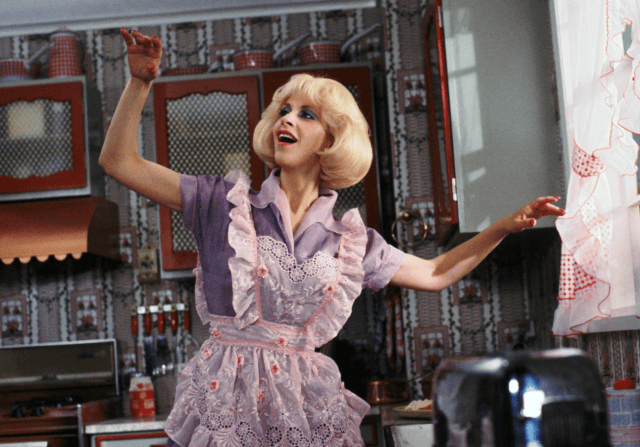
Watch: Ellen Greene Reflects on the Enduring Legacy of Little Shop of Horrors
Frank Oz’s cult classic movie-musical has gotten a new 4K restoration in celebration of its 40th anniversary.