
Interview: Wayne Brady Is Showing Up for Queer Black Love This Pride in La Cage aux Folles
Brady plays Georges in the Encores! production of Harvey Fierstein and Jerry Herman’s groundbreaking musical.
 |
New York City
|
|
New York City
|
June 16, 2026
New York City Center Encores! is ringing in Pride Month with La Cage aux Folles (June 17-28), Harvey Fierstein and Jerry Herman’s musical hybrid of activism and entertainment. It swept the 1984 Tony Awards, not just for its parade of feathered costumes and bouncy Herman melodies, but for its dialogue with the moment—a time defined by reactionary Reaganites and a gay community in crisis.
If that sounds eerily familiar to you, Wayne Brady agrees. “Everything that these characters go through is just as true now,” says Brady, who plays nightclub manager Georges in the musical’s first all-Black cast, directed by Robert O’Hara. Billy Porter plays the club’s star drag performer and George’s life partner Albin—casting that unites two actors who each walked a mile in Lola’s steel-reinforced stilettos as the lead of Fierstein’s other Tony-winning musical Kinky Boots (Porter won a Tony for the role in 2013 while Brady joined the Broadway cast in 2015).
After Georges, Brady takes on another queer icon: drag queen Joan Jett Blakk in Tarell Alvin McCraney and Tina Landau’s new play Ms. Blakk for President. Hear how embracing his own queer identity has impacted his relationship to these characters, how queer Black love is getting its due this Pride, and how Beyoncé would absolutely be a regular at the La Cage aux Folles.
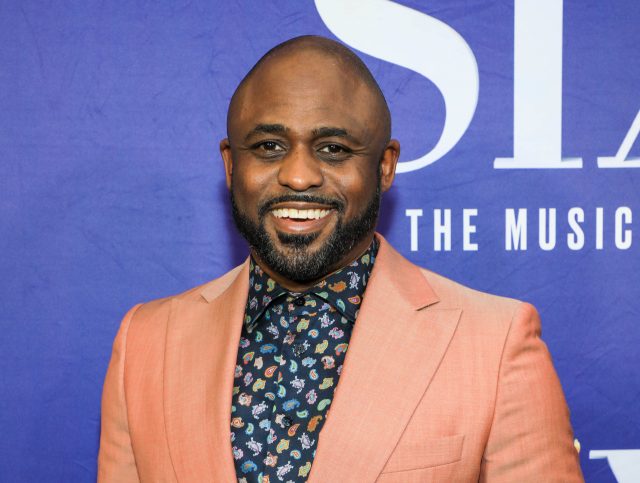
(© Tricia Baron)
This conversation has been condensed and edited for clarity.
Welcome back to the land of Harvey Fierstein! How did this production of La Cage come into your life?
Harvey and I talked maybe six years ago about the idea of doing a version of La Cage with an all-Black cast. Initially, Tituss Burgess and I talked to him about it. We floated it and nothing seemed to happen, so life went on. Fast-forward to last year and I got a phone call asking if I wanted to do it. I couldn’t have been more thrilled. And then I see Harvey the first day of rehearsal and he hugs me and he says, “Here we are!” It’s just one of those very cool moments that I look at and go, “Man, that’s Harvey. And he wants me to do his show.” You just have to pinch yourself. And with Billy Porter who is my brother in the Kinky Boots sisterhood. It’s all just really full circle.
You and Billy have known each other a long time, but this is your first time working together. How is he so far as a scene partner?
It’s wonderful. We both want to create a relationship between Albin and Georges where you see decades of love and admiration. It’s a truly codified relationship. You shouldn’t just be told that these two people love each other. You should see it. They laugh at each other’s jokes, they have a close physical relationship, you can tell that we’re on the same team. The fun is building out that relationship. And there’s no one else that I would love to do it with more than Billy.
Your character, Georges, is a parent. Does being a parent yourself help you understand him better?
Absolutely. The way that I see Georges, he is the father. He is the father of La Cage, he is the father to his son, his job is to make sure that the world is alright for Albin. And being the father to a 23-year-old, I know exactly where Georges is coming from when he has these difficult conversations with his son. And he’s placed in the horrible position of feeling like he’s betraying the love of his life to make his son happy. He even says during [the song “With Anne on My Arm”], “If there’s a chance they’ll be just like Albin and me then maybe it’s Anne.” He sees that his son genuinely has the opportunity for love. And as a parent, in my opinion at least, your job is to want every opportunity for your child. If he has the opportunity to set his child up for love, then he has to take it.
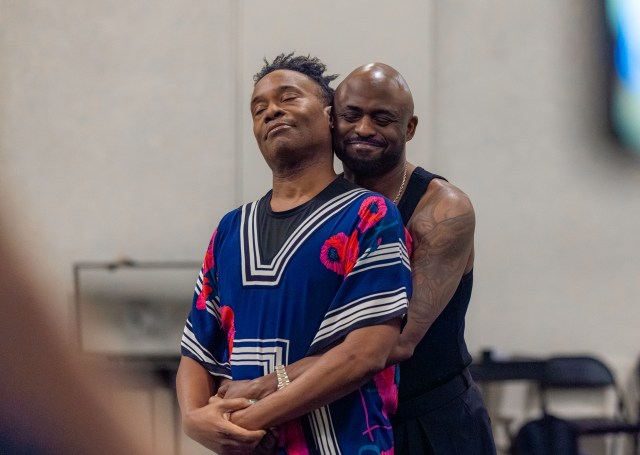
(© Benjamin Miller)
Does La Cage resonate differently in the context of a Black family? What does an all-Black cast add to the story?
When you ask, “Why a Black production? What does it add?,” I would ask, “Why not?” To say that means the default is that it’s a white show. And that’s exactly why it should be a Black show. Talking to Harvey the first day of rehearsal, he said when he was writing this that he wanted to write a world where, for once, anyone who is heterosexual would be looked at as the other. Because the way the world is set up now, if you are queer, you are the other. So in my mind, when you just add the layer of a Black cast, you are saying these people all matter, and this is a world in which all these beautiful black- and brown-skin people are just walking around living their life. Anytime you can normalize anyone onstage other than what you’ve always seen, that’s important.
Has your director Robert O’Hara shared anything about his vision for the production?
It was really important for him to create a world where this Black queer love wasn’t anything out of the ordinary. This club where people went to see the Cagelles is the hip place to be. It’s the place where Beyoncé might come incognito; it’s a place where somebody from a movie might come scouting; it’s a place where people would come to let their freak flag fly because they felt that they could be at home. I love that vibe.
That feels like the perfect segue into your next role as pioneering drag queen Joan Jett Blakk. You’re leading Ms. Blakk for President that’s opening at the Vineyard Theatre in the fall. This is the first stage role that you’re really building from the ground up. Is that an exciting prospect?
It is the most exciting thing to be in the room with [co-creators] Tina [Landau] and Tarell [Alvin McCraney], as this piece is actually being created underneath me. It is the realization of a life-long dream. And to work with two creative juggernauts to tell this beautiful Black queer story—even when I was told about it, I went, “Really? This thing happened? This is a real person?” It checks off every single box that I could possibly want. Going back to why it’s great to do La Cage now, if by me being a part of queer art like this lets me be a part of the solution—using whatever platform or talent that I have to try to make a change and bring awareness—then that’s the best part of the job.
Are you able to bring more of yourself to these roles since speaking publicly about being a part of the queer community?
No, I always felt that I was bringing 100 percent of myself. Especially when it comes to characters like Lola and now Georges and Ms. Blakk. The only difference is now I can truly embrace it publicly. I can bring 100 percent of myself, and I can talk about it 100 percent in the world. And that is freeing in its own way.
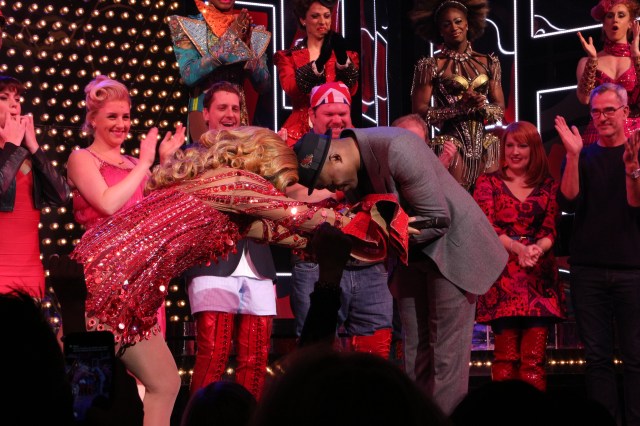
(© David Gordon)




source on Google
Featured In This Story

Latest Reviews
See all





Latest Videos
Watch: Ellen Greene Reflects on the Enduring Legacy of Little Shop of Horrors
Frank Oz’s cult classic movie-musical has gotten a new 4K restoration in celebration of its 40th anniversary.