
Interviews
Interview: Tony Nominee Ani Taj Talks About the Joys and Challenges of Choreographing Rocky Horror
The musical revival comes to Studio 54 will a cult following that Taj aims to satisfy.
 |
Broadway
|
|
Broadway
|
June 2, 2026
(© Tricia Baron)
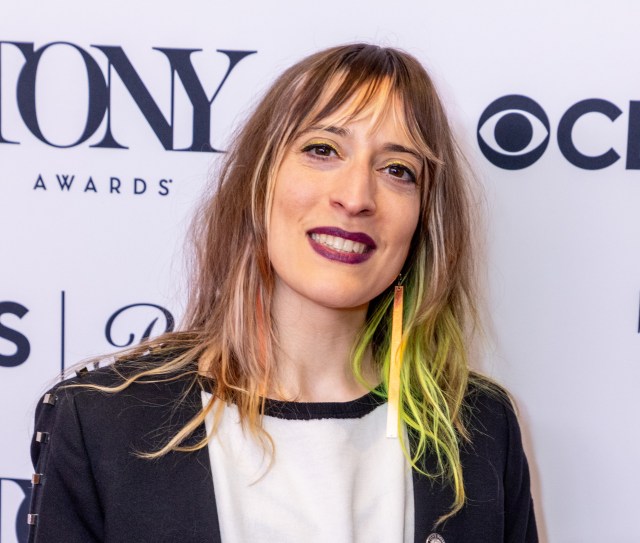
Choreographer Ani Taj and Tony-winning director Sam Pinkleton go way back. They were college roommates, and they’ve been collaborating for the past two decades. Their current project, The Rocky Horror Show, is emblematic of their creative partnership.
“This material felt like a really beautiful marriage of values that the two of us have always shared, of letting people be their freaky, fun selves—I say freaky in the most loving way—allowing there to be some playfulness and dopiness in the joy of it,” Taj says.
Taj, a first-time Tony nominee for her work on Rocky Horror, spoke to TheaterMania about the show’s cult following, the cast, and, of course, the “Time Warp.”
This conversation has been condensed and edited for clarity.
(© Joan Marcus)
What was your familiarity with Rocky Horror before this production?
I have seen a couple of stage productions, but I think I was around 11 when I first saw the film. I remember feeling like, “I’m too young to be seeing this, but I’m transfixed.” It activated something for me, a sort of excitement and a tingle and a confusion that I couldn’t identify, but later I could feel how it expanded a sense of what’s possible. That made more sense when I saw it as an adult, but it started at a young age watching a VHS tape with a friend who was obsessed with it and knew every word.
How do you approach a show whose cult following probably already has ideas about what it should look like?
The things about it that really stick in cultural memory and make people want to call things out and dress up and do the dances are the things that we also love about it, so it was important to us to hold those expectations close and make sure that those remained part of the skeleton of what we’re doing. We were also hopefully making some discoveries along the way that are specific to our collaboration and to the exquisite, unique performers we have from a movement standpoint. I think it’s so much more exciting to make the material with a sense of the specific bodies that are there.
When did you know who the cast would be, and how did their specific skills play into the choreography?
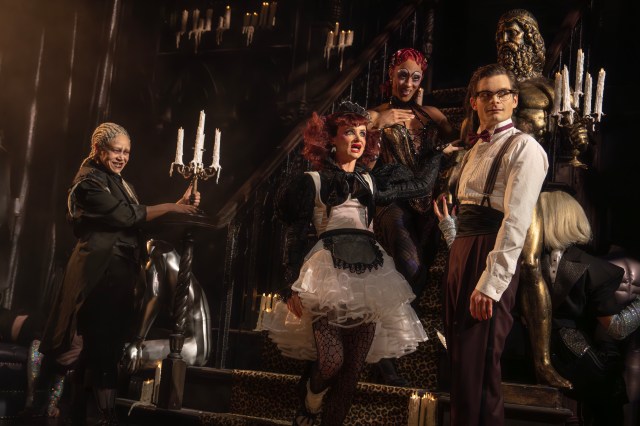
The funny thing with choreography is that you can’t really start until you’re physically in the room with one another, so from a practical standpoint, that excavation started on day one of rehearsal. We had this great first movement jam day co-led by Sam and me where we got to know how people in the room moved, seeing Juliette Lewis kicking her legs and finding all these fun angles in her body and seeing how Luke [Evans] was on this journey of dancing in heels and very fluidly navigated that process with far more elegance than I could. Right away, Juliette came over to me and was like, “I’m really seeing Magenta having these angles in her body.” She and Amber Gray together developed this non-verbal language for how communication happens in the castle. It was really beautiful to watch that.
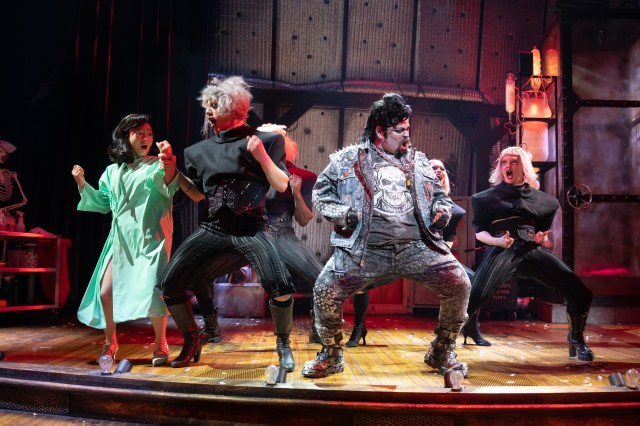
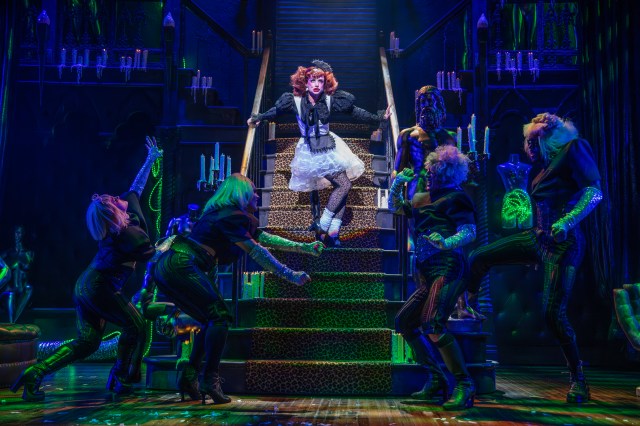
And then our Phantoms [the members of the ensemble] have unique ways of moving. Not a one of them moves like the other. So, we see four different iterations of all the movements that we create. Because they’re different heights, the way they extend their legs is different, and very early on in the process, we saw this as a fun way to see the idea that you can be embodied many different ways in this world that Frank has created.
(© Joan Marcus)
What was the biggest challenge for you?
From a choreographic standpoint, I would say really the “Time Warp” was the one to puzzle over. It’s funny because on paper and in the instructions, it’s a very simple dance, and yet to allow it to have life and breathe and to hold the things that people really want to see in it and also to find some surprises in it was a multi-phase process. How do we embrace the scale of doing this on Broadway, but also the simplicity of the steps, so that if desired people can join in?
We felt that the “Time Warp” needed to feel like a ritual in the castle. We wanted to drop the idea that it’s purely presentational and show that Riff Raff is taking us on a journey and pulling Brad and Janet into their world. That really helped us find the mystery of what it is. Looking for the ritual in it and the magic was something that brought it more alive for us.
What has been the most satisfying part of working on this show?
There was a real welcoming of some of the weird, kooky things we’ve chosen to care about for years working in basements and dirty club venues. Those values and considerations fitting in the context of a Broadway show is really unexpected and fun. There are no pirouettes in this show. I love a pirouette, don’t get me wrong, but it’s not the world of Rocky Horror, in which people dance at their most raw. Jim Sharman [director of the original Broadway production and film] says there’s this thing about the Phantoms and the castle inhabitants of Rocky Horror, and how they dance like people at a party. That felt like an affirmation of ways that I’ve enjoyed creating dance for a long time.
(© Joan Marcus)




source on Google
Latest Reviews
See all

Latest Videos
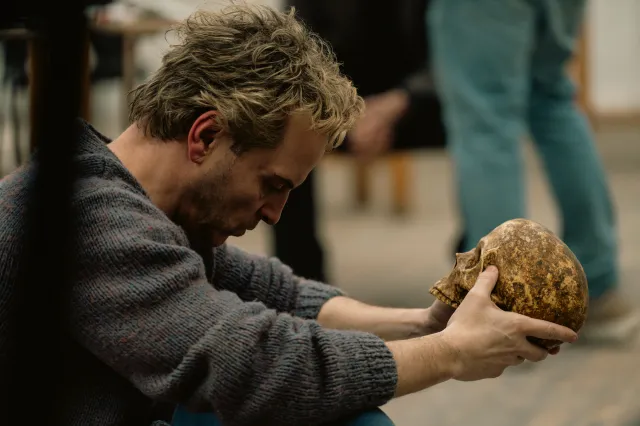
Watch the Trailer for Elsinore Starring Andrew Scott
The film is based on the true story of Ian Charleson, who played Hamlet at London’s National Theatre after being diagnosed with AIDS.