
Interview: Kelli O’Hara Finds Freedom, Farce, and Truth in Noël Coward’s Fallen Angels, Onstage and Onscreen
The celebrated star explains why serious stakes, screen intimacy, and martinis keep Coward’s comedy sparkling. See it in select cinemas October 22 and 25.
 |
Broadway
|
October 7, 2026
(© Evan Zimmerman)
Kelli O’Hara traded her stellar soprano for high-stakes hilarity when she starred in Noël Coward’s Fallen Angels on Broadway this past spring. Her performance earned her a Tony nomination, along with one for her co-star Rose Bryne as well. The production proved to be the comedic gem of the season, and fortunately cinema audiences will now have the chance to see it on the big screen, October 22 and 25. In this conversation, the Gilded Age star reflects on why a comedy written by a 23-year-old man a century ago still feels startlingly perceptive about women, desire, and the lives hidden beneath polished appearances.
Noel Coward wrote this play 100 years ago, and it’s still funny today. Did you think about that?
We thought about it all the time. How did Joni Mitchell write “Both Sides Now” at 23 years old, how did Noel Coward write Fallen Angels at 23 years old, and the more you study him, you realize his life experience sort of led him to being with his mother and women in dressing rooms. He was hearing the real side of what women were going through as opposed to the glossy films or stories that were made about women in that time, because mostly they weren’t women writing them or producing or directing them. I don’t think he just made these things up, I think there probably were women who were yearning for other things. In a way, it’s a gift to have this play. He’s putting an honest conversation on the table, and we just haven’t gotten to see it that often as a mainstream Broadway play and that we can still find it funny.
The timing seems so important in everything with this play. Did you find comedy to be hard?
Oh yeah, people would say, Comedy is the hardest part. I spent most of my career singing and acting, but when you’re an ingenue, when you’re a soprano, you play the serious or the sad or the innocent person always because that’s how somebody decided to write parts; brassy belters get to play the vixens. For me, I was so hungry to do something that was more risky and improvisational. I didn’t think about it as being something hard as much as I thought about it as being something free. When we started to put this together, I was like “I’m going to leap and I’m either going to land or I’m not.”
(©Joan Marcus)
How did you stop yourself from laughing all the time?
You know, I think you learn pretty quickly, when we laugh at the situation, it’s not funny to the audience. That was a quick lesson, in the very few times that we actually cracked up and broke, it just lost all its steam. As Scott Ellis, our director, would always say, keep the stakes high, keep the stakes high. And even though it’s a comedic and there’s a sort of farcical nature of this play, as long as we really truly believe in the high stakes of our situation, that’s when it gets more humorous to the audience.
The set is so beautiful. Did you feel like with the set and the costumes you were transported back in time?
I did in a way, but what’s interesting is that the audience is looking at just the room itself, but the actor is sitting inside the room but taking in mostly the audience because we’re facing outward. It’s this wonderful trip back in time, but the illusion that the audience experiences isn’t the same one we feel.
I remember standing on the set of the Gilded Age, once we were all in our costumes and we were out in an area that had actually been all fronted and, you know, gravel poured on the streets, and I really felt for the first time, as an actor, I’ve just had an opportunity to step back in time. In theater, it’s this beautiful, artistic world where you can feel what the audience is seeing, you’re taking the audience in. So for me, the magic is more about the joint effort of an illusion mixed with the receiver, the audience.
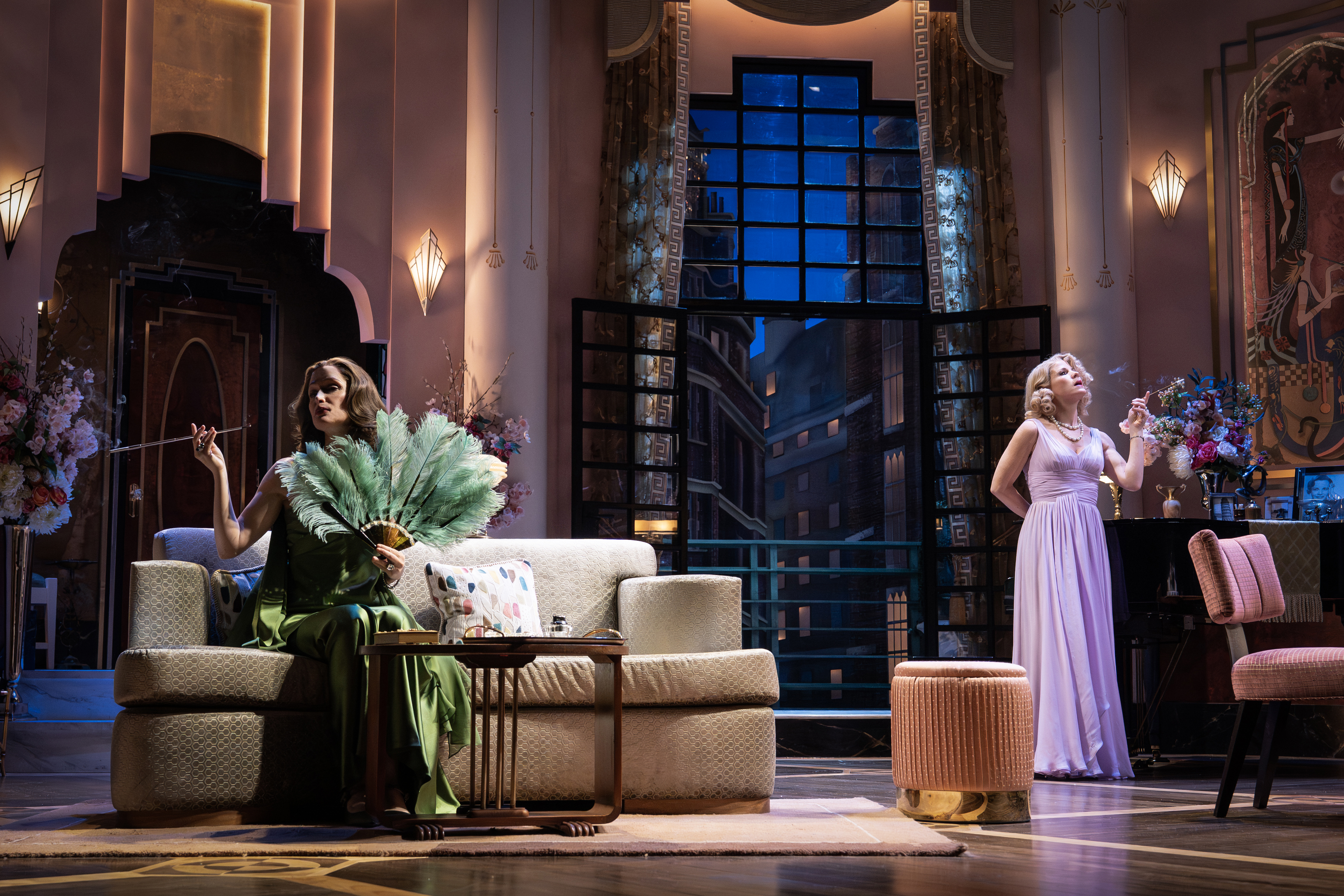
(© Joan Marcus)
Audiences are so lucky to be able to see the filmed version in cinemas if they missed it on Broadway, and it’s shot just beautifully. Do you think that the audiences will experience something different in seeing it on film up close versus being there in person?
I definitely do. There’s nothing to me like a shared experience in a shared space. However, I think that the way we’re able to do it now, again with the artistry, there’s as much in the filming and the editing that it’s as artistic as it is with what we put together for the live performance. When you need to land on a comedic moment or go in closer with the angles of the lenses to catch something more intimate, we’re able to do that on film for the audience.
I have already been trying to tell all my friends that we should to the cinema go dressed up, and we should have copious amounts of champagne.
Totally. Lots of it. I think that’s a great idea because then you’re experiencing it physically, as well as visually. I didn’t grow up with live theater at all, and I fell in love with movie musicals and films. It still made me love theater and want to do theater because the idea of the whole thing as an art form came through the screen to me.
One more question: Champagne or martini?
For me, martinis all day.
Well cheers, dahling!




source on Google
Latest Reviews
See all


Latest Videos
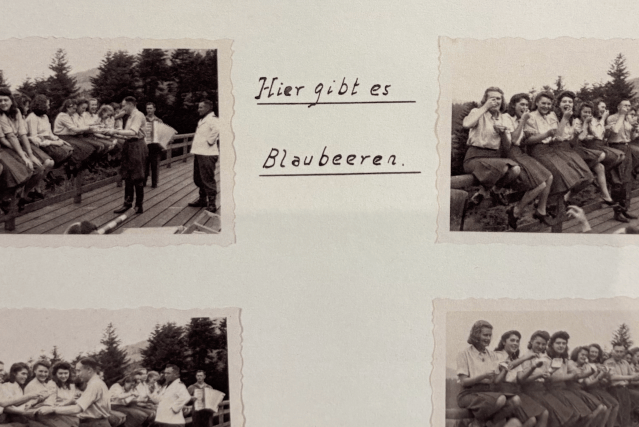
Find Out the Real Story Behind Broadway's Here There Are Blueberries
Moisés Kaufman and Amanda Gronich discuss the new drama along with their cast.