
Interviews
Interview: Cara Ricketts on Bringing Barbie Inspo to Nora Helmer in a 1950s-Era Doll’s House
Justin Emeka’s new adaptation of the Ibsen classic makes its world premiere at Two River Theater.
 |
New Jersey
|
|
New Jersey
|
February 26, 2026
When Henrik Ibsen first introduced the world to Nora Helmer in 1879, it was the repressive mores of Victorian Norway that incited her famous (and controversial) exit. But A Doll’s House is hardly limited to one milieu in its project of depicting a wife and mother as a caged bird (Jamie Lloyd avoided the hassle altogether and gave Broadway audiences a dark void).
In a world-premiere adaptation by Justin Emeka at Two River Theater, Ibsen’s classic domestic drama now finds itself in 1950s suburban New Jersey, and Cara Ricketts (veteran Hermione of Broadway’s Harry Potter and the Cursed Child) leads the cast as a mixed-race Nora Helmer. Her status-seeking husband, Torvald (Joshua Echebiri), is in turn reframed as a Guyanese immigrant with a sister named Helen (Caylen Bryant), a cellist who dreams of winning admission to Juilliard.
“The story fits just as well with a Black cast,” said Ricketts on a break from rehearsal. “It’s like we crack the story open in another way.” Having previously tackled the behemoth Hedda Gabler, Ricketts talks about Ibsen’s great heroines, the Venn diagram between Nora and Barbie, and the macaroons that speak louder than words.
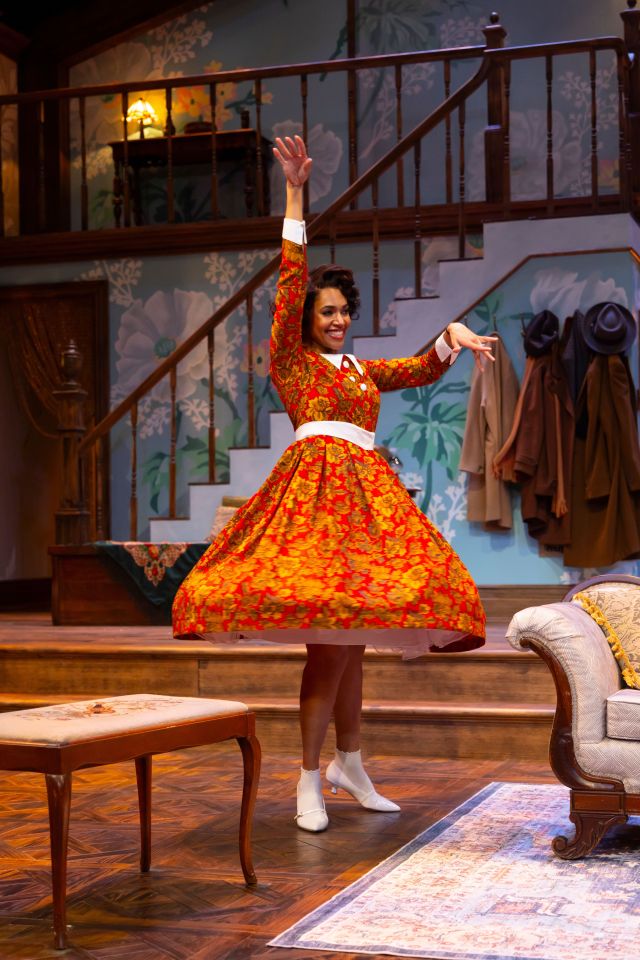
(© T. Charles Erickson)
This interview has been edited and condensed for clarity.
A Doll’s House is a 150-year-old play that seems to always be in the zeitgeist. Do you remember your first encounter with it?
[My aunt] had a copy of A Doll’s House in her library—one of those Penguin Classic copies. The wildest memory I had recently was being a child and looking at the book and going, “A Doll’s House? How does a doll have this many pages?”
When did you finally learn it wasn’t a book about Barbie?
Is it not about Barbie? [Laughs] I have been thinking about that movie during this process. I can’t tell you when I touched it again, but I remember in college us talking about Doll’s House, and the thing that stuck with me is that it opens with this woman worrying about macaroons. I’m like, “What the heck is a macaroon, and why is she so desperate to eat them?”
The answer to that question honestly tells you so much about her.
It’s so funny, I went to the grocery store recently to buy chocolate. When my lady time comes, I eat a crazy amount of chocolate. And I was already feeling shame because the chocolate was on sale so I was about to buy enough that if someone saw my grocery bag and saw that there was only chocolate in there, I would have been properly embarrassed. But then the woman who was working the cash register had a plastic bag with some kind of snack that she’d hidden in the register. I was like, “Oh my god! That’s Nora!”
It does speak to why A Doll’s House inspires so many revivals and adaptations. Everyone can understand Nora’s instinct to hide and to play a part.
We all have the universal issue of “Who am I?” and “Have I found who I am, or am I resting in the identities that I have chosen to align myself with?”

(© T. Charles Erickson)
That brings us to this production, which is set in the 1950s and brings in a new set of intersectional identities. Nora is mixed-race; Torvald is an immigrant from Guyana; Christy, Dr. Rank, and Krogstad are all Black Americans. How does that affect the storytelling?
Someone like Torvald, both in the original piece and in this piece, is someone who is getting opportunities that he wouldn’t have had before. There were major societal changes where the glass ceiling was starting to break. So it doesn’t feel like we’re putting more stuff on top. It’s more like we’ve taken a crystal and we’re looking through another facet. By looking through that view, things can just ring in a way that makes us look at the world that we live in now.
Back in 2016, you starred in a production of Ibsen’s Hedda Gabler that also happened to be set in the 1950s. When you think of how they each feel in your body, how does Nora differ from Hedda?
They’re both delicious! Nora is kind of protected. She’s very much a trophy wife, so she’s learned to navigate within her doll’s house, but she doesn’t know the world. Where Hedda has an idea of the world and might be upset that the world is changing, Nora is on the verge of figuring out what the world is. Nora in my body right now—she’s very Barbie! Nora is held up by corsets and lip gloss. There’s a feminine armor in being dressed up and looking really good and I think she delights in that. Until…
…The perspective on that armor shifts.
Yes. It’s what happens when the oyster pearl is released. Is it the ending of the oyster or the beginning of a pearl?
This production also weaves a lot of music into the story—and choreography by the great Mayte Natalio. Can you tell me how those elements are being used?
Yes! We have the cello that’s being played by Caylen [Bryant], which is so divine. Torvald now has a sister from back home that he’s brought back and she’s practicing the cello for an audition. And so throughout the play, we have moments where there’s just this wonderful grounding sound. We make use of it as well in the tarantella, and we had Mayte come in and choreograph some of those beats. We play with a touch of African dance as well, because the tarantella happens in a particular part of the play where that armor that we spoke of is starting to crack. Nora’s own DNA versus society’s DNA and the DNA of the Italian folk dance— what does that mean when those three things meet together? That’s what we’re playing with at the moment.
It goes to show how well this play can mold to different times and places.
The beautiful thing about a play like this is that you kind of bring your outside world into one room. We’re navigating the emotional fights that we wish to have but can’t have, the societal ideas that we wish to share but don’t know how to share. Both for Ibsen’s time and for this time, they would repress it—or try to repress it.
You’ve got to hide away your macaroons.
Exactly. The surprising [challenge] is tracking the dang macaroons. [Laughs] It’s not like Ibsen or Justin in the adaptation has said, “She must eat six macaroons.” So it’s like, am I being decadent by having too many? Am I not doing enough by having only part of one because I have so many lines? We need some actresses to sit down and talk about how they handled their macaroons.
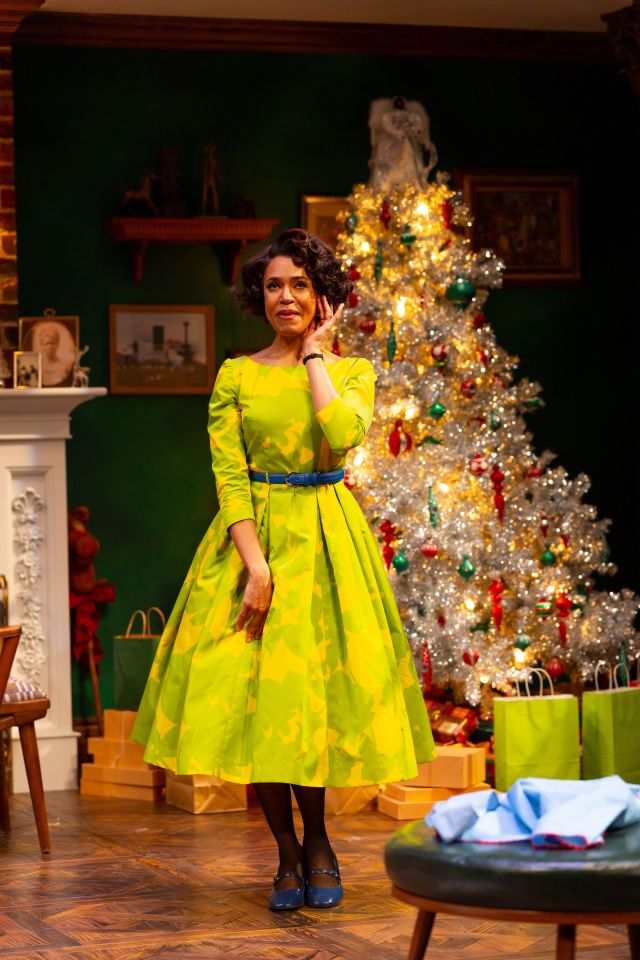
(© T. Charles Erickson)




source on Google
Latest Reviews
See all








Latest Videos

Watch Original Rent Cast Members Sing "Seasons of Love" at 30th Anniversary Concert
The performance features Idina Menzel, Adam Pascal, Anthony Rapp, and more.